Precautions for Consumers on Bank Loans, Currency Exchange, and Overseas Bond and Stock Investments
'Non-face-to-face Currency Exchange Service' Applicants Must Visit Departure Hall Exchange Booth in Person
Brazilian Government Bond Investment Requires Awareness of Exchange Rate and Interest Rate Risks
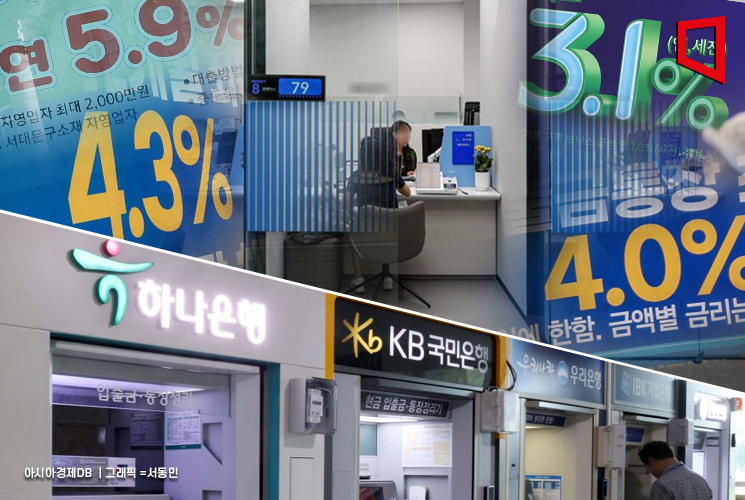
Mr. Yoo applied for a refinancing loan at the bank after receiving a principal repayment request due to the maturity of the Youth Lease Deposit Loan. Afterwards, the bank stated that the amount available for refinancing was insufficient compared to the required principal repayment amount, and the borrower arranged the difference through a card loan. However, just before the loan execution, a credit information inquiry confirmed the use of the card loan, resulting in increased debt and a drop in credit rating, leading to the loan being denied.
On the 25th, the Financial Supervisory Service (FSS) stated in "Consumer Precautions Learned from Major Complaint Cases" regarding the complaint filed by Mr. Yoo that "If the borrower's credit risk worsens due to increased loans, occurrence of delinquencies, or a decline in credit score before loan execution, the loan may be denied, so it is necessary to manage creditworthiness carefully."
Using loans from sectors with high delinquency rates such as card loans or loans from private lenders, or frequently using cash services, can negatively affect creditworthiness. In particular, banks may refuse to execute loans if the borrower's credit risk worsens before loan execution or if the information provided by the borrower changes in a way that significantly affects the loan execution.
Furthermore, the FSS pointed out that when applying for a non-face-to-face foreign exchange service and intending to receive foreign currency at the airport, the applicant must personally visit the airport exchange counter, which is one of the consumer precautions. The non-face-to-face foreign exchange service allows customers to apply for foreign exchange in advance via internet banking and then receive foreign currency cash at a designated branch.
However, only the applicant can receive the foreign currency when applying for the non-face-to-face foreign exchange service, and a physical ID card in the applicant's name is required. Specifically, foreign currency applied for non-face-to-face can be collected at the airport exchange counter before departure inspection, but cannot be collected at the duty-free zone exchange counter after departure inspection.
The FSS urged, "Since the physical receipt of foreign currency can only be done by the applicant at the selected foreign currency receipt location, please bring an ID card in the applicant's name," and added, "Please confirm the exact location of the branch where you will receive the foreign currency when applying for the exchange."
Amid a significant increase in investment in Brazilian government-guaranteed bonds recently due to stable high-interest coupon payments, the FSS emphasized the need to fully understand risks related to exchange rate and interest rate fluctuations before making investment decisions. Foreign currency bond investments can also yield different returns depending on macroeconomic indicators. Based on sales by the five major securities firms, investment in Brazilian bonds in the first half of this year reached 1.7268 trillion KRW, a 101.1% increase compared to 858.8 billion KRW in the same period last year.
The FSS explained, "As the Brazilian real continues to depreciate, interest receipts and bond valuation amounts are decreasing, so understanding exchange rate risk is necessary when making investment decisions," and added, "In addition to exchange rates, bond prices fluctuate according to market interest rate movements, so early sales may result in investment losses due to rising interest rates."
When subscribing to overseas public offering stocks, it is necessary to be aware that the investment environment, including stock allocation criteria, differs from that in Korea. Mr. Song filed a complaint requesting verification of the appropriateness of domestic securities firms' handling and compensation for losses, stating that he exchanged a substantial amount of subscription funds into US dollars through a domestic securities firm to subscribe to US public offering stocks but did not receive any shares and incurred exchange losses when the subscription funds were refunded.
The FSS explained, "The overseas public offering subscription agency service provided by domestic securities firms is a simple brokerage service that only handles subscription receipt and fund transfer, and the stock allocation method follows the internal criteria of the local brokerage firm, in which domestic securities firms do not intervene," and added, "It was pre-notified that foreign securities investments may incur exchange losses due to exchange rate fluctuations in addition to losses from price declines of the securities."
© The Asia Business Daily(www.asiae.co.kr). All rights reserved.
![Clutching a Stolen Dior Bag, Saying "I Hate Being Poor but Real"... The Grotesque Con of a "Human Knockoff" [Slate]](https://cwcontent.asiae.co.kr/asiaresize/183/2026021902243444107_1771435474.jpg)















