As of the 20th of this month, an average of 170 hornet nest removal dispatches per day
Shock from hornet stings... "Call 119 for emergency treatment"
The Jeonbuk Special Self-Governing Province Fire Headquarters (Chief Lee Osuk) recently urged residents to exercise special caution as the number of dispatches for beehive removal and patients stung by bees has increased due to abnormal high temperatures and persistent tropical nights.
According to the Fire Headquarters on the 23rd, there have been 32,827 dispatches for beehive removal over the past three years. Among these, 26,623 cases, accounting for 81%, occurred intensively between the hot months of July and September.
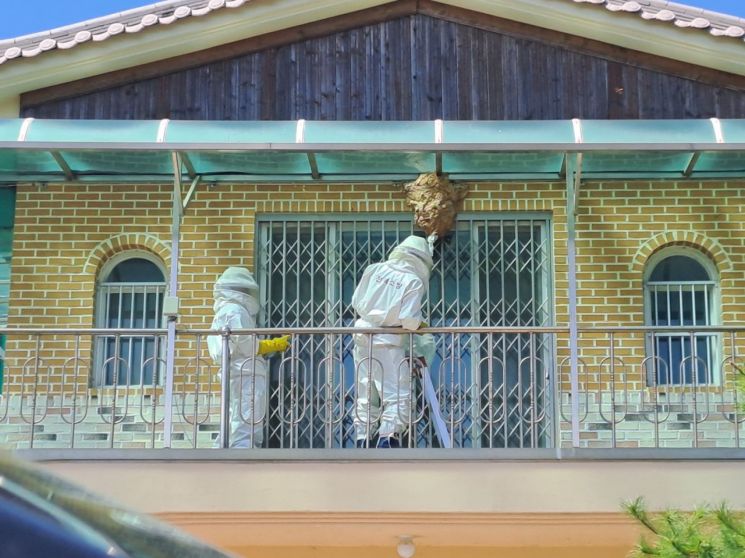
This year, beehive removal dispatches have also increased as the heat arrived earlier than usual due to abnormal climate conditions. In July, there were 3,031 cases, a 59% increase compared to last year. As of the 20th of August, there were 3,403 cases, averaging 170 dispatches per day for beehive removal.
The number of patients stung by bees also increased during the same period. According to Jeonbuk Fire statistics, 1,485 patients received emergency treatment from 119 ambulance teams for bee stings over the past three years. Of these, 1,167 cases, or 78.6%, occurred between July and September.
So far this year, there have been no cardiac arrest incidents caused by bee stings, but two cases occurred in both 2022 and last year.
On the 2nd, in Yongjin-eup, Wanju-gun, a woman in her 50s was stung multiple times by bees in her front yard, causing breathing difficulties. On the previous day, a bee entered a kindergarten in Hyanggok-dong, Namwon-si, and stung a 6-year-old child.
On the 12th, a man in his 50s was stung by bees while trying to remove a beehive in an apartment in Inhu-dong, Jeonju-si. His consciousness deteriorated, and he received an epinephrine injection in the ambulance. Thanks to the prompt treatment, his life was fortunately not at risk.
The Fire Headquarters advised, "If you find a beehive, do not try to remove it yourself or provoke the bees; immediately report it to 119." They explained, "Attempting to remove it forcibly can lead to bee stings, and once a beehive is disturbed, it becomes more difficult for firefighters to remove it during dispatch."
The fire authorities urged caution to avoid bee stings by following these guidelines.
Bees show greater aggression towards dark-colored clothing and strong perfumes or scented cosmetics, so when engaging in outdoor activities, it is advisable to wear white or light-colored clothing and wide-brimmed hats and avoid strong perfumes or scented cosmetics.
When coming into contact with a beehive, you should cover your head and quickly move at least 20 meters away.
If stung by a bee, remove the stinger promptly and disinfect the sting area, or wash with clean water and apply a cold pack to reduce pain.
If stung by a hornet and symptoms such as redness, itching, hives, difficulty breathing, or convulsions appear, suspect an allergic reaction called 'anaphylactic shock', and immediately call 119 for emergency treatment and go to a hospital for safety.
In cases of severe anaphylactic shock, swelling of the mouth and tongue can cause airway obstruction leading to respiratory distress and cardiac arrest, in which case cardiopulmonary resuscitation (CPR) should be performed.
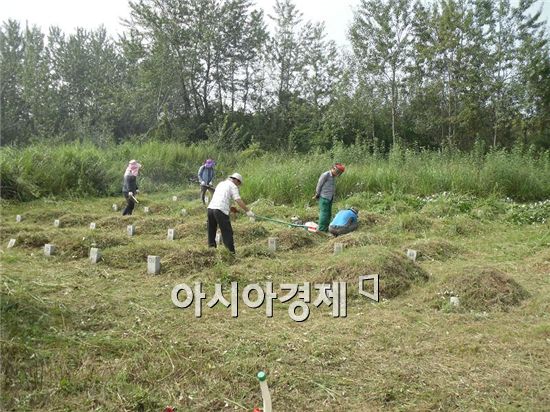
Fire Chief Lee Osuk emphasized, "With Chuseok approaching, many people will visit the mountains for grass cutting and ancestral rites. When going to the mountains, refrain from using perfumes or strongly scented cosmetics that may provoke bees, and if stung, promptly call 119 and seek quick hospital treatment."
Meanwhile, the Jeonbuk Fire Headquarters has pre-stocked emergency treatment drugs such as epinephrine in ambulances to provide rapid emergency care in case of bee sting incidents, as 79% of deaths from bee stings occur within one hour due to shock. They are also continuously educating paramedics on the use of these medications.
© The Asia Business Daily(www.asiae.co.kr). All rights reserved.
![Clutching a Stolen Dior Bag, Saying "I Hate Being Poor but Real"... The Grotesque Con of a "Human Knockoff" [Slate]](https://cwcontent.asiae.co.kr/asiaresize/183/2026021902243444107_1771435474.jpg)
















