KIST, IBS, and Boston Medical School Researchers Identify Process of Toxic Protein Removal in Astrocytes
The research team led by Dr. Ryu Hoon from the Brain Disease Conquest Research Group at the Korea Institute of Science and Technology (KIST, President Oh Sang-rok), in collaboration with the team led by Director Lee Chang-jun at the Institute for Basic Science (IBS, President Noh Do-young) and Professor Lee Jung-hee’s team at Boston Medical School, announced on the 25th that they have discovered that the autophagy action of astrocytes, non-neuronal cells in the brain, removes amyloid beta (Aβ) oligomer toxic proteins in the brains of Alzheimer’s dementia patients and restores memory and cognitive abilities.
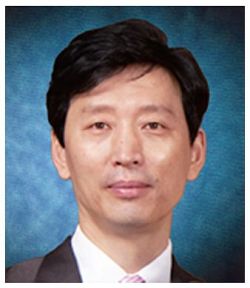 Ryu Hoon, Principal Researcher at KIST
Astrocytes are star-shaped non-neuronal cells that make up more than half of the cells in the brain. Alzheimer’s dementia, a representative example of senile dementia, is a degenerative brain disease caused by abnormal aggregation and accumulation of toxic proteins such as amyloid beta (Aβ) in the brain, which triggers inflammatory responses and neuronal damage. Until now, the academic community has focused on astrocytes removing toxic proteins around neurons, but the process has not been clearly elucidated.
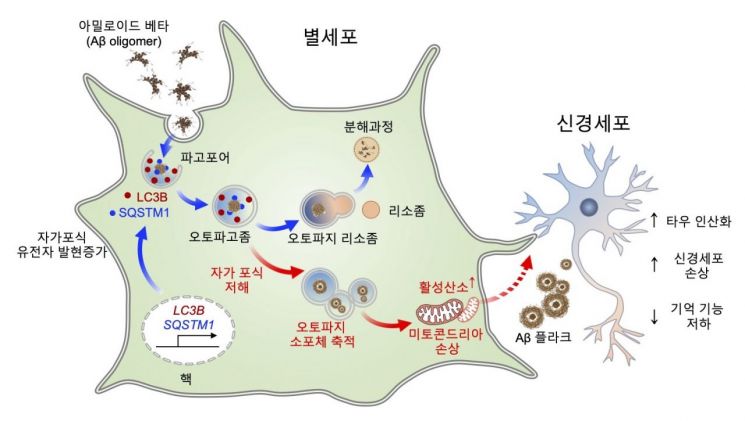 The autophagy mechanism of astrocytes is shown to act as an important regulatory factor in Alzheimer's disease. When autophagy regulatory genes in astrocytes (LC3B, SQSTM1) are activated in Alzheimer's disease, the removal of amyloid beta (Aβ) occurs, playing a crucial role in the recovery of cognitive function.
Autophagy is a ‘self-eating’ process where cells (Auto) engulf (Phagy) themselves. Focusing on the autophagy action of astrocytes that maintain cellular homeostasis, the research team observed that in the brains of Alzheimer’s patients, astrocytes respond by inducing genes that regulate autophagy when toxic protein accumulation or brain inflammation occurs. Based on this, they injected autophagy genes selectively expressed only in astrocytes into the brains of Alzheimer’s-induced mice and confirmed the recovery process of damaged neurons.
The research team demonstrated that the autophagy action of astrocytes reduces amyloid beta (Aβ) protein aggregates while simultaneously improving memory and cognitive functions.
In particular, they confirmed that when the expression of autophagy regulatory genes increases in the hippocampus, the brain region responsible for storing memories, pathological phenomena within brain tissue decrease.
Most importantly, by proving that the autophagy function of astrocytes can be utilized to remove amyloid beta (Aβ) oligomer toxic proteins, known as the main cause of Alzheimer’s dementia, they suggested the possibility of treating Alzheimer’s dementia.
This study is significant in that it proposes astrocytes, non-neuronal cells, as a new target for Alzheimer’s dementia treatment, moving away from the neuron-centered approach previously used in Alzheimer’s drug development. The research team plans to explore drugs that enhance the autophagy function of astrocytes to prevent or alleviate dementia symptoms and conduct preclinical studies on these drugs.
Dr. Ryu Hoon of KIST stated, “We revealed that the autophagy function of astrocytes regulates neuronal damage and also cognitive function in dementia brains,” adding, “We expect this to advance the understanding of cell biological mechanisms related to autophagy and promote basic research on intracellular waste removal and cell health maintenance.”
© The Asia Business Daily(www.asiae.co.kr). All rights reserved.
![Clutching a Stolen Dior Bag, Saying "I Hate Being Poor but Real"... The Grotesque Con of a "Human Knockoff" [Slate]](https://cwcontent.asiae.co.kr/asiaresize/183/2026021902243444107_1771435474.jpg)















