Interview with Jeong Dohyeon, CEO of Lapas
Simple injections with 'microneedles'
Developing obesity drugs, vaccines, allergy medications
"Obesity drug phase 1 clinical results expected within the year"
"Clinical Phase 1 results for a product improved to apply the obesity treatment drug Wegovy as a micro-needle patch on the skin will be released this year. We will use micro-needles to enable comfortable administration."
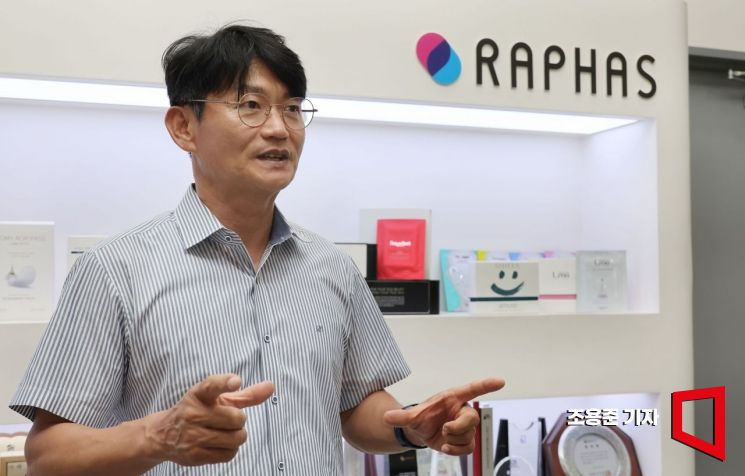 Jung Dohyun, CEO of Lapas, is being interviewed by Asia Economy at the headquarters in Magok-dong, Gangseo-gu, Seoul. Photo by Jo Yongjun jun21@
Jeong Dohyun, CEO of Lapas, stated this goal in an interview with Asia Economy on the 26th, emphasizing the development of pharmaceuticals utilizing micro-needle technology. Lapas was founded in 2006 by CEO Jeong with the aim of developing micro-needle patch technology. Micro-needles are patches with fine needles less than 1 mm in length that are applied to the skin to administer drugs painlessly.
By applying a micro-needle patch, even patients with 'needle phobia' who faint due to fear of injections can receive medication comfortably. It also offers high safety. CEO Jeong explained, "Injections can cause shock side effects if a large amount of drug enters suddenly," adding, "Micro-needles can be designed to control the absorption rate, reducing side effects."
Issues such as the cold chain (refrigerated and frozen distribution), which hindered the supply of messenger RNA (mRNA) vaccines during the COVID-19 pandemic, are also resolved. CEO Jeong said, "Micro-needles solidify the active ingredients, allowing storage and distribution at room temperature for over two years," and added, "We have conducted basic research showing that mRNA vaccines can also be stored and distributed at room temperature."
CEO Jeong incorporated the founding goal into the company name. 'Lapa' means 'healing' in Hebrew. Combining this with 'path,' the route for delivering healing drugs, the name Lapas was chosen to mean 'the path of healing,' fitting for a drug delivery system (DDS) developer.
 Jung Dohyun, CEO of Lapas, is being interviewed by Asia Economy at the headquarters in Magok-dong, Gangseo-gu, Seoul. Photo by Yongjun Cho jun21@
CEO Jeong emphasized, "Besides micro-needles, various formulations such as oral drugs, nasal mucosal sprays, and patch-type plasters exist to replace injections, but micro-needles have a solid competitive edge." He explained, "Oral drugs are convenient but must pass through the stomach and intestines, which can cause gastrointestinal side effects; sprays absorb quickly but have limitations on drug types; patch-type plasters chemically disrupt the skin barrier, causing itching if worn for long periods," adding, "Micro-needles allow administration of all drugs without skin damage and have fewer concerns about side effects."
Lapas first launched various cosmetic products such as acne patches before applying micro-needle patches to pharmaceuticals. CEO Jeong highlighted the technological advantage, saying, "Lapas is the only company in Korea to apply micro-needles to pharmaceuticals and conduct clinical trials." The most advanced pipeline is an obesity treatment. Phase 1 clinical trial results will be released within this year. They converted Novo Nordisk's Wegovy, known as the 'miracle obesity drug,' into a micro-needle formulation. Wegovy is currently only available as a subcutaneous injection that patients must self-administer in the abdomen. CEO Jeong said, "We are targeting commercialization in 2026 when Wegovy's substance patent expires," and added, "Since we have obtained pharmacokinetic data similar to Wegovy in animal studies, we are optimistic about the Phase 1 results."
Additionally, Phase 1 clinical trials for an allergic rhinitis immunotherapy are underway, and hepatitis B and influenza vaccines are awaiting clinical entry. Among these, immune diseases are caused by the body's excessive immune response to specific substances. To treat this, the body must be periodically exposed to the substance to prevent excessive immunity. CEO Jeong said, "Currently, the substance must be administered by injection, making concentration control difficult," adding, "Using micro-needles reduces risks and allows easy administration."
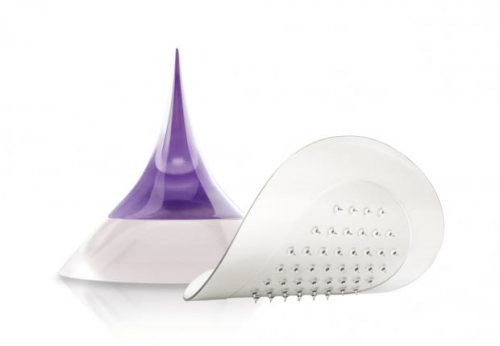
Lapas also has production capacity to support research and development (R&D). The Cheonan plant currently has the capability to produce over 10 million micro-needle patches annually. The plant incorporates Lapas's proprietary 'Drop Expansion (DEN)' process to rapidly manufacture various products.
Based on this growth, CEO Jeong expects to turn a profit this year. He said, "Although we are currently recording losses due to pharmaceutical R&D investments, the cosmetics business division is already profitable with an operating margin of about 20%," adding, "We achieved overall profitability in the second quarter."
© The Asia Business Daily(www.asiae.co.kr). All rights reserved.



















