COVID-19 Pandemic and Healthcare Workforce Exodus
Hospitals Struggle to Operate Emergency Rooms
"Temporary Emergency Room Treatment Restrictions, Normalization Planned"
The government recently announced that it will promptly work to normalize the temporary treatment restrictions that occurred at some emergency medical institutions. As concerns about an 'emergency room crisis' arose due to the upcoming Chuseok holiday coinciding with a resurgence of COVID-19, the government took immediate action to contain the situation.
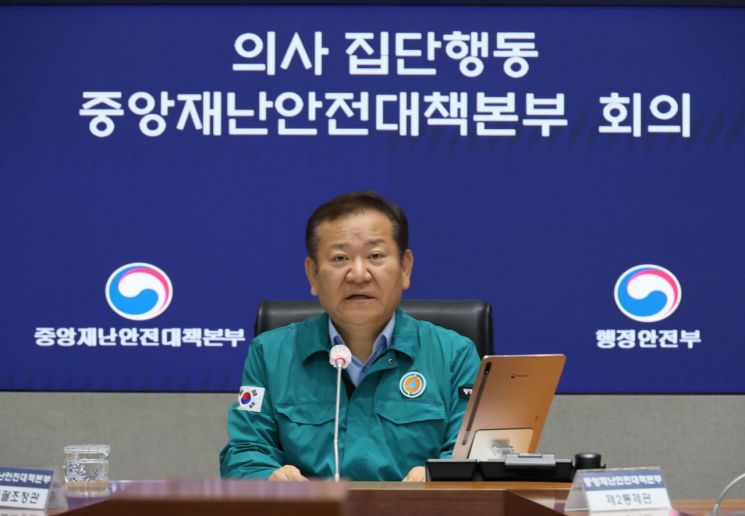
Lee Sang-min, Minister of the Ministry of the Interior and Safety and the 2nd Deputy Head of the Central Disaster and Safety Countermeasures Headquarters, held a Central Disaster and Safety Countermeasures Headquarters meeting at the Government Seoul Office on the morning of the 22nd and stated, "Although temporary treatment restrictions recently occurred at some emergency medical institutions, they are currently operating normally or are expected to normalize soon."
The number of confirmed COVID-19 cases has been on the rise since the end of June, leading to a 'resurgence' of the virus. The number of hospitalized COVID-19 patients increased from 474 in the last week of last month to 1,444 in the third week of this month. Hospitals are struggling to operate emergency rooms due to the combined effects of staff departures, including residents, and the COVID-19 outbreak. In particular, there are growing concerns about a treatment crisis during Chuseok, when general hospitals and clinics close and only emergency rooms remain open.
Minister Lee explained, "The government is closely monitoring all 408 emergency medical institutions one by one and will do its best to ensure that the emergency medical system operates normally. To reduce the burden on overloaded emergency rooms, mild COVID-19 patients who have recently increased are being distributed to local medical institutions such as provincial medical center fever clinics and COVID-19 treatment cooperative hospitals."
The government also intends to proceed with medical reform without setbacks. Minister Lee said, "The expert committee under the Medical Reform Special Committee held a public hearing yesterday on innovative medical supply and utilization system reform plans. Based on this, the special committee plans to announce specific first-phase medical reform implementation plans along with a five-year financial investment plan early next month."
Although only 125 applicants, accounting for 1.7% of the total recruitment target, applied in the second half of this year's resident recruitment, the government stated that it will actively support their training. Residents did not respond to additional recruitment as part of collective action. Minister Lee said, "The government will carefully monitor and provide various support so that the approximately 1,200 residents currently working and those returning in September can focus on their training without difficulties. We will work closely with training hospitals to ensure that each resident receives quality training in an improved training environment and grows into a specialist."
© The Asia Business Daily(www.asiae.co.kr). All rights reserved.
![Clutching a Stolen Dior Bag, Saying "I Hate Being Poor but Real"... The Grotesque Con of a "Human Knockoff" [Slate]](https://cwcontent.asiae.co.kr/asiaresize/183/2026021902243444107_1771435474.jpg)















