KOFST Hosts Forum on Scientific Approaches to Battery Safety
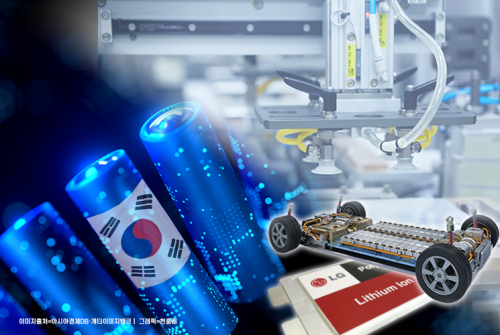
As concerns about electric vehicles grow following an electric car fire at an apartment complex in Cheongna, Incheon, scientists emphasized that understanding batteries accurately and using them properly ensures safety.
At the "Scientific Approach to Battery Safety" forum held on the afternoon of the 21st at the Korea Science and Technology Center by the Korea Federation of Science and Technology Societies, Jeong Hoon-ki, head of the Energy Storage Research Center at the Korea Institute of Science and Technology (KIST), who participated as a panelist, explained, "For batteries made by domestic companies, more than 1,500 safety tests are conducted from material to cell production before being sold to consumers," adding, "If used properly, there is almost no problem."
Center Director Jeong emphasized avoiding overcharging, overdischarging, and refraining from fast charging that can stress the battery. Dr. Do Chil-hoon, keynote speaker and head of the Next-Generation Battery Research Center at the Korea Electrotechnology Research Institute (KERI), advised, "To prevent electric vehicle fires, it is important to maintain the state of charge (SOC) below 80% for short-distance driving and below 90% for long-distance driving," and added, "It is also advisable to avoid charging at low temperatures and rapid charging."
Professor Oh Ki-yong of Hanyang University's Department of Mechanical Engineering stated, "Electric vehicle fires occur when a fully charged battery is subjected to several unfavorable conditions over a long period," and stressed, "It is important to keep the charge level around half during normal use and charge only when necessary." Firefighter Na Young-woon from the National Fire Research Institute warned, "Using products purchased overseas or those without certification increases the risk of fire," and advised, "For wireless vacuum cleaners, it is best to unplug the power cord when going out."
Experts attending the forum explained that while it is impossible to create a 100% safe battery, it is possible to develop batteries that approach that level of safety. Dr. Do Chil-hoon said, "By using non-flammable electrolytes and slightly lowering the cell voltage, it is possible to make considerably stable batteries." Professor Oh added, "If a well-constructed Battery Management System (BMS) that can monitor battery status is implemented, a significant portion of electric vehicle fires can be prevented."
Research and development (R&D) to develop safe batteries must also proceed simultaneously. Dr. Do Chil-hoon stated, "In the mid-term, non-flammable electrolytes and separators should be adopted, and in the long term, all-solid-state lithium-ion batteries using ceramic solid electrolytes and non-lithium metals should be developed," but cautioned, "However, manufacturing costs may increase significantly."
Professor Oh Ki-yong also explained that developing next-generation batteries such as internal flame-retardant separator coating technology, flame-retardant electrolytes, and all-solid-state batteries, along with applying battery thermal management systems, can prevent thermal runaway.
Firefighter Na Young-woon emphasized that to prevent electric vehicle fires from escalating into major accidents, it is crucial to extinguish them within the golden time. Na said, "Electric vehicle fires spread flames horizontally, causing fires to spread to surrounding vehicles and generating large amounts of explosive toxic gases, showing characteristics different from conventional fires," and added, "Since conventional ceiling-type fire alarm systems have limitations, the introduction of AI-based video recognition systems is necessary."
© The Asia Business Daily(www.asiae.co.kr). All rights reserved.
![Clutching a Stolen Dior Bag, Saying "I Hate Being Poor but Real"... The Grotesque Con of a "Human Knockoff" [Slate]](https://cwcontent.asiae.co.kr/asiaresize/183/2026021902243444107_1771435474.jpg)
















