GIST and Seoul Asan Hospital Researchers Confirm Treatment Outcomes for Solid Cancer Patients Through Fecal Microbiota Transplantation
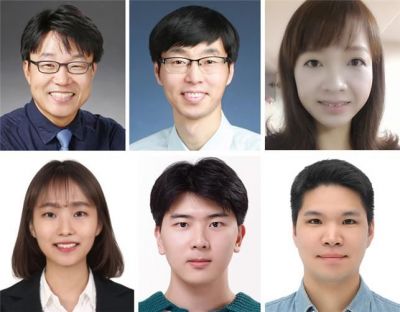 (Top row from left) Professor Han-Soo Park, Department of Biomedical Science and Engineering, GIST; Professor Sung-Yeob Cho, Seoul National University College of Medicine; Researcher Yu-Mi Oh, Seoul National University
 (Bottom row from left) Su-Jeong Kim, GIST student; Yoon-Jae Kim, GIST student; Hyun Kim, GIST student
A world-first study by a domestic research team has revealed that transplanting healthy gut microbiota via fecal microbiota transplantation (FMT) into patients with solid cancers such as liver cancer, stomach cancer, and esophageal cancer can enhance the efficacy of immune checkpoint inhibitor therapy. This means that feces can also serve as medicine.
According to Gwangju Institute of Science and Technology (GIST) on the 18th, a joint research team led by Professor Han-Soo Park of the Department of Biomedical Engineering and Professor Sook-Ryun Park of the Department of Oncology at Seoul Asan Medical Center announced for the first time worldwide that FMT can improve the therapeutic effect of immune checkpoint inhibitors in patients with solid cancers. Solid cancers refer to most cancers that form hard masses.
“Immunotherapy” is a standard cancer treatment method that activates the patient’s immune system by regulating interactions between immune checkpoint proteins, but it has the limitation that only about 20-30% of patients with cancer types known to respond to this therapy actually benefit. Among these, most develop resistance to immune checkpoint inhibitors, leading to cancer recurrence.
Recently, studies have shown that altering the gut microbiota composition through fecal transplantation in patients with malignant melanoma who developed resistance to immune checkpoint inhibitors can restore the response to immunotherapy. This has led to increased research on cancer treatments using FMT. However, until now, there have been no clinical studies demonstrating that FMT can enhance the efficacy of immune checkpoint inhibitors in metastatic solid cancers such as liver, stomach, and esophageal cancers.
The GIST-Seoul Asan Medical Center joint research team conducted a study on 13 patients with stage 4 solid cancers?including liver, stomach, and esophageal cancers?who had developed resistance to immune checkpoint inhibitors. They transplanted feces from patients who responded to immunotherapy and then re-administered immune checkpoint inhibitor treatment. As a result, one patient with metastatic liver cancer experienced a 48% reduction in tumor size after FMT. Five patients with metastatic cancer showed no further tumor progression following FMT. The research team confirmed that nearly half of the 13 patients resistant to immune checkpoint inhibitors showed therapeutic effects after fecal transplantation.
The research team identified a beneficial bacterial species called Prevotella merdae among the various strains in the feces and named it “Prevotella merdae Immunoacits” for the first time. From patients who did not show improved therapeutic effects despite FMT, they discovered two harmful bacterial species: Bacteroides plebeius and Lactobacillus salivarius. They also confirmed that even if beneficial bacteria are present, the coexistence of harmful bacteria can prevent improvement in the efficacy of immune checkpoint inhibitor therapy.
Professor Han-Soo Park of GIST’s Department of Biomedical Engineering stated, “This study confirmed that the response to immune checkpoint inhibitor therapy is more significantly influenced by microbial communities than by individual microorganisms. Moving forward, we plan to continue developing optimal microbial communities that increase beneficial bacteria and reduce harmful bacteria to improve cancer treatment outcomes through research optimizing gut microbiota combinations and cancer immune responses.”
Professor Sook-Ryun Park of the Department of Oncology at Seoul Asan Medical Center said, “We will continue gut microbiota research to develop new treatments to overcome resistance to immune checkpoint inhibitors.”
© The Asia Business Daily(www.asiae.co.kr). All rights reserved.

















