Stores Welcoming Cafe Workers "Sales Actually Increase"
Using Differentiation Strategies in the Competitive Cafe Market
Number of Cafe Operators Nationwide Up 48% in 5 Years
On the afternoon of the 14th, I visited a cafe in Mapo-gu, Seoul. Soft music was playing in the store, and each seat was equipped with a power outlet, creating a quiet atmosphere. Out of 16 tables, customers at 13 were working on laptops or studying with books open.
Hwang Ji-won (29), who runs the cafe, said, "I thought cafes that do not discourage 'Kagong' (cafe studying) would have poor sales, but on the contrary, word of mouth has increased sales significantly." She added, "This cafe is doing better now than when I operated franchise stores for seven years." Although it was a weekday afternoon, several customers had to leave because there were no available seats.
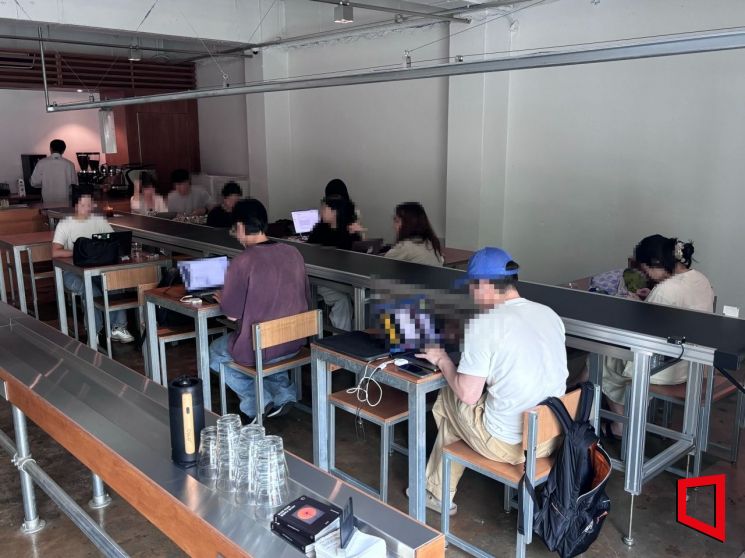 A view of a cafe in Mapo-gu, Seoul. Most customers are working on their laptops.
 Photo by Yeom Dayeon
Recently, the number of 'Kagongjok'?people who study in cafes?has been increasing, and more cafes are welcoming them. These cafes create an environment conducive to studying by allowing customers to stay for long periods and charge their phones and laptops. This trend contrasts with the previous perception that discouraged Kagongjok. On social networking services (SNS), lists of 'cafes good for Kagong' are shared and gaining popularity.
Hwang said, "As the Kagong culture has become more active and demand has steadily increased, more and more customers are visiting." Park (28), who works at a nearby cafe, also explained, "The first floor of the store is mainly for groups of customers, while the second floor is developing a study atmosphere. The owner was initially negative but now seems to welcome Kagong customers as their numbers have grown."
In fact, some cafes prohibit laptop use inside or require a separate paid fee to use power outlets. The reasons include low turnover rates and electricity costs. Yoon (23), who often enjoys Kagong, said, "When I have work to do, I usually study in cafes, but in private cafes, I often felt uncomfortable. Nowadays, there seem to be more cafes where I can study comfortably, so I keep looking for them."
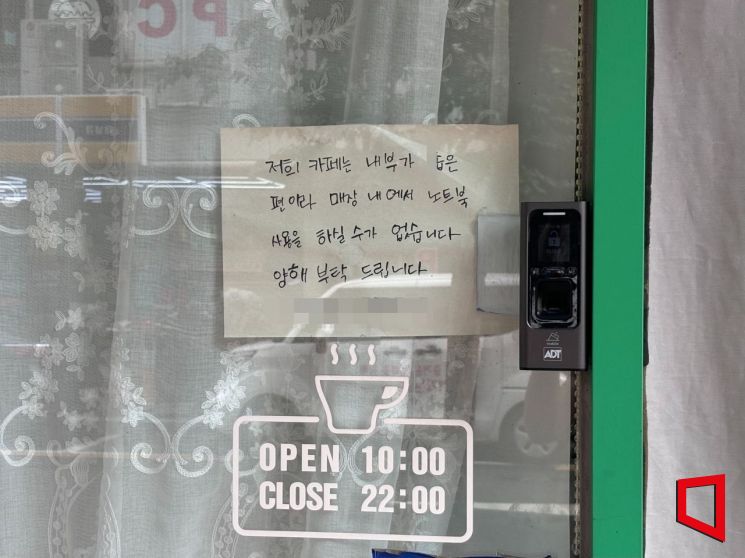 A notice stating "Laptops are not allowed to be used inside" is posted at a cafe in Gwanak-gu, Seoul.
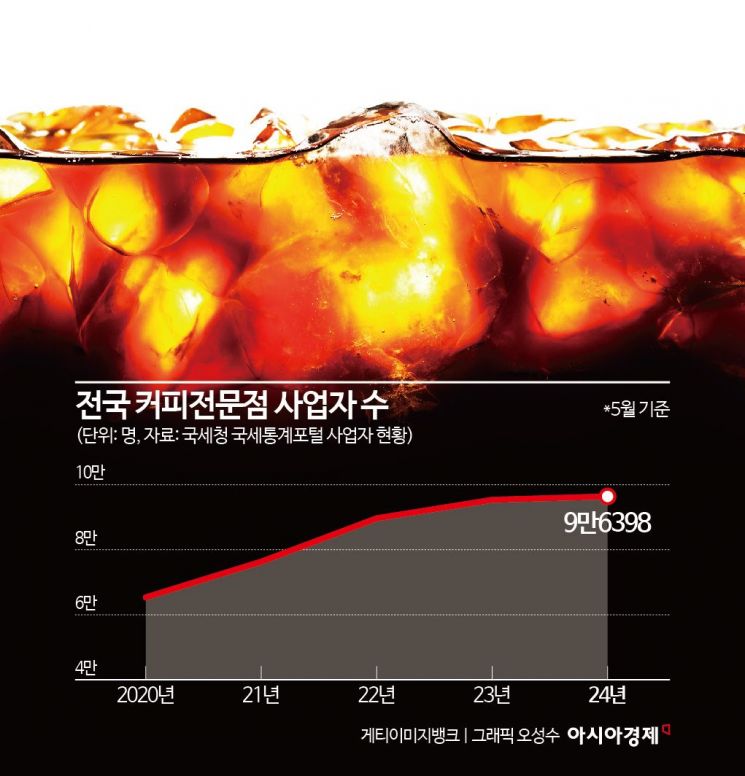
This phenomenon is interpreted as a means to gain competitiveness in the fierce cafe industry. According to the National Tax Service's tax statistics portal, as of May, the number of coffee shop operators nationwide was 96,398, approaching 100,000. This is a 48% increase from 65,340 in 2020 over five years.
However, cafes also record a high closure rate. According to Seoul's commercial district analysis service, 1,101 cafes in Seoul closed in the first quarter of this year, the highest number since the data became available. Professor Choi Cheol of Sookmyung Women's University’s Department of Consumer Economics analyzed, "In a situation where the number of cafes is rapidly increasing, reflecting new demand from Kagongjok is a differentiated business strategy, such as creating an environment where customers can sit alone and work."
Kim (29), who runs a cafe in Dongjak-gu, Seoul, said, "Compared to when there were fewer Kagongjok, there is no significant difference in sales." He added, "Setting rules such as banning laptops in cafes would inevitably be inconvenient for customers."
Kim continued, "Because the perception of Kagongjok is not very positive, visitors tend to be cautious, but unless they bring extreme items like printers, we welcome them."
Professor Choi explained, "In the past, cafes were spaces for socializing with others, but now, consumption involving studying or working alone is increasing. Cafes that operate in line with social trends and demands, such as Kagongjok, will become more common."
© The Asia Business Daily(www.asiae.co.kr). All rights reserved.
![Clutching a Stolen Dior Bag, Saying "I Hate Being Poor but Real"... The Grotesque Con of a "Human Knockoff" [Slate]](https://cwcontent.asiae.co.kr/asiaresize/183/2026021902243444107_1771435474.jpg)


















