Bao Wu: "The crisis is longer and colder than expected"
Iron ore futures prices have plummeted 30% this year
Responding with low-price exports... but facing overseas tariff barriers
"It will be more difficult to endure than expected." China Baowu Steel, the largest steel company in China and the world's number one by production volume, expressed concern that the domestic steel industry is facing a severe downturn. Domestically, difficulties have increased due to weak demand, while internationally, it has become a pariah as major countries criticize it for overproduction and market distortion.
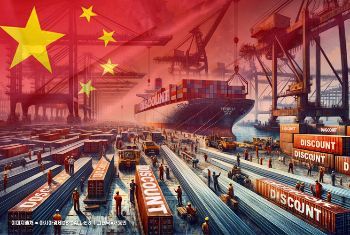
On the 14th, Baowu Steel issued a statement under the name of Chairman Hu Wangming (胡望明), saying, "The crisis will be longer, colder, and harder to endure than we anticipated." It emphasized to employees that "to get through a long and harsh winter, accumulating cash is more important than making profits," urging austerity measures.
Baowu Steel did not specify the exact causes of the current steel industry downturn. However, since steel is used in the production of building structures, ships, and vehicles, it is widely assessed that the trend is closely linked to the downturn in China's economy. The Chinese steel industry also experienced significant recessions during the 2008 global financial crisis and the 2015 stock market crash. Baowu Steel explained that the current steel industry downturn is more severe than those periods. Bloomberg News noted, "In all three periods, President Xi Jinping tried to overcome the recession with stimulus measures, but in 2024, recovery is expected to take longer."
The price of iron ore futures, a raw material for steel products, has fallen below $100 per ton, dropping about 30% since the beginning of the year. This is due to a sharp decline in steel demand caused by domestic sluggishness such as the Chinese real estate slump and factory activity contraction. On the Chicago Mercantile Exchange (CME), iron ore futures briefly hit $96.85 per ton on the day.
Bloomberg reported, "Iron ore inventories are piling up at Chinese steel mills, and rebar used in construction is cheaper than at any time since 2017," adding, "As profitability declines, steel mills are caught in a vicious cycle of having to reduce production."
Currently, the Chinese steel industry is trying to overcome difficulties by expanding low-priced exports overseas, considering weak domestic demand. China's steel exports are expected to exceed 100 million tons for the first time since 2016 this year.
However, countries around the world struggling with the tsunami of Chinese steel are fiercely criticizing the market distortion caused by the Chinese government's overproduction policies. Steel mills in various countries, unable to withstand competition with low-priced Chinese steel, are reluctantly going through closure procedures or entering temporary shutdowns.
In response, the United States and the European Union (EU) have already countered with tariffs, and recently Latin American countries such as Brazil, Chile, and Colombia have also raised or are considering raising tariffs belatedly. Southeast Asian countries including Indonesia, Malaysia, and Vietnam have recently launched anti-dumping investigations into Chinese products, including steel.
© The Asia Business Daily(www.asiae.co.kr). All rights reserved.
![Clutching a Stolen Dior Bag, Saying "I Hate Being Poor but Real"... The Grotesque Con of a "Human Knockoff" [Slate]](https://cwcontent.asiae.co.kr/asiaresize/183/2026021902243444107_1771435474.jpg)
















