"Failure to Take Preemptive Measures Against Malicious Landlord Guarantee Enrollment"
The Ministry of Land, Infrastructure and Transport was found to have delayed responding to the Housing and Urban Guarantee Corporation's (HUG) risk management requests, such as lowering the guarantee limit, despite the rapid increase in jeonse guarantee accidents.
Additionally, it was revealed that HUG exacerbated the damage by failing to take measures such as preemptively blocking guarantee subscriptions by malicious landlords, even as large-scale jeonse frauds exploiting the jeonse guarantee occurred.
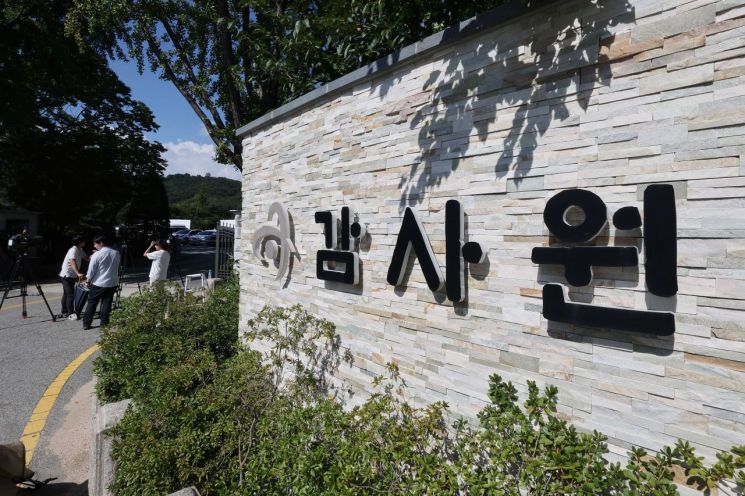
On the 13th, the Board of Audit and Inspection disclosed key audit results on the 'Implementation Status of Policies for Stabilizing Housing for Low-Income Citizens,' stating that although jeonse guarantee accidents surged, no related measures were taken, failing to prevent the misuse of jeonse guarantees for jeonse fraud, which led to an expansion of HUG's financial losses.
Since 2019, as jeonse guarantee accidents surged, HUG requested the Ministry of Land, Infrastructure and Transport 16 times from September 2020 to February 2022 to lower the jeonse guarantee limit to prevent jeonse fraud and manage HUG's financial risks.
In particular, in October 2021, despite receiving a report that a risk management measure to lower the loan-to-value ratio from 100% to 90% was necessary due to the anticipated massive financial losses of HUG, the Ministry of Land, Infrastructure and Transport misjudged that risk management was possible because the overall accident rate of jeonse guarantees was declining and failed to properly review HUG's requests.
After the jeonse fraud damage worsened, the Ministry of Land, Infrastructure and Transport only began reviewing countermeasures in June 2022 and lowered the applied official price ratio and loan-to-value ratio starting last year.
"If the Ministry of Land, Infrastructure and Transport had lowered the loan-to-value ratio, approximately 4 trillion won in accidents could have been prevented"
The Board of Audit and Inspection estimated that if the Ministry of Land, Infrastructure and Transport had lowered the loan-to-value ratio to 90% as requested by HUG in October 2021, about 3.9 trillion won in guarantee accidents could have been prevented. It explained that the Ministry's delayed response failed to prevent the large-scale jeonse fraud and HUG's financial deterioration caused by the surge in jeonse guarantee accidents.
The Board of Audit and Inspection requested caution from the Ministry of Land, Infrastructure and Transport and notified HUG to prepare measures to refuse guarantee subscriptions for malicious landlords.
Furthermore, it was also uncovered that the Ministry of Land, Infrastructure and Transport's management of landlords' obligation fulfillment was insufficient, resulting in many private rental houses being excluded from inspections during lease contract report checks, and lease contracts being accepted without guarantee subscriptions, thus missing actions such as fines.
According to Article 4 of the Private Rental Housing Act and others, landlords must fulfill obligations such as lease contract reporting and guarantee subscription in exchange for various tax benefits like acquisition tax reductions.
The Ministry of Land, Infrastructure and Transport can identify suspected unreported cases through systems like 'RentHome' and the 'Residential Lease Information System' (RHMS), but due to improper utilization, about 79% of private rental houses were not investigated over the past five years (2019?2023).
Additionally, the Korea Housing Finance Corporation (HF), which operates jeonse loan guarantee products to stabilize housing for low-income citizens, was found to have approved product subscriptions even for high-value lease contracts.
HF does not approve jeonse loan guarantee subscriptions for houses with tenant deposits exceeding 700 million won (500 million won in provincial areas), but it left a loophole allowing high-priced houses to subscribe to jeonse loan guarantees by increasing monthly rent instead of the tenant deposit, contrary to the guarantee's operational purpose.
The Board of Audit and Inspection stated, "We notified HF to prepare measures to prevent high-value lease contracts from subscribing to jeonse loan guarantees intended for housing stability for low-income citizens by recalculating the tenant deposit for monthly lease contracts using the monthly-to-jeonse conversion rate and disallowing subscriptions if the recalculated tenant deposit exceeds 700 million won (500 million won in provincial areas)."
© The Asia Business Daily(www.asiae.co.kr). All rights reserved.
![Clutching a Stolen Dior Bag, Saying "I Hate Being Poor but Real"... The Grotesque Con of a "Human Knockoff" [Slate]](https://cwcontent.asiae.co.kr/asiaresize/183/2026021902243444107_1771435474.jpg)
















