Bank of Korea's 'June Money and Liquidity'
Money Supply Increases for 13 Consecutive Months Centered on Regular Savings and Securities
As expectations for a base interest rate cut in the second half of the year grow, the broad money supply in the market has increased for the 13th consecutive month, centered on time deposits and beneficiary certificates.
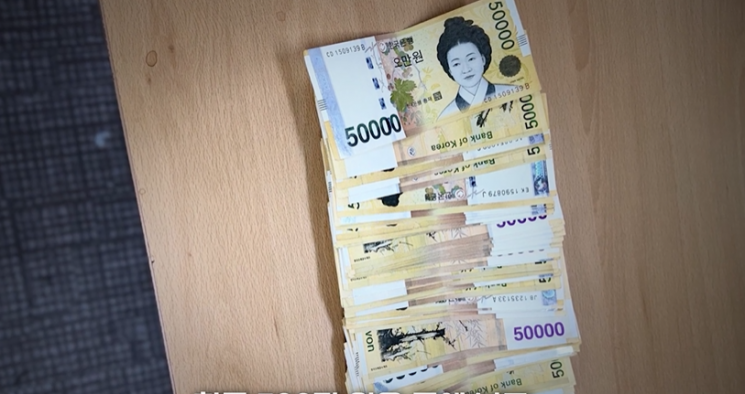
According to the "June 2024 Money and Liquidity" report released by the Bank of Korea on the 13th, the broad money supply (M2, seasonally adjusted, based on average balance) in June reached 4,037.6 trillion won, an increase of 23.5 trillion won from the previous month. The money supply has been rising for 13 consecutive months since June last year.
M2 is an indicator used to represent the amount of money circulating in the market. It includes narrow money (M1), which consists of cash, demand deposits, and savings deposits with check-writing privileges, as well as financial products such as money market funds (MMF), time deposits under two years, beneficiary certificates, negotiable certificates of deposit (CD), and repurchase agreements (RP).
By product, time deposits increased by 11.4 trillion won, beneficiary certificates by 9.2 trillion won, and MMFs by 5.1 trillion won. On the other hand, demand deposits decreased by 4 trillion won, and other monetary instruments decreased by 2.8 trillion won.
A Bank of Korea official explained, "Time deposits increased due to expanded demand based on the perception that interest rates are at their peak and banks' efforts to attract funds. Beneficiary certificates continued to rise due to expectations of interest rate cuts and domestic and international stock price increases, and MMFs turned to an increase as social security fund inflows occurred."
Conversely, demand deposits decreased mainly due to local governments' fiscal spending, and other monetary instruments turned to a decrease as foreign currency deposits declined due to corporate import payment settlements.
By economic agents, households and nonprofit organizations and other financial institutions increased, while corporations and other sectors decreased. Households and nonprofit organizations (10.6 trillion won) increased mainly in time deposits, and other financial institutions (2.3 trillion won) increased mainly in beneficiary certificates. On the other hand, other sectors (-5.6 trillion won) decreased mainly in beneficiary certificates, and corporations (-0.5 trillion won) decreased mainly in other monetary instruments.
Meanwhile, narrow money (M1, seasonally adjusted, based on average balance) was 1,220.5 trillion won, down 1 trillion won from the previous month. As demand deposits decreased, the rate of decline narrowed from -1.1% in the previous month to -0.1%.
© The Asia Business Daily(www.asiae.co.kr). All rights reserved.
![Clutching a Stolen Dior Bag, Saying "I Hate Being Poor but Real"... The Grotesque Con of a "Human Knockoff" [Slate]](https://cwcontent.asiae.co.kr/asiaresize/183/2026021902243444107_1771435474.jpg)















