Maduro Rejects Conditional Resignation Talks
WSJ: "A Futile Attempt"
In Venezuela, amid controversy over allegations of fraudulent vote counting in the presidential election, the U.S. government is reportedly pushing for President Nicolas Maduro to relinquish power in exchange for immunity from drug trafficking charges, according to the Wall Street Journal (WSJ) on the 11th (local time).
The WSJ stated that the Joe Biden administration is reviewing all options, including a pardon plan for President Maduro and his close associates, to persuade Maduro to resign before his term ends in January next year.
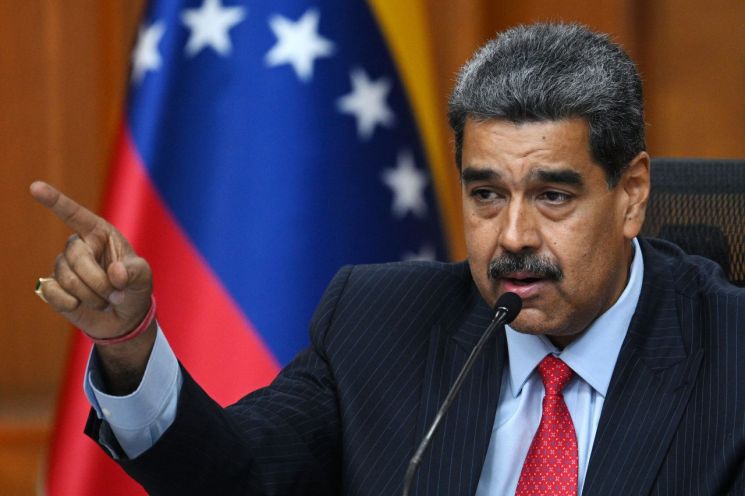
President Maduro claims to have won a third term in the Venezuelan presidential election on July 28, but the opposition alleges that their candidate actually won and has raised suspicions of fraudulent vote counting. The international community also harbors doubts. However, Maduro has responded to opposition protests against the alleged fraud by deploying law enforcement and has dismissed international pressure as interference in domestic affairs, standing firm.
Previously, in 2020, the U.S. indicted President Maduro and about ten of his close associates on charges of involvement in exporting narcotics such as cocaine to the United States. At that time, the U.S. government also offered a $15 million bounty.
The WSJ cited sources saying that last year, the U.S. proposed a pardon plan to Maduro in secret talks held in Doha, Qatar, on the condition that he step down from the presidency.
Discussions about Maduro’s resignation plan were held through online channels between Daniel P. Erikson, the White House National Security Council (NSC) official responsible for Venezuela, and Jorge Rodriguez, the Venezuelan National Assembly Speaker and Maduro’s close aide. The U.S. also sent signals of a "carrot" by indicating that Western oil companies would not be forced to cease their operations in Venezuela.
Jeffrey Ramseur, a Venezuela expert at the Atlantic Council, said the Biden administration is focusing on incentives such as dropping indictments as a negotiation tool rather than punitive measures like sanctions.
The WSJ analyzed that with five months remaining until Maduro’s third-term inauguration, successfully concluding negotiations within that period could influence the outcome of the U.S. presidential election in November.
However, President Maduro has refused to even discuss any agreement conditioned on his resignation. Sources close to the Venezuelan regime reported that Maduro’s position has not changed at present. The WSJ described the U.S. proposal as a "long shot."
© The Asia Business Daily(www.asiae.co.kr). All rights reserved.
![Clutching a Stolen Dior Bag, Saying "I Hate Being Poor but Real"... The Grotesque Con of a "Human Knockoff" [Slate]](https://cwcontent.asiae.co.kr/asiaresize/183/2026021902243444107_1771435474.jpg)















