KCCI SGI Cause Analysis Report
Labor Productivity of 93.68 Million KRW from 2020 to 2022
Main Export Items Have Entered Maturity Stage
Proposals for Business Restructuring and Market Development
As the improvement in labor productivity of export companies has stalled, there is an opinion that it is necessary to establish an environment that can lead to productivity improvement, such as a flexible labor market and transition to new industries.
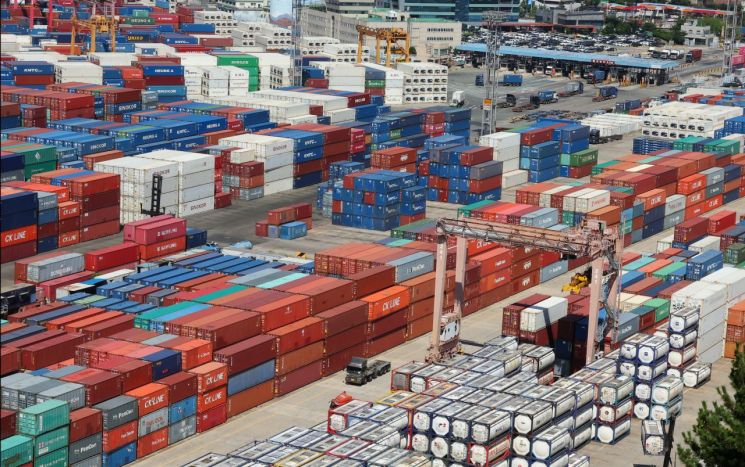
The Korea Chamber of Commerce and Industry's Sustainable Growth Initiative (SGI) proposed this in its report titled "Causes and Implications of the Slowdown in Labor Productivity of Export Companies," published on the 8th.
According to the report, when calculating the labor productivity (value added per employee) of export companies targeting domestic manufacturing, it was found that from 2000 to 2009, before the financial crisis, export companies had about 30% higher productivity compared to all manufacturing companies. However, as of 2020 to 2022, the labor productivity of export companies was 93.68 million KRW, only about 0.8% higher than that of all manufacturing companies (92.89 million KRW).
SGI cited the disappearance of the China special demand and difficulties in workforce restructuring as the background for the sluggish productivity improvement of export companies. While Korea's leading manufacturing industries showed high growth relying on the China special demand in the past, the slowdown in China's economic growth rate and the expansion of localization of parts and materials have compounded difficulties. Furthermore, with the disappearance of the China special demand, labor productivity declined due to the rigidity of the domestic labor market making workforce restructuring difficult.
It was also pointed out that industries producing major export items have already entered the maturity stage in the industrial cycle, limiting the extent of productivity improvement even if investments increase. SGI suggested measures to improve productivity of export companies, including ▲ easing labor market rigidity ▲ promoting efficient resource allocation through business restructuring ▲ discovering markets to replace China.
In particular, the need for flexible workforce management to quickly respond to rapidly changing environments and improve productivity was emphasized. It stated that employment-friendly revisions of labor laws, improvement of uniform regulations on working hours, and reform of wage systems centered on job and performance are necessary.
Kim Cheon-gu, a research fellow at SGI, said, "Considering that the domestic economy has the characteristics of a small open economy, it is difficult to secure the sustainability of economic recovery without improving the productivity of export companies, and there is a risk of a decline in potential growth rate in the mid to long term."
He added, "It is urgent to build a healthy industrial ecosystem through efficient workforce reallocation via a flexible labor market, productivity improvement through the transition of export companies to new industries, strengthening the competitiveness of leading industries, and smooth business restructuring of low value-added companies."
© The Asia Business Daily(www.asiae.co.kr). All rights reserved.
![Clutching a Stolen Dior Bag, Saying "I Hate Being Poor but Real"... The Grotesque Con of a "Human Knockoff" [Slate]](https://cwcontent.asiae.co.kr/asiaresize/183/2026021902243444107_1771435474.jpg)
















