Bank of Korea's 'Green CLO Introduction Plan to Revitalize Green Finance'
Support Measures for SMEs' Mid- to Long-Term Eco-Friendly Investment Funds
SME Financing Rates Can Decrease by up to 262bp
As the international community strengthens regulations on carbon emissions, large domestic corporations are expanding investments to reduce greenhouse gases, while small and medium-sized enterprises (SMEs) remain reluctant to invest in eco-friendly initiatives due to poor financing conditions. In response, there are calls to introduce Green Collateralized Loan Obligations (Green CLOs), which support SMEs in securing long-term funds at low interest rates for investments in low-carbon production facilities.
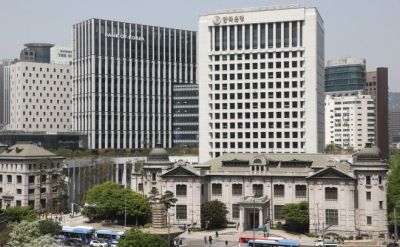
According to the 'BOK Issue Note: Introduction Plan for Green CLO to Revitalize Green Finance' published by the Bank of Korea on the 8th, Green CLO stands for Collateralized Loan Obligation. It is a system where a special purpose company (SPC) issues securitized bonds backed by green loans extended by banks to SMEs.
Examining the Green CLO issuance structure, banks first review and execute green loans for small and medium-sized enterprises. The SPC then issues senior and subordinated CLOs by considering the cash flows of the green loan receivables purchased from the banks. In this process, credit enhancement by guarantee institutions, credit rating assignments and suitability assessments by external rating agencies, and brokerage by securities firms or underwriters for domestic and international public offerings take place. Policy authorities are responsible for establishing certification standards and procedures to activate the Green CLO system.
Park Sang-hoon, head of the Sustainability Growth Research Team at the Bank of Korea and author of the report, stated, "Although pressure for SMEs to transition to a low-carbon economy is increasing, especially among export companies, SMEs remain reluctant to invest in eco-friendly projects due to poor financing conditions such as low credit ratings. Green CLOs are a measure to help these SMEs secure mid- to long-term funds at low interest rates necessary for investing in low-carbon production facilities."
Currently, programs supporting the adoption of eco-friendly technologies and asset securitization for SMEs include the G-CBO by the Korea Environmental Industry & Technology Institute under the Ministry of Environment and CLOs by the Korea Asset Management Corporation (KAMCO). These programs are managed by government-affiliated research institutes or policy financial institutions, which select target companies directly and require substantial fiscal support, leading to concerns about limited scalability.
In contrast, Green CLOs are expected to have greater scalability than existing asset securitization programs because they utilize banks' loan screening networks to select numerous small-scale green loans and do not require large-scale fiscal support such as secondary compensation.
SMEs Using Green CLO... Financing Costs Reduced by up to 262bp
It is estimated that when medium-sized and small enterprises utilize Green CLOs, their financing costs significantly decrease. As of the end of last year, the weighted average loan interest rates for low-credit (credit rating level 6) SMEs were about 6.1% for secured loans and 8.1% for unsecured loans. However, for the same medium-sized and small enterprises participating in Green CLOs, the applicable loan interest rates are estimated to be approximately 5.0% for secured loans and 5.5% for unsecured loans. This means that by using Green CLOs, SMEs could reduce their financing costs by up to 114 basis points (bp) for secured loans and up to 262 bp for unsecured loans (1 bp = 0.01%).
Park explained, "Considering the incentives for SMEs and banks to use and handle green loans, the interest rate reduction effect from securitization, and domestic and international investment demand for Green CLOs, the introduction of Green CLOs is expected to be a useful financing tool for SMEs' eco-friendly transition."
However, policy support such as presenting green loan classification criteria, simplifying certification procedures, and providing additional incentives to companies and banks will be necessary to utilize Green CLOs. Since there are currently no green loan classification standards, it has been proposed to initially apply Green CLOs to loans related to equipment whose green technology commercialization is complete and whose greenhouse gas reduction effects have been verified, then gradually expand after establishing 'Green Credit Management Guidelines.' The Financial Supervisory Service is preparing these guidelines with a target announcement this year, but it is expected to take considerable time for the guidelines to be established in the credit market.
Meanwhile, utilizing Green CLOs is expected to supply long-term investment funds to SMEs and provide new green investment opportunities in the domestic capital market. Park said, "Green CLOs can contribute to establishing a foundation for SMEs, which have mainly relied on short-term bank loans for facility investment funds, to raise long-term funds necessary for introducing carbon reduction facilities through the capital market."
He added, "Green CLOs will offer new green investment opportunities to domestic investors who have faced limited investment options due to the small size of the green finance market. If the program becomes established as one that benefits many vulnerable sectors in the green economic transition (SMEs), it is expected to enhance global investors' perceptions and expand investments, thereby increasing international trust in South Korea's green finance policies."
© The Asia Business Daily(www.asiae.co.kr). All rights reserved.
![Clutching a Stolen Dior Bag, Saying "I Hate Being Poor but Real"... The Grotesque Con of a "Human Knockoff" [Slate]](https://cwcontent.asiae.co.kr/asiaresize/183/2026021902243444107_1771435474.jpg)















