Amid growing concerns about a potential recession in the United States, it has been confirmed through corporate earnings reports that the core of economic activity, consumer spending power, is declining. The demand slowdown trend is clear from the recent earnings of companies such as Walt Disney theme parks, Airbnb, and Hilton Hotels.
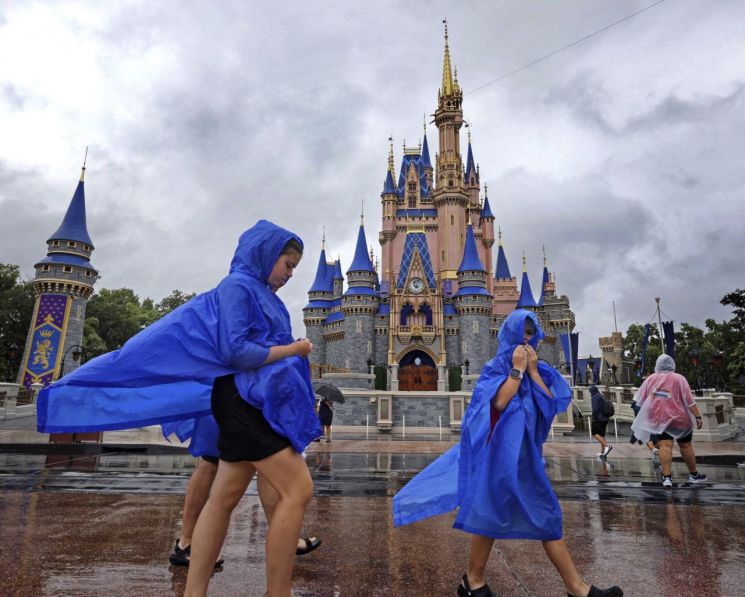
Looking at Disney's fiscal third-quarter earnings released on the 7th (local time), the streaming division recorded its first-ever profit, while the operating profit of the theme park division, including Disney World, fell by more than 3%, missing market expectations.
This is interpreted as an impact of the demand slowdown. Disney Chief Financial Officer (CFO) Hugh Johnston explained, "Consumers are spending more cautiously due to inflation," adding, "High-income travelers are opting for overseas trips instead of visiting Disney theme parks due to the strong dollar." Sales of Disney goods such as dolls and toys also declined. Disney forecasted that the theme park division's performance in the fiscal fourth quarter would also be weak due to weakened consumer demand.
On the same day, Chris Nassetta, CEO of the major hotel chain Hilton, also diagnosed a slowdown in consumer demand. He stated, "The market is definitely weakening," and evaluated, "(American consumers') available income and disposable income have decreased, reducing their spending power on travel and other expenses." This aligns with the context of Marriott CFO Leeny Oberg's comment last week that "American consumers have become more cautious."
Accommodation sharing company Airbnb also reported earnings per share below expectations the previous day, pointing out "signs of weakening demand from U.S. guests." As a result, it forecasted a slowdown in annual revenue growth. Due to these demand slowdown concerns, Airbnb's stock price plunged more than 10% that day. Additionally, large corporations such as McDonald's and Procter & Gamble also announced quarterly sales weaknesses. Major foreign media evaluated, "There is sufficient evidence through the corporate earnings season that U.S. consumer spending is already under pressure."
Additional savings, which had supported consumption so far, are also understood to have been depleted. According to the Federal Reserve Bank of San Francisco, the excess savings accumulated during the pandemic have been fully exhausted this year. Furthermore, consumer loans in June, released by the Federal Reserve (Fed) on the same day, increased by $8.93 billion, falling short of the $10 billion forecast. Apollo's Chief Economist Thorsten Slok assessed that this consumer credit slowdown "aligns with the gradual slowdown in consumer spending," adding, "Consumer spending growth is slowing down. It is not a crash."
© The Asia Business Daily(www.asiae.co.kr). All rights reserved.
![Clutching a Stolen Dior Bag, Saying "I Hate Being Poor but Real"... The Grotesque Con of a "Human Knockoff" [Slate]](https://cwcontent.asiae.co.kr/asiaresize/183/2026021902243444107_1771435474.jpg)
















