A 20-year-old man who, driven by delusions of persecution, attempted to kill his high school teacher with a weapon has been sentenced to 13 years in prison.
The man, diagnosed with schizophrenia while receiving treatment for depressive disorder, was found to have committed the crime due to delusions that his teachers had molested and harassed him and his sister during high school.
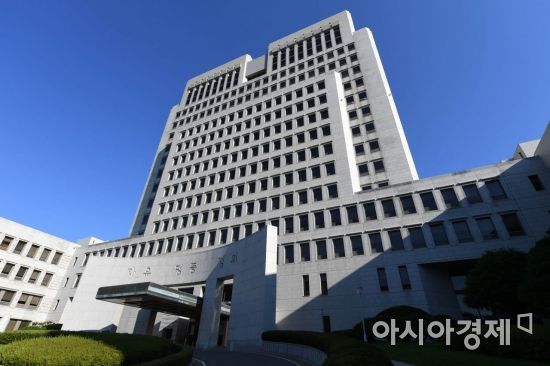
According to the legal community on the 7th, the Supreme Court's 2nd Division (Presiding Justice Kwon Young-jun) upheld the original sentence of 13 years imprisonment for Yoo (29), who was charged with attempted murder.
The court stated, "Considering the defendant's age, character, environment, relationship with the victim, motive, means and consequences of the crime, and circumstances after the crime as recorded, even when taking into account the mitigating factors argued in the appeal, it cannot be said that the original court's sentence of 13 years imprisonment is excessively unfair," thus rejecting Yoo's appeal.
Yoo was indicted for attempting to kill a teacher in his 40s with a weapon after breaking into a high school in Daedeok-gu, Daejeon, around 10 a.m. on August 4 last year.
He broke into the school and waited for about 30 minutes before attacking the victim with a weapon and fleeing, but was caught after about three hours. Fortunately, the victim was transported to the hospital emergency room and survived.
Since June 2021, Yoo had been receiving treatment for depressive disorder, and in August 2022, he was diagnosed with schizophrenia by his attending physician after exhibiting delusions such as "During high school, teachers slapped me, grabbed my ankles to drag me, and came to our house as a group to sexually molest me and my sister." The doctor recommended hospitalization, but Yoo refused. In December of the same year, during counseling sessions, he expressed thoughts like "Not taking revenge despite what happened makes me feel cowardly or truly stupid," but later discontinued treatment.
From the summer of 2022, plagued by delusions about his former high school teachers, Yoo decided to punish or take revenge on the teachers he believed were perpetrators. Starting in September of the same year, he began searching for these teachers using the Education Office website's 'Find a Teacher' service.
He tried to verify whether his delusions were true by asking family members, teachers, and classmates, but all denied or said they did not remember such incidents. Yoo also attempted to file complaints against the teachers at the police station but was rejected due to lack of evidence.
Then, Yoo resolved that if he could not legally punish the teachers, he would take revenge by other means. Believing the victim was the "ringleader of the group that harassed him," he found out the school where the victim worked and went there to commit the crime himself.
The first trial court sentenced Yoo to 18 years in prison and ordered him to wear an electronic location tracking device for 10 years.
The court pointed out, "This crime was committed because the defendant, suffering from schizophrenia, was deluded that the victim had harassed him during school days. He prepared a weapon in advance and went to the school where the victim worked to kill him but failed. Considering the motive, circumstances, method, and result, the crime is very serious."
The court also considered unfavorable factors for Yoo, such as committing the crime in broad daylight at a school with many people including students, showing no remorse during the investigation, and not making efforts to restore the victim.
However, the court took into account favorable factors such as Yoo admitting to the crime, being in a delusional state due to schizophrenia at the time, and having no prior convictions for similar offenses when determining the sentence.
The appellate court reduced Yoo's sentence to 13 years in prison.
The court stated, "The main motive for this crime was the defendant's delusion that the victim, a teacher during his high school years, physically abused or sexually assaulted him, which is a symptom of schizophrenia."
It added, "The defendant stated in his handwritten appeal and reflection letter that he has been continuously receiving medication while incarcerated, that his hatred and desire for revenge against the victim were delusions, and that the victim had actually treated him kindly. He acknowledged his crime and expressed remorse. The blameworthiness of the defendant is not higher than that of a person without mental illness."
The court further noted that the type of murder in this case does not fall under 'retaliatory murder' under the Act on the Aggravated Punishment of Specific Crimes or indiscriminate murder targeting multiple people, which are considered 'blameworthy motive murders.' Nor does it fall under 'mitigated motive murders' such as family murders committed under severely impaired judgment or where the victim is at fault. Instead, it is classified as a 'common motive murder.'
Most importantly, since the victim fortunately survived and the crime was an attempted murder, the defendant's culpability is less than that of a completed murder, which results in the irreversible loss of life. The sentencing guidelines for attempted murder reduce the recommended sentencing range for completed murder by one-third to two-thirds.
The court found the first trial's 18-year sentence, although within the recommended range for attempted murder, excessively harsh and unfair.
It explained, "The recommended sentencing range for attempted murder is so broad that it cannot be compared to other crimes. Considering the sentencing disparities between completed and attempted murder seen in lower courts, it is difficult to view the defendant's acknowledged and remorseful guilt as exceeding the lower bound of the aggravated range for 'common motive murder' or reaching the lower bound of the aggravated range for 'blameworthy motive murder' under the sentencing guidelines for completed murder."
Considering these factors along with the defendant's age, occupation, character, environment, means and consequences of the crime, motive, and circumstances after the crime revealed during the trial, the appellate court concluded that the original sentence was excessively severe and unjust.
Yoo appealed again, but the Supreme Court also found no problem with the appellate court's judgment.
© The Asia Business Daily(www.asiae.co.kr). All rights reserved.
![Clutching a Stolen Dior Bag, Saying "I Hate Being Poor but Real"... The Grotesque Con of a "Human Knockoff" [Slate]](https://cwcontent.asiae.co.kr/asiaresize/183/2026021902243444107_1771435474.jpg)















