Shinichi Uchida, BOJ Deputy Governor, Makes First Official Statement
Nikkei Rises 2% in Morning, Yen/Dollar Exchange Rate Trends Upward
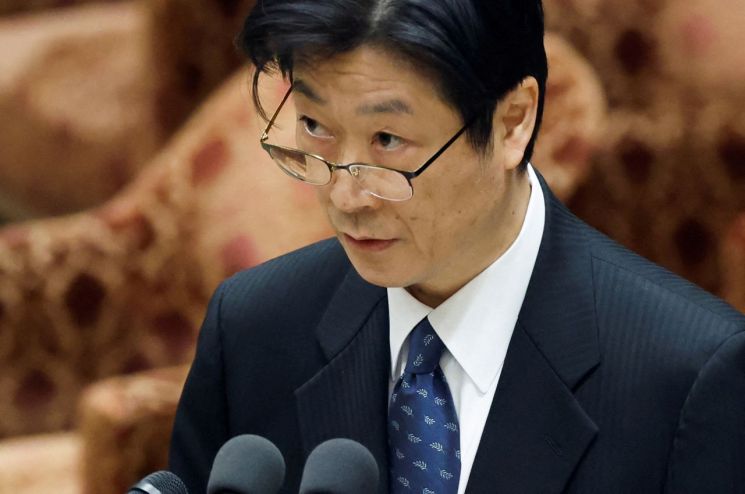
Shinichi Uchida, Deputy Governor of the Bank of Japan (BOJ), stated on the 7th that "interest rates will not be raised in a situation where the financial capital market is unstable." This is interpreted as the authorities sending a dovish (monetary easing preference) signal to the market after Japan's rapid interest rate hike was pointed out as the cause of increased volatility in global financial markets.
According to Nihon Keizai Shimbun (Nikkei), Deputy Governor Uchida said at a lecture for businesspeople held in Hokkaido on the same day, "Because sharp volatility is appearing in domestic and international financial markets, it is necessary to maintain the current level of accommodative monetary policy for the time being," and added, "Interest rates will not be raised when the financial market is unstable." This is the first official statement from a BOJ official since the central bank's benchmark interest rate hike on the 31st of last month.
Regarding the background of the BOJ's short-term policy rate hike, he explained, "It was a decision made with the consideration that import prices would rise again due to the depreciation of the yen," and added, "Additional rate hikes will be made on the condition that the economy and inflation targets are continuously achieved." Earlier, BOJ Governor Kazuo Ueda mentioned at a press conference, "Considering that real interest rates are at an extremely low level, if future economic and inflation forecasts are realized, policy rates will continue to be raised accordingly."
Following Deputy Governor Uchida's remarks on the day, concerns about additional rate hikes were alleviated, and the Nikkei 225 average stock price (Nikkei index) closed the morning session up 2%. Stock prices rose mainly in export stocks such as Toyota Motor due to expectations of yen weakness. Around 10 a.m. that day, the dollar-yen exchange rate, which was trading in the mid-144 yen range per dollar, surged about 2.5 yen after Uchida's remarks. It is currently moving around 147.63 yen.
Earlier, the Tokyo stock market recorded its largest drop ever on the 5th, recreating the nightmare of the "Black Monday" in October 1987. One of the causes was pointed out to be the rapid narrowing of the US-Japan interest rate differential due to the BOJ's sharp rate hike, which led to massive unwinding of yen carry trades. At the lecture, Deputy Governor Uchida expressed the view that "the US economy is highly likely to achieve a soft landing, and the profitability of Japanese companies has also improved," and since the fundamentals of the two economies have not changed significantly, the recent series of market reactions are excessive.
Hirofumi Suzuki, Chief Foreign Exchange Strategist at Sumitomo Mitsui Banking Corporation, said, "Announcing that the monetary policy direction will be adjusted amid rapid changes in the financial market will provide relief to the market," and pointed out, "The yen is likely to depreciate." Takuya Kanda, an analyst at Gaitame.com Research Institute, evaluated, "The BOJ, which raised rates because it disliked yen weakness, seems to be indicating a halt to rate hikes this time because it dislikes stock price declines."
There are also pessimistic views. Charu Chanan, Head of Currency Strategy at Saxo Markets, said about Uchida's remarks, "They may bring some stability to the Japanese stock market immediately, but the US economic data and recession concerns, which were major catalysts for the recent decline, have not been completely resolved." Yuichi Kodama, an economist at Meiji Yasuda Research Institute, analyzed, "It is premature to assume that there will be no rate hikes before the end of the year based on Uchida's remarks," and predicted, "The BOJ is expected to raise rates to 0.5% before the end of the year."
Meanwhile, on the same day, the Japanese Ministry of Finance announced that the Japanese government and the BOJ purchased 5.9185 trillion yen (approximately 56 trillion won) worth of yen and sold dollars to prevent a collapse in the yen's value in April. Kyodo News reported that this was the largest intervention on a daily basis. On April 29, in the Asian foreign exchange market, the dollar-yen exchange rate exceeded the 160 yen level for the first time in 34 years and then plunged more than 4 yen. Market experts viewed this as intervention by Japanese foreign exchange authorities to curb the rapid yen depreciation, but officials said, "No comment on whether there was foreign exchange market intervention," and did not disclose whether intervention occurred.
© The Asia Business Daily(www.asiae.co.kr). All rights reserved.
![Clutching a Stolen Dior Bag, Saying "I Hate Being Poor but Real"... The Grotesque Con of a "Human Knockoff" [Slate]](https://cwcontent.asiae.co.kr/asiaresize/183/2026021902243444107_1771435474.jpg)















