Recruitment Period Extended Until the 16th... Second Half Training Starting in September
Non-Emergency Patients Face Higher Emergency Room Medical Expenses Out-of-Pocket
As the recruitment rate for residents in the second half of the year remains low, the government will resume resident recruitment starting from the 9th of this month. Although the number of resigned residents returning to training sites has more than doubled in the past week, most have been employed as general practitioners in medical institutions rather than training hospitals. To alleviate the medical service gap and emergency room burden caused by the prolonged collective resignation of residents, the government has decided to gradually increase the out-of-pocket medical expenses for non-emergency patients visiting emergency centers.
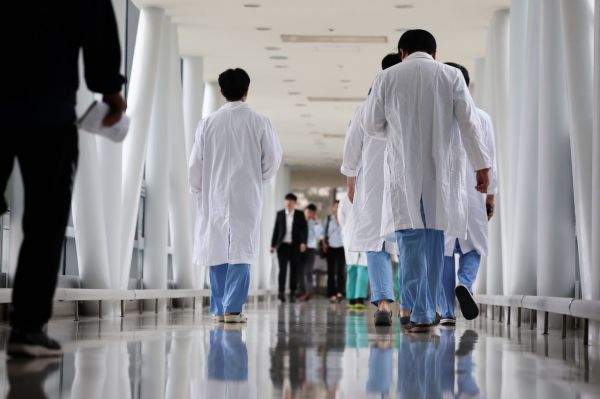
On the 7th, Jeong Yunsun, the 1st Controller of the Central Disaster and Safety Countermeasures Headquarters (Director of Health and Medical Policy at the Ministry of Health and Welfare), held a briefing at the Government Seoul Office regarding the doctors' collective action and announced the extension of the recruitment schedule for residents in the second half of the year.
In the previous recruitment conducted last month for the second half of the year, only 104 out of 7,645 eligible candidates applied, resulting in a low application rate of 1.3%. Accordingly, the Ministry of Health and Welfare will conduct additional recruitment for residents starting from the 9th. First-year residents will be recruited until the 14th, and second- to fourth-year residents and interns until the 16th. Starting with the written exam for first-year residents on the 17th, each hospital will proceed with their selection procedures until the end of August, aiming to begin training in the second half of the year from September.
As of the 5th, 1,091 residents have returned to training sites. Among the 5,701 resigned residents, about 11%, or 625, have been employed at general hospitals and other institutions, which is more than double the 258 recorded a week earlier.
However, the Ministry of Health and Welfare explained that many of these individuals have been employed as general practitioners in hospital-level medical institutions rather than as residents. Among the resigned residents, 91 have applied for the second half resident recruitment.
Jeong, the 1st Controller, stated, "We have decided to extend the recruitment period to provide as many opportunities as possible for residents to return. If there are residents who intended to return but could not apply due to the short application period or social pressure, we encourage them to actively apply in this additional recruitment."
Meanwhile, the Central Disaster and Safety Countermeasures Headquarters discussed measures to maintain the emergency medical system as the number of moderate-severity patients visiting emergency rooms has increased beyond normal levels, limiting the treatment of severe and emergency diseases in many medical institutions and for many conditions.
First, to secure emergency room personnel necessary for maintaining the emergency medical system, the plan is to minimize the departure of specialists by continuing to support incentives for specialists using the increased 'emergency room specialist consultation fees,' as well as wages and on-call allowances for new and replacement personnel. Additionally, the recruitment of contracted doctors at emergency medical institutions will be encouraged, and public health doctors and military doctors will be assigned to regional emergency centers and area emergency centers lacking specialists.
To allow regional emergency centers to focus on treating severe patients, patients with moderate or lower severity will be actively transferred to local emergency centers or regional emergency institutions to reduce workload. In particular, institutions with sufficient personnel among local emergency centers will be designated as base regional centers to share the workload of area emergency centers. Furthermore, for mild and non-emergency patients visiting area emergency centers, the out-of-pocket medical expenses will be gradually increased to encourage patient distribution. Conversely, in cases of severe or emergency patients, they will be immediately transferred to hospitals capable of providing life-saving core treatments to protect patient lives and ensure linkage to hospitals capable of treatment.
Jeong, the 1st Controller, said, "Although the residents' collective action has entered its sixth month, the government will strengthen the emergency medical system to ensure no disruption in the treatment of severe and emergency patients, carefully monitor the management difficulties of large hospitals, and take all necessary measures required on the ground."
© The Asia Business Daily(www.asiae.co.kr). All rights reserved.
![Clutching a Stolen Dior Bag, Saying "I Hate Being Poor but Real"... The Grotesque Con of a "Human Knockoff" [Slate]](https://cwcontent.asiae.co.kr/asiaresize/183/2026021902243444107_1771435474.jpg)
















