Seoul City-Seoul Council Drug Special Committee Chair Kim Young-ok Hosts
Workshop to Strengthen Treatment and Rehabilitation Policies for Drug Addicts
'Seoul City Drug Management Center' Initiative... Building Integrated Services
Seoul City announced on the 7th that it will hold the 'Seoul City Narcotics Management Policy Workshop' to discuss policy directions for narcotics response with experts. Currently, Seoul City is considering various policies, including the establishment of the 'Seoul City Narcotics Management Center' for patients addicted to narcotics.
This workshop is co-hosted by Seoul City and Kim Young-ok, Chairperson of the 'Seoul Metropolitan Council Special Committee for a Narcotics-Free Seoul,' to review Seoul's narcotics response policies and incorporate suggestions from experts and discussants into policy.
The first presentation, titled 'Current Status of Narcotics and Suggestions for Seoul City's Narcotics Response Measures,' will be delivered by Professor Jang Ok-jin of the Department of Psychiatry at Inje University Haeundae Paik Hospital. Professor Jang is expected to analyze the severity of Korea's narcotics problem, the response personnel and systems, and suggest establishing governance based on a field survey to continuously discuss narcotics response.
The second presentation, 'Policy Directions for Treatment and Rehabilitation of Narcotics Addicts in Seoul,' will be given by addiction treatment specialist Dr. Cho Sung-nam of Eunpyeong Hospital. Dr. Cho will address the rapid increase in juvenile and twenties narcotics offenders and addiction issues, and mention the direction for building treatment and rehabilitation infrastructure within the local community.
The discussion will be chaired by Professor Lee Sang-gyu of Hallym University College of Medicine, with participation from five members including Professor Kim Jang-rae of the Department of Psychiatry at the National Medical Center, Kim Nami, Head of the Department of Addiction Studies at Samyook University, and Lee Han-deok, former Head of Addiction Rehabilitation Team at the Korea Anti-Drug Movement Headquarters.
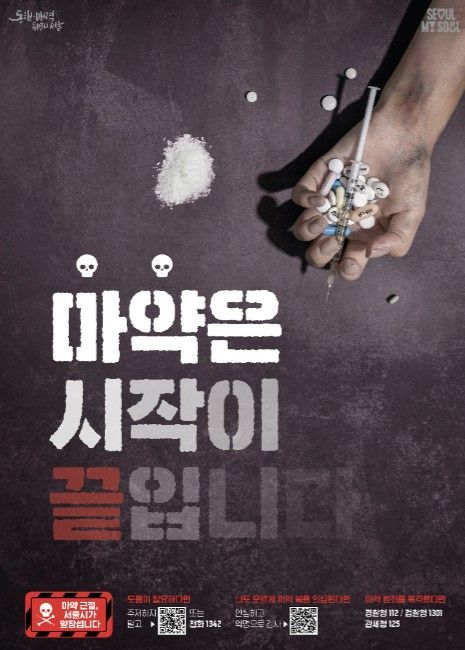
Currently, Seoul City has established a comprehensive narcotics management plan and created a dedicated team to respond to narcotics threatening daily life, such as last year's narcotics beverage incident in the Gangnam academy district, implementing prevention, crackdown, treatment, and rehabilitation policies comprehensively. In particular, to protect the health of citizens including youth, Seoul is promoting the establishment of a 'Seoul-type testing, treatment, and rehabilitation system' and focusing on narcotics prevention education and publicity to raise awareness among all citizens.
To facilitate easy access to testing, 'anonymous narcotics testing' is being conducted at health centers in 25 autonomous districts. Victims exposed to narcotics or citizens wishing to be tested can receive free testing, which covers six types of narcotics (Philopon, marijuana, morphine, cocaine, amphetamine, ecstasy). To enable narcotics addicts to receive treatment nearby, Seoul has designated and operates 24 'Narcotics Addiction Treatment Companion Clinics,' the first of their kind nationwide. These clinics can be accessed through related organizations such as the Korea Anti-Drug Movement Headquarters (telephone counseling center 1342) and the city's Integrated Addiction Management Support Center.
Additionally, Seoul is promoting the establishment of the 'Seoul City Narcotics Management Center (tentative name),' which will have integrated functions of counseling, treatment, rehabilitation, research, and education for narcotics addicts. This center plans to provide integrated counseling, treatment, and rehabilitation services by linking public and private resources, while simultaneously performing research and educational functions. It aims to open in June 2025, focusing on outpatient care. Choi Hyun-jung, Director of Seoul City's Health and Medical Policy Division, added, "We are also putting effort into narcotics prevention education," and explained, "The number of professional instructors will be expanded to 50 in 2025 and 100 in 2026."
© The Asia Business Daily(www.asiae.co.kr). All rights reserved.
![Clutching a Stolen Dior Bag, Saying "I Hate Being Poor but Real"... The Grotesque Con of a "Human Knockoff" [Slate]](https://cwcontent.asiae.co.kr/asiaresize/183/2026021902243444107_1771435474.jpg)















