Cases of Receiving Benefits Under Open Conditions but Not Keeping Promises Increase
Seoul City to Create Detailed Standards for Management
Continuous Facility Opening Commitment, Legal Amendments, and Strong Administrative Measures
The Seoul Metropolitan Government will strengthen management and supervision of apartment complexes that fail to keep their promises to open public facilities after occupancy. They will secure commitments to continue facility openings and entrust the operation rights of public facilities to district offices. Administrative measures will be taken if these commitments are not fulfilled. Legal amendments will also be pursued.
On the 7th, Seoul announced that it will establish and implement the "Standards for Opening and Operating Resident Community Facilities in Multi-family Housing" containing these measures.
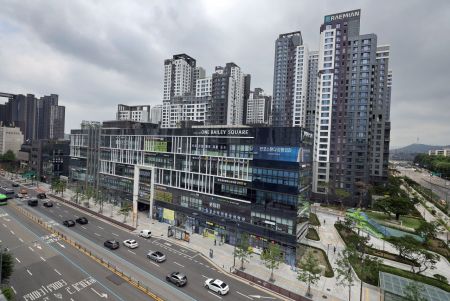
Currently, there are a total of 31 redevelopment project sites that have agreed to open resident community facilities. These sites were designated as special architectural zones and received benefits such as increased floor area ratio on the condition that they open resident community facilities to the public. However, cases have occurred where complexes such as Acro River Park and Raemian One Veil in Seocho-gu, which have already been occupied, failed to keep their opening promises after occupancy.
The city explained that it expects the number of complexes opening resident community facilities to increase and has therefore prepared standards for opening and operating these facilities.
First, from the architectural committee review stage when the special architectural zone is designated, matters related to facility opening will be continuously specified at each project progress stage, including sales, completion, and formation of the residents' representative meeting. This will be explicitly stated in official documents such as the special architectural zone designation notice, project implementation approval conditions, and building register to secure commitments. Facility opening will also be specified in the resident recruitment announcement to provide sufficient prior explanation to prospective residents, and separate consent will be obtained at the time of sales contracts to be attached to the contract documents.
Additionally, to prevent cases where facilities are opened but usage fees for outsiders are set prohibitively high, making actual use difficult, the operation rights of resident community facilities will be entrusted to district offices. Facility operators must decide operation methods and usage fees according to the district office’s decisions.
If facility opening is not implemented, administrative measures will be taken. The city plans to impose construction performance fines and register the building as a violating structure in the building register, applying strong administrative guidance. Various permits such as for change of use will also be restricted. Benefits such as subsidies for model complexes will be excluded.
Related legal amendments will also be pursued. In the "Multi-family Housing Management Act," which governs management of multi-family housing complexes after occupancy, legal grounds will be strengthened by specifying that the residents' representative meeting must comply if the project entity such as the association has promised facility opening and operation.
Han Byung-yong, Director of the Housing Office at Seoul City, said, "It is an unacceptable serious wrongdoing to receive incentives such as relaxed spacing between buildings on the condition of opening some resident community facilities and then break that promise. As large-scale complexes designated as special architectural zones continue to be built, we will ensure that the opening of resident community facilities proceeds smoothly without conflict."
© The Asia Business Daily(www.asiae.co.kr). All rights reserved.
![Clutching a Stolen Dior Bag, Saying "I Hate Being Poor but Real"... The Grotesque Con of a "Human Knockoff" [Slate]](https://cwcontent.asiae.co.kr/asiaresize/183/2026021902243444107_1771435474.jpg)















