"CXMT Production Begins"
Building Supply Chain Independence Amid US Sanctions
Gap with Korea May Narrow to 2-3 Years
China is reported to have started mass production of high-bandwidth memory (HBM). Although the products are older models with significantly lower performance compared to Samsung Electronics or SK Hynix, the fact that the roadmap has been advanced by 1 to 2 years ahead of expectations is seen as a sign of technological pursuit.
According to industry sources on the 7th, Taiwan's Digitimes recently reported that China's leading memory company Changxin Memory Technologies (CXMT) has begun production of the 2nd generation HBM, HBM2. Although yield and production volume remain uncertain, the timeline has been advanced by about two years from the initially expected 2026. CXMT is also reportedly considering establishing a production line capable of producing 50,000 12-inch wafers per month at its HBM fab located in the Hefei region. Considering that SK Hynix and Samsung Electronics have HBM production capacities of 120,000 to 130,000 wafers per month, this is not a negligible scale. The production capacity of the US-based Micron is about 20,000 wafers per month.
Looking at China's roadmap so far, it appears that instead of immediately developing and mass-producing cutting-edge HBM like domestic companies, the strategy is to achieve results starting from older products to meet the demand for HBM used in AI accelerators that can be utilized domestically. The top priority is to establish supply chain independence without relying on the US and South Korea.
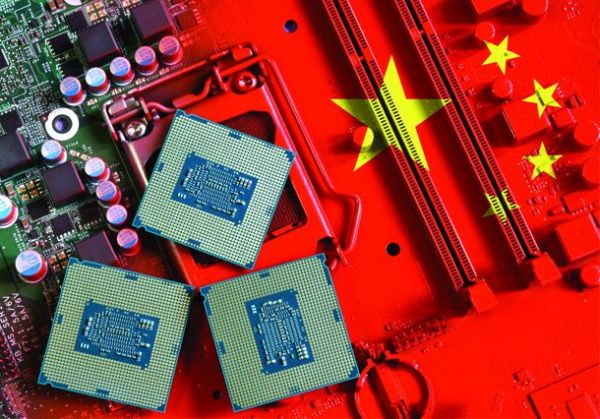
China is rushing HBM mass production due to instability in overseas supply caused by US sanctions. In particular, China has more demand for older generations like 2nd generation HBM rather than the latest 5th generation because it cannot utilize GPUs or NPUs used in high-performance AI accelerators. The most popular HBM in China is Samsung Electronics' HBM2, but there are concerns about potential supply disruptions due to US restrictions.
Industry experts believe that considering product yield and other factors, it will take more time for China to stabilize HBM mass production. However, since Chinese memory companies have started HBM production, the possibility of them advancing in the market cannot be ruled out. CXMT is also known to be pursuing HBM3 technology development.
China has made securing HBM manufacturing technology a national project. National-level support is also substantial. In May, the Chinese State Council announced the establishment of the "National Integrated Circuit Industry Investment Fund Phase 3." The fund size is 340 billion yuan (approximately 65 trillion KRW), the largest ever, and this fund is expected to focus investments not only on semiconductor materials, parts, and equipment but also on HBM and AI semiconductors.
Kim Yang-peng, a senior researcher at the Korea Institute for Industrial Economics & Trade, said, "I don't know how China has built its HBM development and production capabilities, but the yield and marketability will likely be inferior," adding, "If proper equipment is introduced to China, the technology gap with domestic companies could be narrowed to about 2 to 3 years."
© The Asia Business Daily(www.asiae.co.kr). All rights reserved.

















