$5.6 Trillion Global Market in 2022
8.6% Annual Growth Rate Expected Until 2027
There has been a call for policy support to foster major wellness industries such as exercise and healthcare, traditional and complementary medicine as export industries. Wellness refers to health management activities performed by consumers for prevention rather than treatment of diseases.
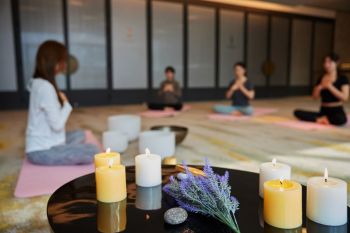 Lotte Hotel & Resort's lifestyle hotel brand L7 Gangnam is collaborating with wellness platform Dallaem to host the 'Wellness Weekend.'
 [Photo by Lotte Hotel]
Source: Mirae Economy (https://www.mirae-biz.com)
According to the report "Global Wellness Industry Growth and Analysis of Promising Export Sectors in Korea" released on the 7th by the Korea International Trade Association's Institute for International Trade and Commerce, the global wellness industry size was $5.6 trillion (approximately 7,710 trillion KRW) in 2022. It is expected to grow at an average annual rate of 8.6% until 2027. North America and Europe, which account for more than 60% of the global wellness market, are leading market growth.
The size of Korea's industry was about $113 billion (approximately 156 trillion KRW) in 2022, ranking 9th in the world. It grew at an average annual rate of 4% over the four years from 2019 to 2022. The domestic wellness market was confirmed to consist of exercise and healthcare, traditional and complementary medicine, nutritional habits, and beauty care, which together account for about 72% of the total.
The report highlighted the export industrialization potential of exercise and healthcare as well as traditional and complementary medicine. Korea's exercise and healthcare industry has a distinctive edge in the adoption of digital technology. Numerous medical device companies and startups are targeting overseas markets by launching health management devices and solutions based on innovative technologies. Representative companies include i-SENS (blood glucose meters), Loople (biological rhythm recovery devices), Ceragem (health management devices), and LuxLab (training devices).
Demand for traditional and complementary medicine is also increasing in Western countries. The Korean medicine industry has higher competitiveness than traditional medicines from other cultures due to its modern treatment and research infrastructure.
Lim Ji-hoon, senior researcher at the Korea International Trade Association, said, "Considering the global market size and growth trend of the wellness industry, Korean companies' exports are still at an early stage," adding, "It is necessary to promote policies to revitalize the domestic wellness industry linked to the tourism industry, establish standards for fostering export industries, prepare related laws, support research and development (R&D), and provide testbeds for verifying new technologies."
© The Asia Business Daily(www.asiae.co.kr). All rights reserved.

















