Medical Reform Special Committee Briefs on Progress of Specialist and PA-Centered Hospitals
Gradual Introduction of Multi-Institutional Residency Training System
Patients Referred by Partner Hospitals Receive Priority Treatment at Tertiary Hospitals
The government is transitioning tertiary hospitals to a structure centered on specialized personnel, gradually reducing the reliance on resident doctors, who currently make up an average of 40%, to half or less, below 20%. Additionally, by fostering tertiary hospitals as central cooperative hospitals within their regions, a 'specialized referral and return system' will be introduced to ensure that patients requested by cooperative hospitals receive priority treatment.
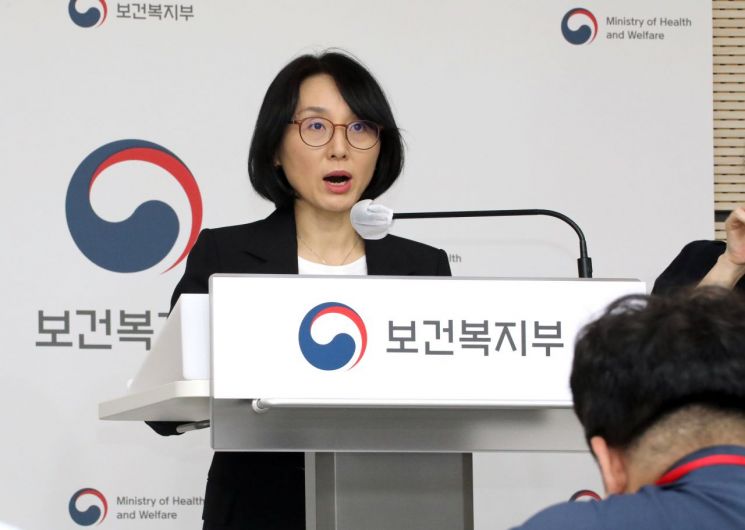
On the 6th, the Medical Reform Promotion Team of the Ministry of Health and Welfare held a briefing at the Government Complex Sejong to explain the purpose, progress stages, and future plans of the government’s ongoing support project for the structural transformation of tertiary hospitals.
Team Leader Jeong Gyeong-sil said, "There are concerns about whether the transition of tertiary hospitals to specialized personnel-centered hospitals can be achieved if the output of specialists is delayed due to prolonged resident doctor shortages. However, if we reduce the treatment of mild patients and restructure the treatment system to focus on severe cases while redesigning tasks around specialized personnel, it is definitely possible."
She added, "We plan to actively support the introduction of hospital-based training programs and work efficiency processes so that tasks previously handled by resident doctors can be managed by specialists and physician assistant (PA) nurses."
To this end, efforts to improve the resident training environment will continue first. Team Leader Jeong said, "We will establish a cooperative training system, such as rotational training between tertiary hospitals and cooperative hospitals, to allow residents to gain diverse clinical experiences through a multi-institutional cooperative training system, which will be introduced step-by-step. Through this, we will gradually reduce the reliance on resident labor, which currently accounts for about 40%, to half or less, below 20%."
She also explained, "Instead of uniformly reducing resident training hours, adjustments will be made according to the realities of the field and specialties to minimize the impact on the field while supporting residents to grow into competent specialists through diverse and intensive training."
Tertiary hospitals will be transformed into centers focusing on severe patients, significantly strengthening conditions to concentrate on treating appropriate diseases such as severe, emergency, and rare incurable diseases.
Team Leader Jeong said, "Over about three years, we will raise the proportion of severe patients, currently around 50%, to 60%, and when designating the 6th term tertiary hospitals in 2027, we will appropriately raise the lower limit of the proportion of 'inpatients with specialized treatment disease groups,' which is currently 34%, as the standard for severe cases." She added, "We are also actively collecting opinions from the medical field that the current criteria for severe patients need to be improved to transition to a hospital centered on severe patients."
She continued, "We will strengthen the role of tertiary hospitals as 'central cooperative hospitals' within their regions, leading regional medical capabilities. When promoting the tertiary hospital structural transformation support project, we will ensure the establishment of strong cooperative systems, such as forming networks among more than 10 cooperative hospitals."
In particular, the existing formal referral and return system will be completely revamped to establish a 'specialized referral and return system' where doctors’ professional judgments enable tertiary hospitals and cooperative hospitals to actively refer and return patients.
Team Leader Jeong emphasized, "Under the specialized referral and return system, patients will receive priority treatment, and if symptoms change, they will be able to receive priority treatment at tertiary hospitals at any time through a fast track. The reduction of hospital beds will mark the beginning of tertiary hospitals focusing on severe treatment and shifting from quantity to quality."
© The Asia Business Daily(www.asiae.co.kr). All rights reserved.
![Clutching a Stolen Dior Bag, Saying "I Hate Being Poor but Real"... The Grotesque Con of a "Human Knockoff" [Slate]](https://cwcontent.asiae.co.kr/asiaresize/183/2026021902243444107_1771435474.jpg)















