On the 5th (local time), the Iranian government reaffirmed its intention to retaliate against Israel, stating that "the aggressor (Israel) must be punished."
According to Yonhap News on the same day, Nasser Kanaani, spokesperson for the Iranian Ministry of Foreign Affairs, said, "We do not want an escalation of tensions in the Middle East region," but added, "We will create deterrence in response to the Zionist regime's (Israel's) adventurous behavior."
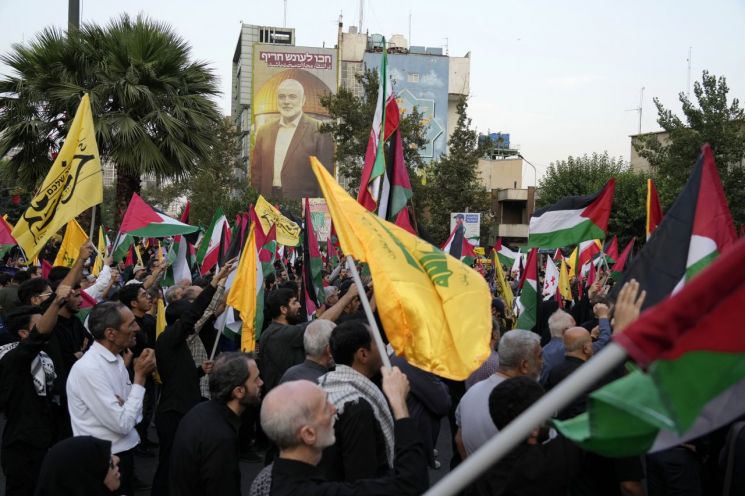
Earlier, on the 31st of last month, the assassination of Ismail Haniyeh, the top political leader of the Palestinian armed faction Hamas, in Tehran, the capital of Iran, had already led Iran and Hamas to announce retaliation against Israel.
Spokesperson Kanaani's emphasis on "deterrence" is interpreted as a statement underscoring the justification for retaliation against Israel. The Supreme Leader of Iran, Ayatollah Ali Khamenei, also ordered a strong response the day after Haniyeh's death, stating that "harsh retaliation against Israel is an obligation."
In Iran's theocratic system, the Supreme Leader, who is considered the "representative of God" and the ultimate decision-maker, is known to have his orders executed unless he cancels them himself. Some Western media, including the United States, have speculated that Iran might launch an attack as early as the 5th.
© The Asia Business Daily(www.asiae.co.kr). All rights reserved.
![Clutching a Stolen Dior Bag, Saying "I Hate Being Poor but Real"... The Grotesque Con of a "Human Knockoff" [Slate]](https://cwcontent.asiae.co.kr/asiaresize/183/2026021902243444107_1771435474.jpg)















