OpenAI, the developer of ChatGPT, has already developed technology that can check whether students have used ChatGPT dishonestly for assignments or papers. However, considering user backlash and the potential misuse of the technology, it has not been made public.
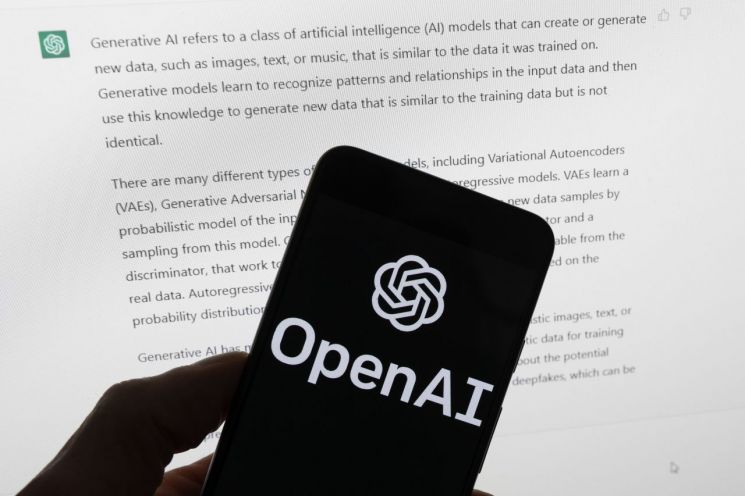
According to the Wall Street Journal (WSJ) on the 4th (local time), OpenAI has been ready to launch this technology for about a year. A source described it as "just a matter of pressing a button." This method identifies content generated by ChatGPT by displaying a 'watermark,' providing a score indicating the likelihood that the entire document or parts of it were written by ChatGPT. As a result, assignments and papers can be identified as written by ChatGPT with 99.9% accuracy.
OpenAI has been discussing this identification tool since before the release of ChatGPT in November 2022. A source conveyed that internal debates have continued since then over transparency versus attracting more users. According to a survey conducted by OpenAI among loyal ChatGPT users, one-third of users said they might stop using ChatGPT if this cheating detection technology were introduced. Additionally, 69% of respondents believed that the results of the cheating detection technology would lead to false accusations regarding AI use.
In particular, OpenAI is reportedly concerned that this technology could disadvantage users whose native language is not English, and that someone might misuse the technology to attack specific individuals or groups. Internally, there are also concerns that this technology could degrade the writing quality of ChatGPT, but sources added that tests conducted earlier this year confirmed no adverse effects. WSJ reported, "There is broad consensus within OpenAI that deciding the scope of the technology’s release is difficult," adding, "If too few people have access to the identification tool, it will be ineffective; if too many have access, it could be misused."
Generative AI can produce entire essays or papers in just seconds. Accordingly, frontline schools want this technology to be made public to prevent AI cheating by students. Alexa Guterman, an English teacher at a New York City high school, told WSJ, "It’s a huge problem," and "It’s an issue every teacher I work with has talked about." According to a recent survey by the nonprofit Democracy Tech Center, 59% of U.S. middle and high school teachers believed students had used AI to complete assignments. This figure has increased by 17 percentage points compared to a year ago.
Sam Altman, CEO of OpenAI, and Mira Murati, CTO, also participated in discussions about this technology. Sources said that while CEO Altman encouraged the project itself, he did not push for its public release.
© The Asia Business Daily(www.asiae.co.kr). All rights reserved.
![Clutching a Stolen Dior Bag, Saying "I Hate Being Poor but Real"... The Grotesque Con of a "Human Knockoff" [Slate]](https://cwcontent.asiae.co.kr/asiaresize/183/2026021902243444107_1771435474.jpg)















