Budget Size Increased Compared to the 7th Elected Term, Local Government Bonds Significantly Reduced
New Local Bonds Issuance Minimized, Focus on Early Repayment
Gumi City in North Gyeongsang Province announced that it will actively manage local bonds, which could become an obstacle to the city's finances in the future, to strengthen fiscal soundness.
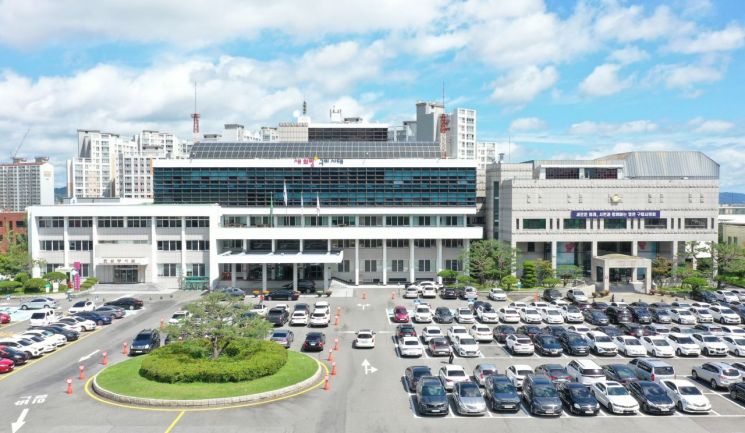
During the previous 7th term of local government, the scale of Gumi City's local bonds was the highest in the province. However, since the 8th term, the city has secured as much budget as possible by attracting national and provincial government projects, thereby curbing the issuance of new local bonds.
Through these efforts, the city is pursuing early repayment of local bond principal and significantly reducing the scale of local bonds.
As of the end of 2021 (the 7th term), the city's local 'debt' (local bonds) stood at 206.5 billion KRW. However, after the start of the 8th term, the city utilized net surplus funds generated after settlement to make early repayments of 30.5 billion KRW in 2022 and 22.2 billion KRW in 2024.
As a result, as of the end of 2024, the city's local 'debt' (local bonds) is expected to decrease to 159.4 billion KRW (a 22.8% reduction), improving fiscal soundness.
In the settlement, 'liabilities' refer to current obligations, including debt, that are expected to result in future outflows of resources (funds), and include contingent liabilities for which the timing and amount of payment are not yet determined.
In the 2023 fiscal year settlement, 'liabilities' increased mainly due to other non-current liabilities such as pending lawsuits. This is different from 'debt,' which has a stronger nature of confirmed obligations.
There are some concerns about a slight decrease in the execution rate per capita in the settlement. However, this phenomenon occurred because the budget size increased by 496 billion KRW in just two years after the 8th term, due to increased national and provincial government funding. The delay in single-year execution is due to the carryover of purpose-specific projects that were not executed according to annual plans, but this does not mean the budget is being wasted or left unexecuted.
The city is making every effort to attract national and provincial government projects from a mid- to long-term perspective for the transformation of Gumi. In the future, it plans to provide a variety of administrative services to citizens by closely forecasting revenues, minimizing budget execution balances, and increasing the early execution rate of single-year budgets.
Mayor Kim Jangho stated, "Since the launch of the 8th term, we have responded to the government's austerity measures due to the economic downturn with strong expenditure restructuring and proactive debt management, and we will repay high-interest financial bonds early." He added, "The interest savings will be prioritized for building infrastructure to improve residential conditions and for projects to boost the local economy, thereby actively enhancing administrative services for citizens."
© The Asia Business Daily(www.asiae.co.kr). All rights reserved.
![Clutching a Stolen Dior Bag, Saying "I Hate Being Poor but Real"... The Grotesque Con of a "Human Knockoff" [Slate]](https://cwcontent.asiae.co.kr/asiaresize/183/2026021902243444107_1771435474.jpg)
















