"Inhahara. It’s time. (Cut. It`s time.)"
Dr. Claudia Sahm, who devised the so-called ‘Sahm’s rule’ to detect U.S. recessions based on the unemployment rate, has argued that the Federal Reserve (Fed) should immediately begin cutting the benchmark interest rate.
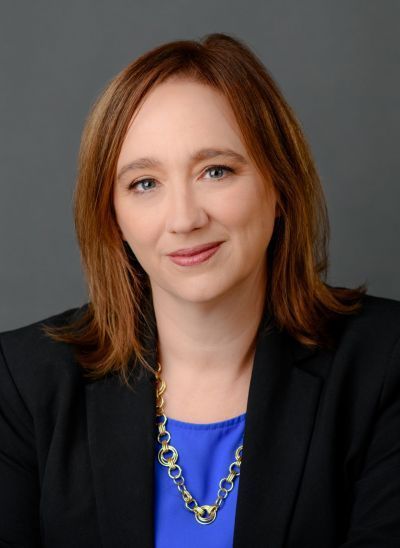
On the 30th (local time), Dr. Sahm stated in the SAHM (Stay-at-Home Macro) consulting newsletter titled "Cut" that "the already confirmed progress on inflation justifies the first rate cut."
She pointed out that the personal consumption expenditures (PCE) price index, a key inflation indicator monitored by the Fed, has narrowed to within 0.5 percentage points of the inflation target (2%), while the current interest rate is 3 percentage points higher than before the pandemic. She also mentioned the recent cooling trend in the labor market as a background for discussing rate cuts.
Dr. Sahm acknowledged that "there is no urgency to cut rates this week," but argued that "although economic growth and the labor market remain robust, this is not a reason to wait (to cut rates)." She added, "Good monetary policy does not delay for urgent situations," emphasizing that "once inflation normalizes, the Fed’s monetary policy should also normalize."
Specifically, she identified four inflation-related reasons why the Fed should have confidence in cutting rates at the July Federal Open Market Committee (FOMC) meeting. First, inflation indicators confirmed since the June meeting suggest that the indicators which raised concerns about a rebound earlier this year are likely due to seasonal adjustments or one-off factors. She also noted that the monthly rent inflation rate has fallen to pandemic levels and that wage growth is easing. Additionally, citing the Beige Book and other sources, she pointed out that consumers have become more price-sensitive again, limiting companies’ ability to raise prices.
Dr. Sahm stated, "The basis for easing is clear," but warned, "Waiting until September would allow two more months of inflation and employment data to strengthen the case for rate cuts, but waiting longer could incur costs." She highlighted that monetary policy changes take considerable time to affect the real economy and cautioned, "Waiting could make gradual cuts difficult and create unwarranted urgency."
However, Dr. Sahm viewed the likelihood of the Fed cutting rates at the ongoing July FOMC meeting as low. The FOMC statement, to be released at 2 p.m. Eastern Time on the 31st, is expected to be interpreted as hawkish (favoring monetary tightening), while Fed Chair Jerome Powell’s press conference may somewhat soften this tone, though a hawkish aftertaste is anticipated.
Dr. Sahm assessed, "The Fed is not confident about inflation. It wants more data," adding, "The Fed does not want to appear weak on inflation nor reduce concerns about the labor market. No one wants to be Arthur Burns, the former Fed Chair who failed to control inflation." She further said, "The Fed is close enough, and if necessary, the data is sufficient," but noted, "The Fed is missing rate cut opportunities by wanting more data and even seems to want to take emergency measures later. That would be regrettable."
This is interpreted as a concern that the Fed’s excessively delayed normalization of monetary policy could unnecessarily heighten recession fears. Sahm’s rule, devised by Dr. Sahm, essentially identifies that a sudden recession may occur when the three-month moving average of the unemployment rate rises by 0.5 percentage points from the lowest point in the past 12 months. This has been validated in all past recessions since the 1970s, including the global financial crisis. According to data from the Federal Reserve Bank of St. Louis, as of June, the Sahm’s rule figure stands at 0.43 percentage points, approaching the threshold.
© The Asia Business Daily(www.asiae.co.kr). All rights reserved.
![Clutching a Stolen Dior Bag, Saying "I Hate Being Poor but Real"... The Grotesque Con of a "Human Knockoff" [Slate]](https://cwcontent.asiae.co.kr/asiaresize/183/2026021902243444107_1771435474.jpg)











