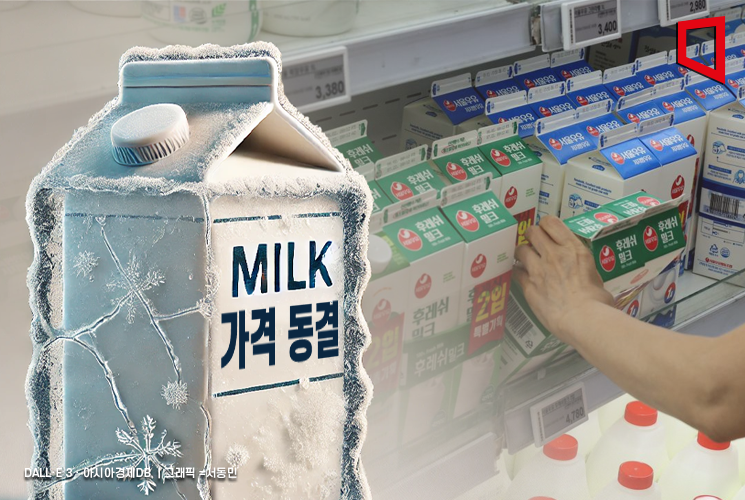
Dairy Companies Also Plan to Freeze White Milk Prices... "No Consumer Price Increase"
Raw milk producers and the dairy industry have decided not to raise raw milk prices considering the current inflation situation.
The Ministry of Agriculture, Food and Rural Affairs announced on the 30th that it decided to freeze raw milk prices in this year's price negotiations.
The negotiations between producers and the dairy industry on raw milk prices were held 14 times from June 11th, following Statistics Korea's announcement on May 30th that the 2023 milk production cost increased by 4.6% (44.14 KRW per liter) compared to 2022.
This negotiation applied a differentiated pricing system by usage, which the government established to promote the development of the dairy industry. Under the previous cost-linked system, which determined raw milk prices solely based on production costs, 90-110% of the production cost increase had to be reflected regardless of market conditions, which would have required raising raw milk prices by 40-49 KRW per liter. However, the differentiated pricing system by usage allows for consideration of both production cost fluctuations and raw milk supply and demand conditions (a 2% decrease in drinking milk consumption). As a result of this system reform, this negotiation reflected only 0-60% of the production cost increase, proceeding within a range of 0-26 KRW.
Originally, the negotiations were scheduled to take place throughout June, but as the situation worsened for all stakeholders?due to decreased milk consumption, increased imports of sterilized milk, rising feed costs, increased farm debt, and more farm closures?producers demanded the maximum increase of 26 KRW. On the other hand, the dairy industry requested a freeze, leading to a deadlock. Consequently, the negotiations were extended by one month until the end of July, but no progress was made due to significant differences in opinions between the two sides.
An official from the Ministry of Agriculture, Food and Rural Affairs stated, "The ministry actively persuaded both sides by proposing a mediation plan, and producers and the dairy industry agreed to freeze the prices of drinking milk products such as milk and fermented milk in the spirit of coexistence, considering the difficult inflation situation and the decline in drinking milk consumption." The official added, "Raw milk prices had continuously increased reflecting rising production costs since the reduction in 2016 (18 KRW), but due to the system reform, prices were frozen for the first time despite rising production costs."
Additionally, the price of processed milk used for processed dairy products such as cheese and powdered milk was reduced by 5 KRW from the current 887 KRW per liter. According to the government’s findings after the negotiation, with the freeze in raw milk prices, dairy companies such as Seoul Milk, Maeil, and Namyang also plan to freeze the price of white milk, so the Ministry of Agriculture, Food and Rural Affairs expects that consumer prices will not increase. Therefore, it is anticipated that there will be no price increases in milk-related processed foods, such as cafe latte price hikes caused by the so-called 'milkflation,' this year. The adjusted raw milk prices will be applied starting August 1.
Along with the raw milk price negotiations, negotiations determining the purchase volumes of raw milk by usage were conducted. It was decided to reduce drinking milk by 9,000 tons while increasing processed milk by 9,000 tons to respond to changes in dairy product consumption structure. The results of this negotiation suggest that, as originally intended by the government, the differentiated pricing system by usage will gradually contribute to restructuring production and increasing self-sufficiency by reflecting consumption changes (decrease in drinking milk and increase in processed milk). The usage-based purchase volumes decided this time will be applied for two years starting January next year.
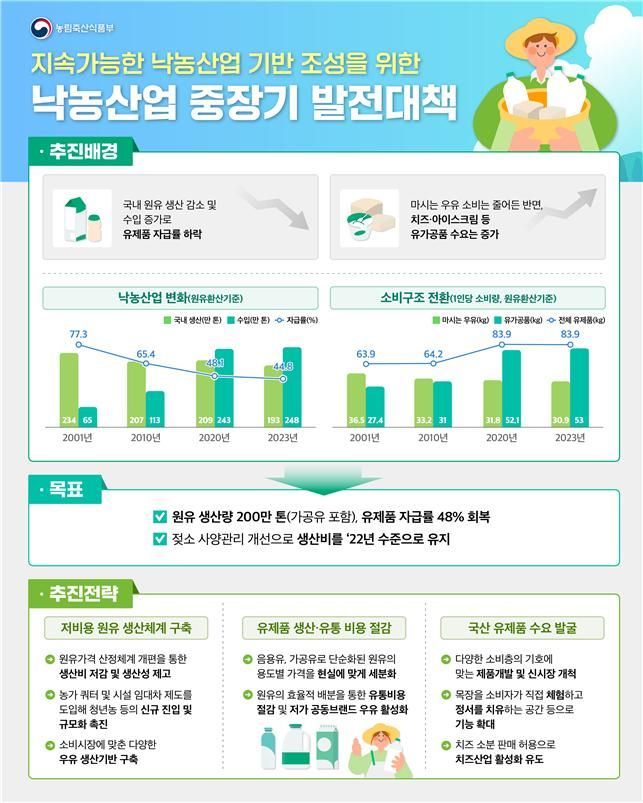
The Ministry of Agriculture, Food and Rural Affairs has been discussing measures for the development of the dairy industry with stakeholders such as producers and the dairy industry over 15 sessions since last October to establish the differentiated pricing system by usage and promote sustainable development of the dairy industry. Based on this, it prepared the 'Mid- to Long-term Development Plan for the Dairy Industry.' Through this plan, the ministry aims to secure a stable raw milk production base and increase self-sufficiency in the mid- to long-term, while stabilizing production costs through improved feeding management. The plan includes three core strategies: ▲ establishing a low-cost raw milk production system ▲ reducing production and distribution costs of dairy products ▲ discovering demand for domestic dairy products, to enhance the competitiveness of domestic raw milk.
Song Mi-ryeong, Minister of Agriculture, Food and Rural Affairs, said, "The conditions surrounding the dairy industry are not easy," and added, "We will enhance the competitiveness of domestic raw milk through cost reduction efforts so that consumers can purchase domestic dairy products at reasonable prices."
© The Asia Business Daily(www.asiae.co.kr). All rights reserved.
![Clutching a Stolen Dior Bag, Saying "I Hate Being Poor but Real"... The Grotesque Con of a "Human Knockoff" [Slate]](https://cwcontent.asiae.co.kr/asiaresize/183/2026021902243444107_1771435474.jpg)
















