25% of Greenhouse Gas Emissions from Schools in Seoul Public Buildings
Effective Reduction Encouraged through Customized Carbon Zero Plans for Each School
10 Elementary and Middle Schools Including Seoul Gyesang Elementary and Jungpyeong Middle School Participate, Targeting 10% Reduction in Electricity Usage Compared to Last Year
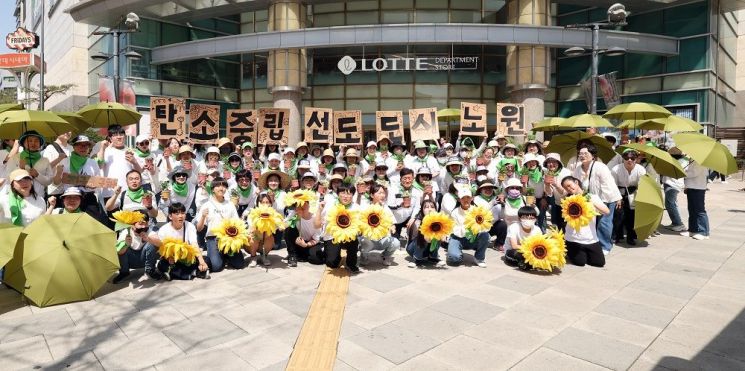
Nowon-gu, Seoul (Mayor Oh Seung-rok) announced that it will join hands with the Seoul Metropolitan Office of Education to reduce greenhouse gas emissions at 10 schools in the district.
The district focused on the fact that, as of 2018, buildings accounted for 61% of total greenhouse gas emissions, schools accounted for 25% of emissions among public buildings in Seoul, and the district has a large number of elementary and middle schools (ranked 1st in elementary schools and 2nd in middle schools), and thus launched a school greenhouse gas reduction project.
The "School Greenhouse Gas Reduction Project" will be carried out at 10 local schools that applied to participate in the "Carbon Zero Practice School" program, reducing greenhouse gases through data analysis and standardized models.
As a result of recruiting participating schools until the 15th, six elementary schools?Seoul Gyesang Elementary, Seoul Gongneung Elementary, Seoul Dongil Elementary, Seoul Cheonggye Elementary, Seoul Taereung Elementary, and Sangmyeong Elementary?and four middle schools?Gwangwoon Middle, Noil Middle, Wolgye Middle, and Jungpyeong Middle?applied, making a total of 10 schools participating.
According to research by the Seoul Metropolitan Office of Education, electricity accounts for about 48% of schools' carbon emissions, which is the highest proportion, and due to changes in school care functions and learning directions, electricity usage per student is gradually increasing. Based on this, the district set a goal with participating schools to reduce electricity usage by 10% compared to the previous year over six months from July to December. If electricity usage is successfully reduced, the case of the Carbon Zero Practice School will be expanded to general schools, laying the foundation for achieving school carbon neutrality by 2050.
To achieve the goal of reducing electricity usage, the district will first collect and analyze school energy consumption. By analyzing maximum power load and electricity bills, the district will estimate the savings effect and, based on diagnostic results, propose reduction measures for each school’s heating and cooling air conditioning systems and maximum power demand controllers, and support reduction equipment such as smart plugs.
From September, school members will actively carry out carbon reduction practices. Through voluntary efforts by faculty, students, and parents, monthly electricity usage and reduction status will be derived. A carbon report for each school will be prepared with experts, and based on the results, the district plans to produce a school greenhouse gas reduction guide and distribute it to all schools in Seoul.
Activities to enhance the carbon sensitivity of the school community and spread practices will also be supported. Efforts will be made to build consensus through carbon literacy education and campaigns targeting all students, focusing on 5th and 6th graders in elementary school and 1st graders in middle school, as well as practice activities by student and parent clubs.
Oh Seung-rok, Mayor of Nowon-gu, said, "I hope that carbon neutrality practices led by students will raise environmental sensitivity in the local community," and added, "We will continue to lead carbon neutrality and create a sustainable future by cooperating with local communities such as schools."
© The Asia Business Daily(www.asiae.co.kr). All rights reserved.
![Clutching a Stolen Dior Bag, Saying "I Hate Being Poor but Real"... The Grotesque Con of a "Human Knockoff" [Slate]](https://cwcontent.asiae.co.kr/asiaresize/183/2026021902243444107_1771435474.jpg)















