78.5 Patients Aged 0-6 in the 3rd Week of This Month... Highest Ever Surpassing 2019 Levels
Children Should Refrain from Attending Daycare and Kindergarten Before Full Recovery
Hand, foot, and mouth disease (HFMD) in infants and young children aged 0 to 6 has reached the highest level in the past 10 years, prompting health authorities to urge adherence to preventive measures.
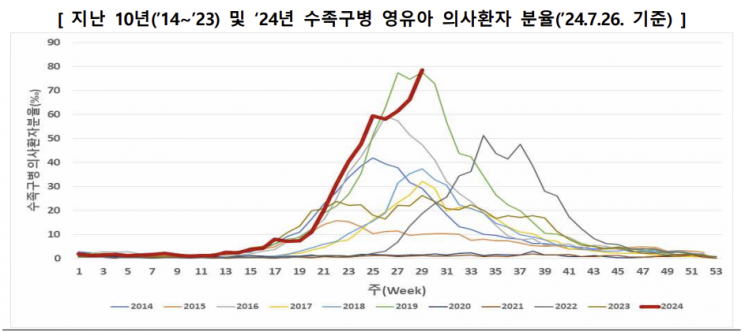
According to the HFMD sentinel surveillance results from the Korea Disease Control and Prevention Agency on the 29th, as of the third week of this month (14th to 20th), the proportion of HFMD patients among outpatients per 1,000 infants and young children reached 78.5, surpassing the previous peak of 77.6 in 2019.
The number of HFMD patients among domestic infants and young children has surged about 35% over four weeks, rising from 58.1 in the fourth week of last month to 61.5 in the first week of this month, 66.2 in the second week, and 78.5 in the third week.
Most HFMD patients are 18 years old or younger, including infants and young children. During the recent 3 to 4 years of the COVID-19 pandemic, HFMD outbreaks were minimal, leading to reduced herd immunity in the community. As a result, the disease is currently spreading mainly among infants and young children who have weaker immune systems and poor personal hygiene.
The main cause of HFMD is known to be Coxsackievirus, a type of enterovirus; however, there are various subtypes, and viruses such as Echovirus and Enterovirus 71 (EV-A71) can also cause the disease. Therefore, even if someone has had HFMD before, they can be infected again if the causative virus is different.
HFMD can be transmitted through contact with feces via hands or through respiratory secretions such as saliva, sputum, and nasal mucus from infected patients. Infection can also occur by touching contaminated objects handled by patients and then touching the mouth, which is why the disease mainly spreads among infants and young children who have poor personal hygiene and frequently engage in group activities.
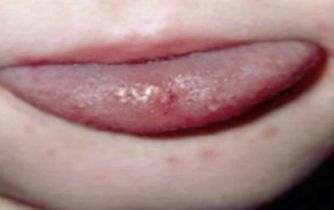
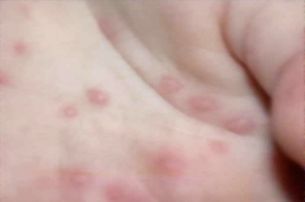
When infected with HFMD, rashes and blisters appear on the hands, feet, and mouth. Generally, symptoms such as fever, loss of appetite, sore throat, and fatigue appear for 2 to 3 days after onset, then improve and disappear naturally within 7 to 10 days.
In some cases, severe complications may occur. If a high fever above 38 degrees Celsius develops, or if symptoms such as weakness in the limbs, vomiting, or seizures appear, prompt medical attention should be sought.
Since there is no vaccine for HFMD, it is crucial to thoroughly practice personal hygiene, such as proper handwashing, and to take care to prevent transmission to others when infected.
To prevent transmission within families, caregivers in households with infected patients should wash their hands thoroughly after handling infants’ diapers and wash any clothing contaminated with excreta thoroughly. Childcare centers and kindergartens should strictly disinfect toys, playground equipment, doorknobs, and other frequently touched items and surrounding environments. Additionally, since infants and young children with HFMD are highly contagious, it is advisable to refrain from attending childcare centers or kindergartens until they have fully recovered.
© The Asia Business Daily(www.asiae.co.kr). All rights reserved.
![Clutching a Stolen Dior Bag, Saying "I Hate Being Poor but Real"... The Grotesque Con of a "Human Knockoff" [Slate]](https://cwcontent.asiae.co.kr/asiaresize/183/2026021902243444107_1771435474.jpg)

















