Bio Association 'Current Status and Outlook of the Biopharmaceutical CDMO Market'
Global CDMO Expected to Grow at an Annual Rate of 14.3%
Samsung Biologics Anticipated to Grow Through Aggressive Expansion
The global biopharmaceutical market size is expected to exceed 1,000 trillion KRW by 2028. As the overall market size rapidly grows, the trend of major big pharma companies outsourcing production to specialized Contract Development and Manufacturing Organizations (CDMOs) is increasing, making the growth of the CDMO industry even more prominent.
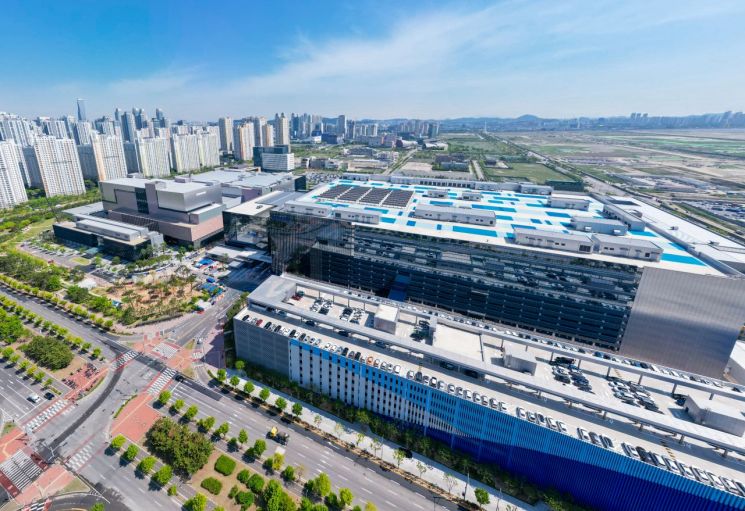
According to the "Global Biopharmaceutical CDMO Market Status and Outlook" report released by the Korea Bioindustry Association on the 29th, global biopharmaceutical sales last year amounted to $480.03 billion (approximately 665 trillion KRW). The biopharmaceutical market is expected to grow at an average annual rate of 9.0% over the next six years, surpassing 1,000 trillion KRW with $752.1 billion (about 1,042 trillion KRW) by 2028, and expanding to $806.3 billion (about 1,117 trillion KRW) by 2029. The share of biopharmaceuticals in the overall pharmaceutical industry is also projected to reach around 38.5% by 2028.
The biopharmaceutical CDMO market is expected to grow even faster. Biopharmaceutical CDMO sales are predicted to grow at an average annual rate of 14.3%, increasing from $19.68 billion last year to $43.85 billion (approximately 60.7 trillion KRW) by 2029. The report noted, "Biopharmaceuticals rely on CDMO services due to the advantages of automation during filling and finishing processes, which improve operations and minimize contamination," suggesting the potential for even greater growth.
 John Rim, CEO of Samsung Biologics, is presenting at the JP Morgan Healthcare Conference (JPMHC) last January.
 [Photo by Samsung Biologics]
As of last year, among major global CDMO companies, Samsung Biologics ranked 4th with a sales market share of 9.9%. Swiss company Lonza held the highest share at 25.6%, followed by China's WuXi Biologics (12.1%) and the U.S. Catalent (10.1%). After Samsung Biologics, the rankings were Japan's Fujifilm Diosynth Biotechnologies (6.8%), Germany's Boehringer Ingelheim (5.9%), and Japan's AGC Biologics (4.4%).
Although currently ranked 4th, Samsung Biologics is expected to rise to the top 3 as the market environment becomes increasingly favorable. The biggest beneficiary factor is the conflict between the U.S. and China. The U.S. Congress is pushing for a biosecurity law targeting WuXi Biologics due to concerns over genetic information leaks. With legislation expected within the year, there are concerns that biopharmaceuticals produced by WuXi Biologics may not be covered by U.S. public insurance if it becomes regulated. If the legislation passes, WuXi Biologics' sales market share is expected to decline significantly.
Additionally, Samsung Biologics' aggressive factory expansions and sales growth exceeding the market average are raising expectations for an increase in market share. Last year, Samsung Biologics recorded a sales growth rate of 23.1%, significantly surpassing the market average, with annual sales of 3.6946 trillion KRW. This year, the market expects sales to grow by 19.5% to 4.415 trillion KRW, exceeding the global average growth rate of 10.6%.
Samsung Biologics' 4th plant, completed last year, is expected to enter full "full operation" as early as this year, and the 5th plant with a production capacity of 180,000 liters is scheduled to be completed by April next year. Furthermore, the company plans to build all 6th to 8th plants by 2032, increasing total production capacity to 1,324,000 liters. Along with rapidly increasing production capacity, the order intake speed is also accelerating. Samsung Biologics has secured orders worth 2.5399 trillion KRW this year alone. Notably, earlier this month, it succeeded in securing a mega order worth $1.06 billion (approximately 1.4675 trillion KRW), demonstrating a focus on both the quantity and quality of orders.
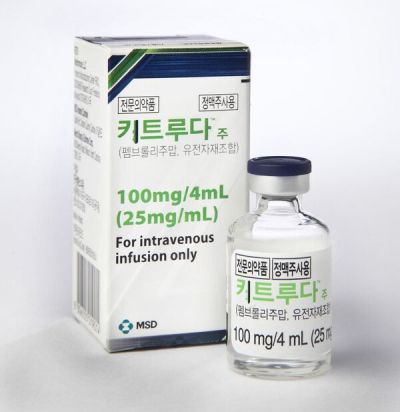
Looking at the sales outlook by biopharmaceutical field for this year, the oncology sector, which treats cancer, is expected to account for the largest share at 23.9%. Oncology is projected to continue growing, reaching 26.7% of the market by 2029, increasing its market share. The blockbuster drug with the highest sales this year is expected to be MSD's immuno-oncology drug Keytruda. Alongside this, Novo Nordisk's glucagon-like peptide-1 (GLP-1) class diabetes treatment Ozempic and Sanofi's atopic dermatitis and asthma treatment Dupixent are expected to be the top three biopharmaceutical sales leaders.
Among modalities (treatment approaches), platforms recently gaining attention such as cell and gene therapies (CGT) and antibody-drug conjugates (ADC) are expected to continue their growth trends. The CGT market is forecasted to grow at an average annual rate of 41.6% until 2029, reaching up to $55 billion (approximately 76 trillion KRW), while ADC is expected to grow at an average annual rate of 28.2%, reaching up to $40 billion (approximately 55 trillion KRW). However, the highest sales sector is anticipated to be the antibody therapy market, forming a market size of up to $365 billion (approximately 505 trillion KRW).
© The Asia Business Daily(www.asiae.co.kr). All rights reserved.



















