The Institute for Korean Historical Studies criticized on the 27th the inscription of the Japanese Sado Mine, a site of forced labor of Koreans during the Japanese colonial period, as a UNESCO World Heritage site, calling it "a diplomatic failure that conceded the truth of history to the Japanese government under the pretext of improving Korea-Japan relations."
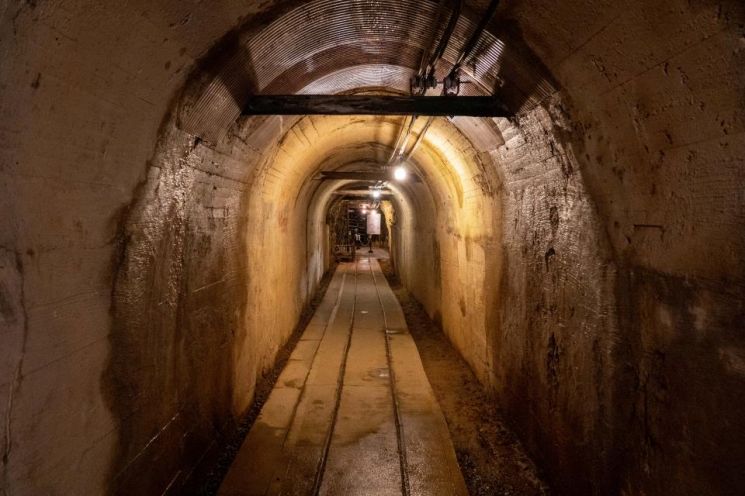
The Institute pointed out that at the UNESCO World Heritage Committee, the Japanese representative referred to the Korean forced laborers as "workers from the Korean Peninsula," stating, "This term was created by then Japanese Prime Minister Shinzo Abe after the October 2018 Supreme Court ruling on forced mobilization to deny the coercion and downplay the scale of forced labor."
They added, "Compared to the statements made by the Japanese government at the time of the inscription of the Meiji Industrial Revolution Sites as UNESCO World Heritage in 2015, this represents a significant regression," emphasizing, "It cannot be helped but to evaluate this as a result of the Japanese government enforcing historical denialism."
Regarding Japan's claim that exhibits related to Korean workers at the mine site have already been installed, the Institute rebutted, "The term 'forced mobilization' cannot be found in the exhibits, which are titled 'Life of Mine Workers Including Those from the Korean Peninsula.'"
The Institute for Korean Historical Studies added, "No matter how much the Japanese government tries to hide history, the history of forced mobilization of Koreans is an undeniable truth that cannot be concealed."
At the 46th UNESCO World Heritage Committee meeting held in New Delhi, India, the inscription of Sado Mine, applied for by Japan, was decided by unanimous consent on the same day.
© The Asia Business Daily(www.asiae.co.kr). All rights reserved.
![Clutching a Stolen Dior Bag, Saying "I Hate Being Poor but Real"... The Grotesque Con of a "Human Knockoff" [Slate]](https://cwcontent.asiae.co.kr/asiaresize/183/2026021902243444107_1771435474.jpg)
















