Vice Chairman Sangin Lee, Last 3 Hours at KCC
Opposition: "Impeachment Train Continues"... Normalization Unlikely
'Performance Decline' Dual Hardships for Domestic Media Industry
Lee Sang-in, the acting chairman of the Korea Communications Commission (KCC), who had been serving as the acting chairman, voluntarily resigned on the 26th amid impeachment pressure from the opposition party. As the heads of the KCC have stepped down one after another due to the ruling and opposition parties' struggle for control over public broadcasting, the KCC, which oversees broadcasting, telecommunications, and media policies, has been effectively paralyzed.
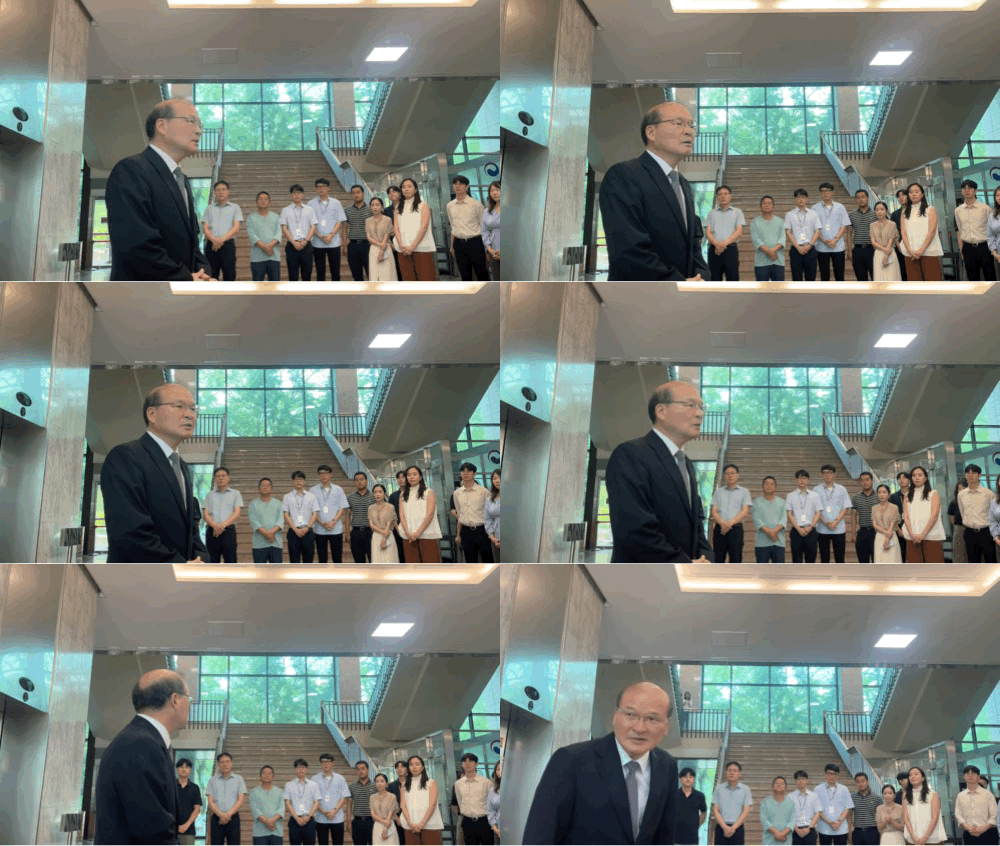 Acting Chairman of the Korea Communications Commission, Lee Sang-in, is saying farewell to employees on the first floor of the Government Gwacheon Complex on the 26th without holding an official retirement ceremony.
On the morning of the 26th, the acting chairman arrived at his office in the Government Complex Gwacheon around 7:40 a.m. Two hours later, it was reported that President Yoon Seok-yeol had approved the dismissal of the acting chairman, and the acting chairman left the complex around 10:40 a.m. without any separate farewell ceremony.
At the first-floor lobby, the acting chairman met with staff and said, "I apologize for leaving without fulfilling my duties as a standing commissioner amid the KCC being trapped in a severe political conflict," adding, "I hope the KCC will normalize and properly carry out its original mission."
He also expressed, "I deeply thank the staff who have quietly and diligently carried out the commission's work during my one year and three months of service." After shaking hands with some employees, he remained silent in response to reporters' questions and got into his car.
The acting chairman was appointed as a commissioner in May last year under then KCC Chairman Han Sang-hyuk. Within the two-person KCC system, he participated in major decisions and tasks such as the change of the largest shareholder of YTN and plans for appointing members to the boards of public broadcasters. He served twice as acting chairman following the voluntary resignations of Commissioners Lee Dong-kwan and Kim Hong-il.
The opposition party argues the illegality of the two-person KCC system and opposes the formation of boards for public broadcasters such as MBC. Despite three impeachment attempts, voices within the opposition openly say, "The impeachment train keeps running." The social costs incurred each time the chairman changes are greater than expected. The KCC and the National Assembly must begin preparing confirmation hearings to verify the qualifications and expertise of candidates. The media, focusing on candidates' qualifications and morality, naturally push coverage of broadcasting and telecommunications industry development to the background.
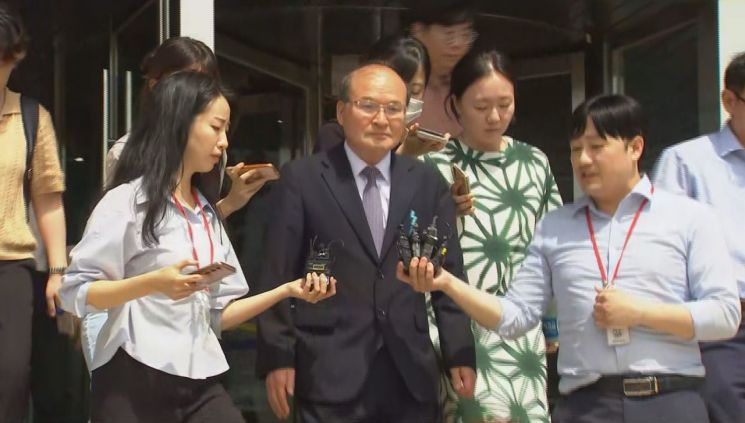 Acting Chairman Lee Sang-in Leaving the Korea Communications Commission Building
 Photo by Yonhap News
Considering the rapidly changing media environment, it is clear that now is not the time for such turmoil. An industry insider lamented, "The domestic broadcasting industry is struggling due to competition with global broadcasters, but it is unfortunate that important policy discussions cannot proceed because of being mired in political strife."
The reality reflected in numbers is also harsh. The three domestic online video services (OTT) ? TVING, Wavve, and Watcha ? are collectively posting operating losses exceeding 200 billion won annually. Last year, domestic broadcasting business revenue decreased by 4.7% compared to the previous year, marking the first decline in ten years. In particular, advertising revenue plummeted by 19%, delivering a direct blow to terrestrial broadcasters. The industry is suffering from a double burden due to soaring production costs and outdated regulations. There are even predictions that the domestic broadcasting and media industry will become dependent on global platforms amid this uneven playing field. The KCC announced in its early-year work report that it would support the overseas expansion of K-media and content to become a global media powerhouse, but whether this goal can be achieved remains uncertain.
Fake news exploiting artificial intelligence (AI) deepfake technology will also harm the public if the KCC fails to perform its role.
The longer this exhausting conflict continues, the more global platforms with massive capital quietly smile as they target the domestic media market. It should be remembered that as the monopoly structure in broadcasting distribution and content production deepens, domestic operators lose competitiveness, and viewers lose opportunities to enjoy diverse content.
© The Asia Business Daily(www.asiae.co.kr). All rights reserved.
![Clutching a Stolen Dior Bag, Saying "I Hate Being Poor but Real"... The Grotesque Con of a "Human Knockoff" [Slate]](https://cwcontent.asiae.co.kr/asiaresize/183/2026021902243444107_1771435474.jpg)
















