Koo Young-bae, CEO of Qoo10, has been 'expanding the business' since the lifting of the non-compete clause in 2019
Acquired TMON and WEMAKEPRICE without spending money
Focused solely on increasing shares of Nasdaq-listed Qxpress
"We will complete the ‘global e-commerce ecosystem’ connecting sellers and buyers worldwide, centered in Korea." This is what Koo Young-bae, CEO of Qoo10, said after acquiring the U.S. e-commerce platform Wish earlier this year. Although Wish claims to serve 33 languages in over 200 countries worldwide, the market considered it a so-called ‘faded’ platform. In 2020, it had 100 million monthly users, but at the time of acquisition, it had shrunk to about 10 million users, losing ground to Chinese shopping apps. The acquisition of Wish, which had shrunk to one-tenth of its former size and was continuously declining, for 230 billion KRW was explained by him as part of the goal of building a ‘global e-commerce ecosystem.’ However, the strategy to achieve that goal had been focused solely on ‘expanding scale,’ including the acquisition of Wish. The recent settlement delay issues at TMON and WEMAKEPRICE stemmed from this strategic misstep.
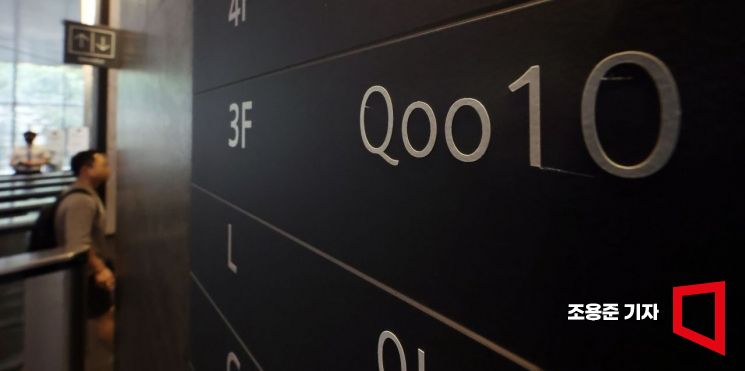 The settlement delay incident that began at Wemakeprice, an online shopping mall operated by Qoo10 Group headquartered in Singapore, is spreading to TMON. On the 24th, a Qoo10 signboard was posted on a building in Gangnam-gu, Seoul. Photo by Yongjun Cho jun21@
According to the industry on the 26th, Qoo10’s strategy to expand scale dates back to 2019, when CEO Koo Young-bae’s non-compete clause was lifted. When Koo sold Gmarket to eBay in 2009, the contract included a clause stating he would not compete in the same industry in Korea for 10 years. After this clause expired, Koo began to expand his activities. He established the Korean branch of the logistics subsidiary Qxpress, founded in 2012, and acquired ShopClues, the third-largest open market in India.
Notably, from the acquisition of ShopClues, CEO Koo adopted a share exchange method. This was with the Nasdaq listing of Qxpress in mind. With the rapid growth of the global e-commerce market increasing logistics volume, and Qxpress supporting delivery through 19 logistics hubs across 11 countries, the prospects for Qxpress’s Nasdaq listing and success looked promising. Having previously succeeded in listing Gmarket on Nasdaq, Koo initiated the Nasdaq listing process for Qxpress as the COVID-19 pandemic caused a surge in online logistics volume. The listing process was handled by the U.S. investment bank Goldman Sachs.
The strategy of using shares eligible for Nasdaq listing also worked when acquiring domestic e-commerce platforms from 2022. When acquiring TMON and WEMAKEPRICE, which recently faced issues, Qoo10 chose to exchange Qoo10 and Qxpress shares without paying any cash. The industry views the consecutive acquisitions of platforms operating the same business without spending money as an effort to increase transaction volume and thereby expand the volume handled by Qxpress. To receive favorable evaluations during Nasdaq screening and increase valuation, it was necessary to increase distribution volume. After TMON and WEMAKEPRICE were acquired by Qoo10, policies to channel volume to Qxpress were actively promoted as evidence of this. TMON, WEMAKEPRICE, and Interpark Commerce each launched integrated logistics services?T Prime, W Prime, and I Prime respectively?as core businesses in partnership with Qxpress. Sellers wishing to sell overseas direct purchase products on WEMAKEPRICE and TMON had to register their products on Qoo10.
However, the series of acquisitions carried out solely with the ‘Qxpress Nasdaq listing’ card, despite insufficient financial resources, has now led to a situation where Qxpress’s Nasdaq listing may become difficult. Seo Yong-gu, professor of business administration at Sookmyung Women’s University, said, "Qoo10’s reckless acquisitions triggered this incident," adding, "Since Korea is the most competitive market for e-commerce, if they fail to find differentiation points that reveal their strengths to consumers, similar problems may continue."
© The Asia Business Daily(www.asiae.co.kr). All rights reserved.

















