Support for Housing Stability Including Smooth Jeonse Deposit Returns for Tenants
Extension of Deregulation on Reverse Jeonse Return Loans Applied to Individual Rental and Sales Operators
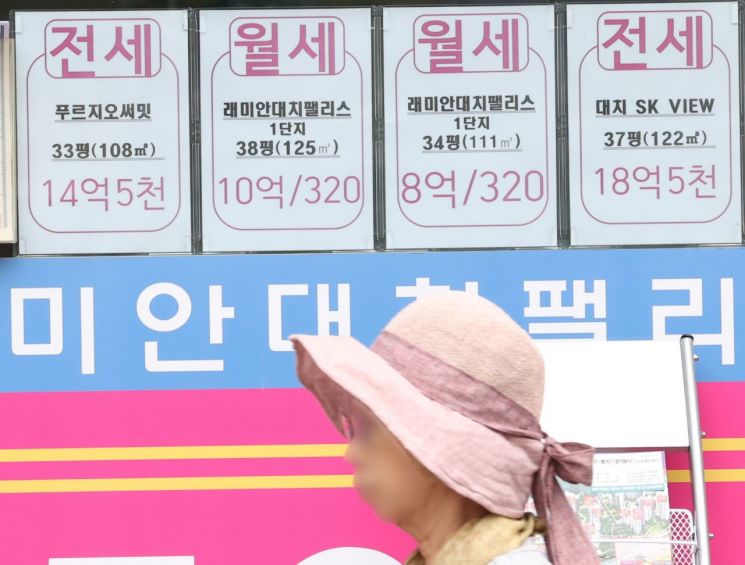
The regulatory easing measures for reverse jeonse refund loans to stabilize the housing of reverse jeonse tenants will be extended until the end of this year.
On the 24th, the Financial Services Commission announced at a regular meeting that a partial amendment to the Banking Supervision Regulations with this content was approved. With this regulatory amendment, the temporary easing of loan regulations for the purpose of refunding jeonse deposits, which has been implemented since July last year to stabilize the housing of reverse jeonse tenants, has been extended for five months until December 31 of this year.
The easing measure for reverse jeonse refund loans was temporarily introduced for one year to support tenants who are restricted in moving due to delays in refunding jeonse deposits caused by unexpected jeonse price declines or who are anxious about the non-refund of jeonse deposits, so that they can smoothly receive their jeonse deposits back. Landlords who completed ownership transfer registration and lease contracts before July 3 last year and must refund the jeonse deposit by July 31 of this year were able to obtain loans within a DTI (debt-to-income ratio) of 60% instead of a DSR (debt service ratio) of 40%, on the condition that they take tenant protection measures such as subscribing to jeonse deposit refund guarantee insurance for subsequent tenants.
However, the FSC judged that the reverse jeonse situation, where the new jeonse deposit is lower than the existing jeonse deposit, continues across the metropolitan area and provinces due to the delayed recovery of the jeonse market, and is likely to persist until the end of the year. Therefore, it decided to extend the existing easing period by five months to support tenants facing difficulties due to reverse jeonse to smoothly receive their jeonse deposits.
The application period of the easing measures for reverse jeonse refund loans, which apply to individual rental and sales business operators, will also be extended until the end of this year. According to the current model guidelines for credit screening of individual business loans in the banking sector, rental and sales business operators facing reverse jeonse situations are subject to an RTI (rental business interest coverage ratio) of 1.0 instead of 1.25 times (non-regulated areas) to 1.50 times (regulated areas) on the condition of tenant protection measures when taking loans for refunding jeonse deposits. Currently, the Korea Federation of Banks is revising these model guidelines, and after consultations among banks, it plans to amend the guidelines and extend the easing measures until the end of this month.
A Financial Services Commission official stated, “With this extension of the reverse jeonse refund loan measures, tenants who suffer housing instability due to ongoing reverse jeonse, such as not receiving or delayed refund of jeonse deposits, are expected to be able to receive their jeonse deposits more smoothly.” He added, “After implementing this extension, we plan to decide by the end of this year whether to end or further extend the reverse jeonse refund loan regulations, considering trends in the jeonse market and household debt.”
© The Asia Business Daily(www.asiae.co.kr). All rights reserved.
![Clutching a Stolen Dior Bag, Saying "I Hate Being Poor but Real"... The Grotesque Con of a "Human Knockoff" [Slate]](https://cwcontent.asiae.co.kr/asiaresize/183/2026021902243444107_1771435474.jpg)















