Box Office Revenue of 610.3 Billion KRW in First Half of Year, Similar to Last Year
'Pamyo' and 'Beomjoedosi 4' Surpass 10 Million Viewers
Polarization of Hits Deepens... Screening Share Reaches 82%
"Screen Monopoly Restrictions Must Be Enforced by Law"
Although two films each surpassed 10 million viewers, the majority of filmmakers did not rejoice. Instead, they struggled with box office polarization. This is the reality of the domestic theater scene in the first half of the year.
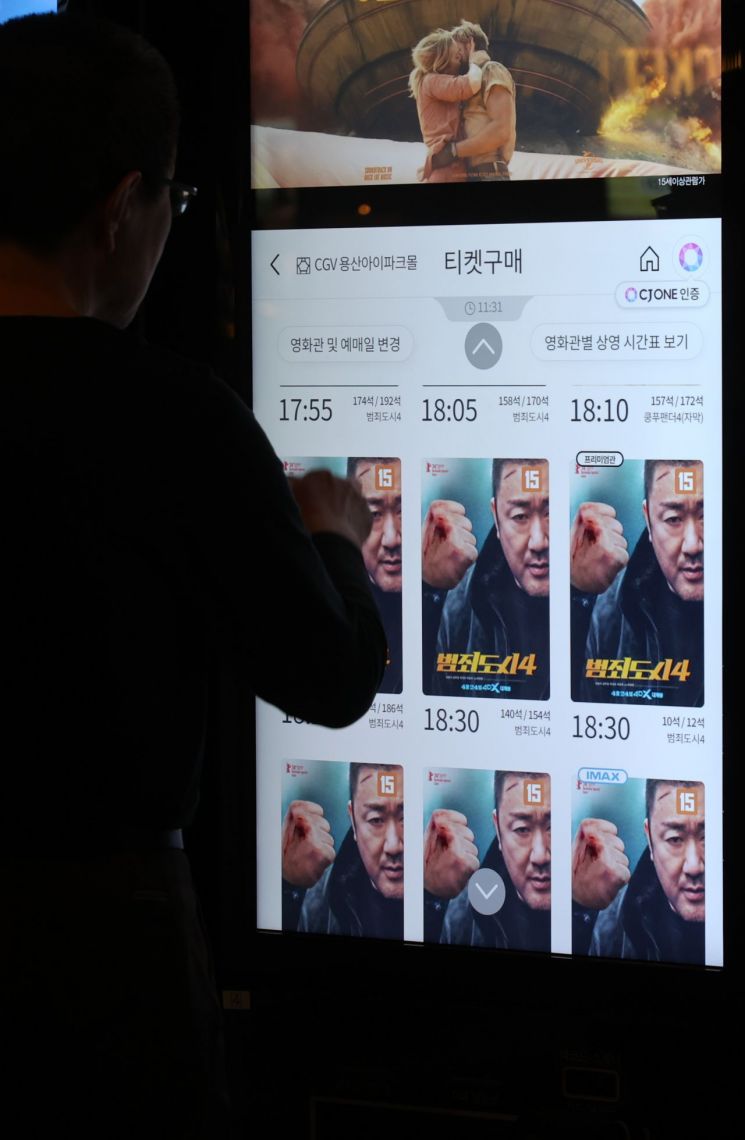
According to the Korea Film Council's integrated ticket sales system, the total box office revenue in the first half of the year was 610.3 billion KRW, with 62.93 million viewers. This represents an increase of 0.4% (2.4 billion KRW) and 7.8% (4.54 million viewers) respectively compared to the same period last year. However, these figures still fall short of pre-pandemic levels. The average box office revenue for the first half of 2017-2019 was 839 billion KRW, with an average audience of 100.99 million.
The average movie ticket price was only 9,698 KRW, dropping below 10,000 KRW for the first time in three years. This decline is due to reduced revenue from premium formats such as IMAX and 4DX (special sensory experience screenings). The poor performance of Hollywood films optimized for special environments contributed to the decrease in average ticket prices.
Foreign films generated 252 billion KRW in revenue during the first half, which is only 56.5% of the 446.1 billion KRW average for the first half of 2017-2019. This is also a 36.3% (143.6 billion KRW) decrease compared to the same period last year. The number of viewers was 25.62 million, far below the 53.17 million average for 2017-2019, representing a 31.4% decline from the previous year.
A representative from the Korea Film Council stated, "Except for 'Wonka' (3,531,717 viewers) and 'Inside Out 2' (8,086,331 viewers), no foreign film surpassed 30 billion KRW in revenue or 3 million viewers," and analyzed that "the delay in the release of blockbuster films due to last year's Hollywood strike had a significant impact."
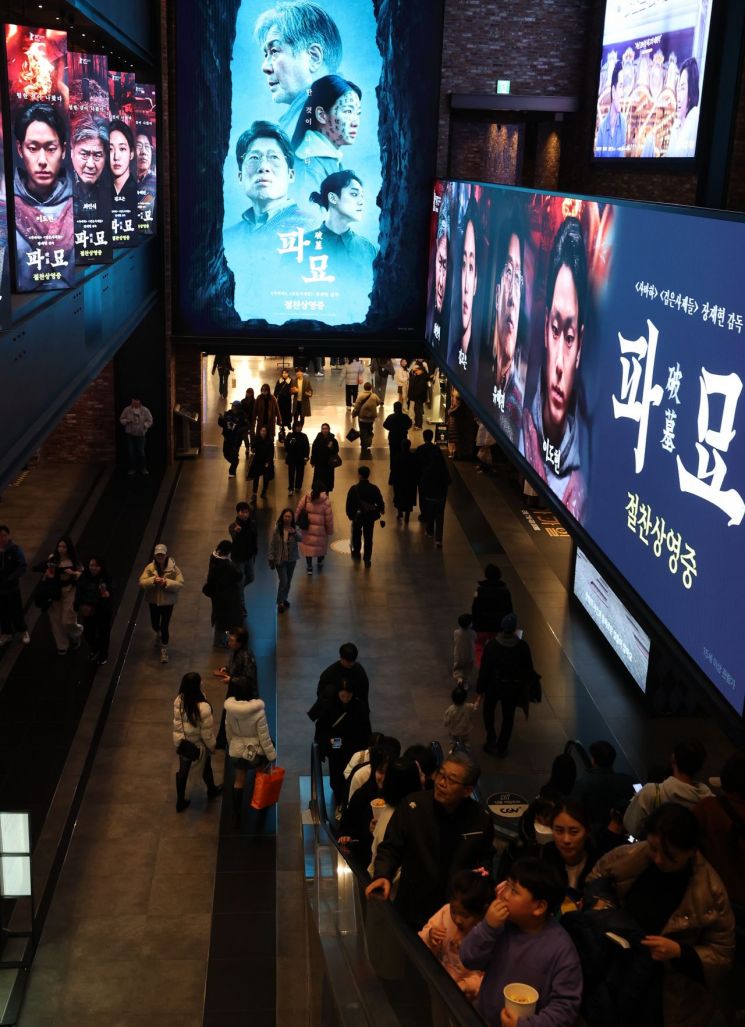
The bigger issue is the polarization of box office success. For the first time in history, two Korean films released in the first half of the year surpassed 10 million viewers: 'Pamy?' (11,913,264 viewers) and 'Crime City 4' (11,508,870 viewers). Their combined revenue was 358.3 billion KRW, recovering to 91.2% of the 392.9 billion KRW average for the first half of 2017-2019. This is a remarkable 68.8% (146 billion KRW) increase compared to the same period last year. The audience count also rose by 77.3% (16.26 million viewers) to 37.31 million. For the first time in four years, Korean films outperformed foreign films in both revenue (58.7%) and audience numbers (59.3%).
However, behind these shining achievements lies a serious problem. Apart from 'Pamy?' and 'Crime City 4,' no Korean film exceeded 20 billion KRW in revenue or 2 million viewers. The issue of uneven screening allocation, which had been emerging even before the pandemic, has reached a critical level.
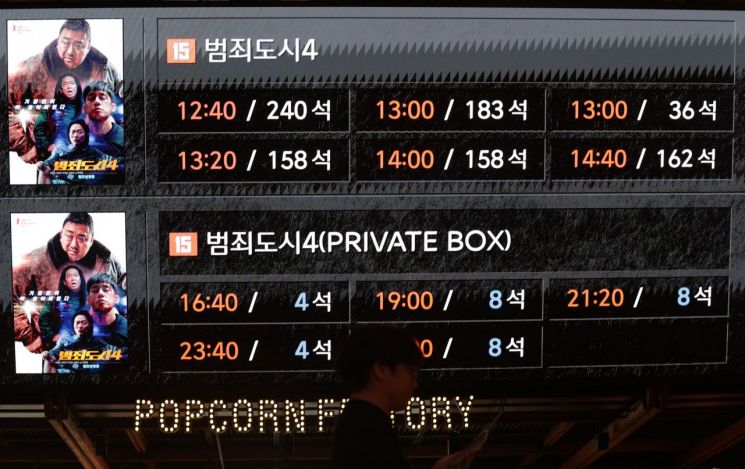
For example, 'Crime City 4' held an 82% screening share on April 27, just four days after its release. According to the Korea Film Council's data, this was the highest ever recorded. The seat occupancy rate was even higher at 85.9%. From its release on April 24 to May 14, for twenty-one days, both screening share and seat occupancy rate remained above 50%. 'Pamy?' enjoyed the same status for seventeen days, gaining momentum at the box office.
Screening share refers to the proportion of total screenings in domestic theaters that a particular film occupies over a certain period. In the film industry, a screening share exceeding 50% is generally considered a screen monopoly. This is because other films released around the same time cannot secure sufficient screening opportunities. There are concerns that less prominent films may fail as a result.
While ten films, including 'Crime City 2' in 2022, had screening shares exceeding 50%, this number dropped to four last year. However, in the first half of this year alone, four films?'Crime City 4,' 'Pamy?,' 'Inside Out 2,' and 'Kung Fu Panda'?have exceeded this threshold, indicating a resurgence.
Lee Ha-young, an operating committee member of the Korean Film Producers Association, raised the need for regulation at a forum titled "Screen Monopoly Issues and Alternatives" held at the National Assembly Library in Yeouido on the 16th, stating, "The screening share of films monopolizing screens is increasing, but there is no system to control this."
Baek Jang-soo, a director of the Korean Film Producers Association who participated as a panelist, also argued, "In 2011, the Korean Film Co-Growth Council reached an ideal agreement, including rational screen allocation, but it had no effect," and insisted, "Now, screen monopoly restrictions must be enforced by law."
© The Asia Business Daily(www.asiae.co.kr). All rights reserved.
![Clutching a Stolen Dior Bag, Saying "I Hate Being Poor but Real"... The Grotesque Con of a "Human Knockoff" [Slate]](https://cwcontent.asiae.co.kr/asiaresize/183/2026021902243444107_1771435474.jpg)

















