Falsely Accusing a Teacher to Stay in Seoul Detention Center... Supreme Court Also Rules Guilty
Former JY Group Chairman Joo Soo-do, who was indicted for having an acquaintance falsely ‘self-accuse’ him, has had his guilty verdict upheld by the Supreme Court. Joo is accused of orchestrating this ‘false accusation scheme’ to avoid being transferred to a provincial prison while serving his sentence.
According to the legal community on the 24th, the Supreme Court’s 2nd Division (Presiding Justice Shin Sook-hee) upheld the original court ruling that sentenced Joo to 10 months in prison with a 2-year probation for the charge of instigating false accusation.
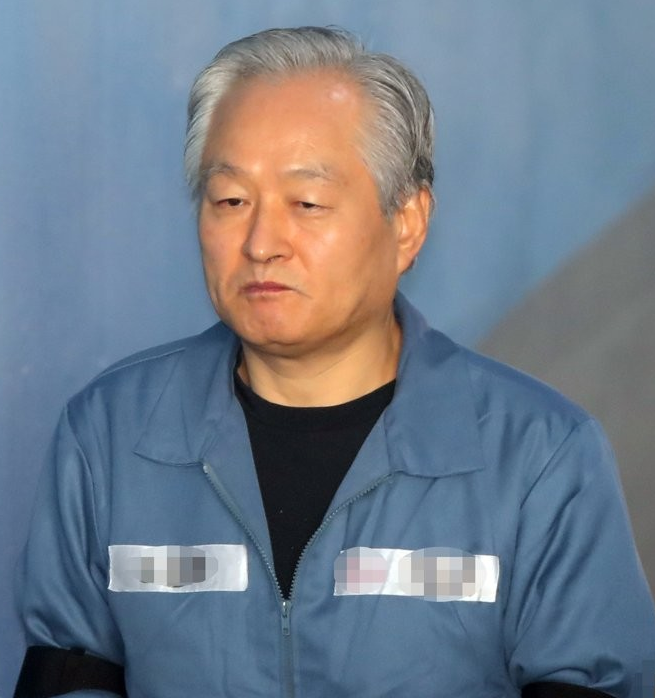
Joo was previously sentenced to 12 years in prison in 2007 for illegally pocketing 2.1 trillion won through a multi-level marketing scheme. However, while incarcerated, he was additionally indicted for fraud after operating the multi-level marketing company ‘Human Living’ through associates, defrauding 1,137 billion won from 1,329 people, resulting in an additional 10-year sentence in 2020.
Furthermore, in 2019, Joo was additionally indicted on charges of instructing an acquaintance to falsely accuse him of wage arrears to avoid being transferred to a provincial prison and remain at Seoul Detention Center. The strategy was based on the fact that being a complainant would keep him at Seoul Detention Center due to prosecution investigations and lawyer visits.
The first trial court recognized the guilt of instigating false accusation and sentenced Joo to 10 months in prison with a 2-year probation. Co-defendants Lee and Ha were sentenced to 6 months in prison with a 2-year probation and a fine of 10 million won, respectively.
Joo, Lee, and Ha appealed, citing reasons such as factual errors, misinterpretation of law, and excessive sentencing.
However, the second trial court dismissed their appeals, stating, “Considering the defendants’ age, character, environment, motive and means of the crime, and circumstances after the crime, the original sentencing is neither too lenient nor beyond a reasonable range.”
The Supreme Court also found no issues with the second trial court’s judgment. The court stated, “There is no misinterpretation of the establishment of the crime of false accusation or the exclusionary rule regarding illegally obtained evidence in the original judgment,” and dismissed the appeals of Joo and others.
© The Asia Business Daily(www.asiae.co.kr). All rights reserved.
![Clutching a Stolen Dior Bag, Saying "I Hate Being Poor but Real"... The Grotesque Con of a "Human Knockoff" [Slate]](https://cwcontent.asiae.co.kr/asiaresize/183/2026021902243444107_1771435474.jpg)















