Counting coins took 3 hours... Damaged coins too
Court says "Waste of judicial resources"... Additional fines imposed
A man in China who paid a fine of 10,000 yuan (about 1.9 million won) in coins was fined additional penalties for wasting judicial resources.
On the 22nd, the South China Morning Post (SCMP) introduced the story of a man named Wanmo living in Chengdu City, Sichuan Province, southwestern China. Recently, when he went to the Sichuan Provincial Court to pay a fine, he brought a large sack of coins instead of banknotes. Because of this, court officials as well as bank employees joined forces to count the money, which took about three hours to verify the amount. Moreover, some of the coins were reported to be so severely damaged that they could not be used.
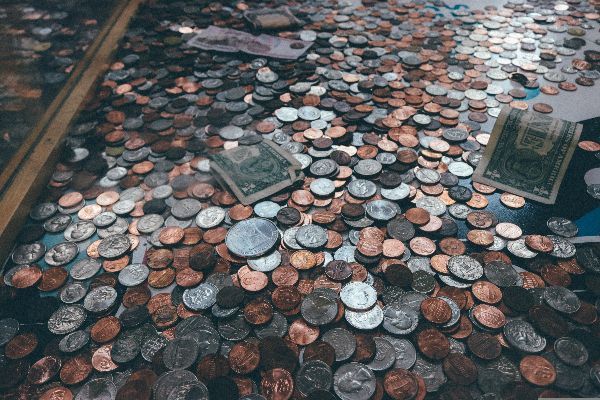
The court imposed an additional fine of 2,000 yuan (about 380,000 won) on Wanmo, stating that he failed to provide a reasonable explanation for paying the fine with so many coins. The reason was that he wasted judicial resources and passively resisted the court's enforcement.
As this story became known, local netizens have been engaged in heated debates. Some netizens sided with the court, saying, "It is clear that he intended to cause trouble for the court," and "The additional fine is appropriate." However, other netizens argued, "Aren't coins legal tender?" "Even if he caused inconvenience to the court, he did not violate the law," and "The court overreacted."
Meanwhile, in the past, a business owner who held a grudge after a former employee reported unpaid wages to the authorities was accused by the U.S. Department of Labor for committing a 'coin attack.' In January 2022, the Wage and Hour Division of the U.S. Department of Labor filed a lawsuit against Miles Walker, the owner of an auto repair shop in Peachtree City, Georgia, for violating the Fair Labor Standards Act (FLSA).
 US Auto Repair Shop Owner's 'Coin Terror' Against Former Employee
[Image Source=Social Networking Service (SNS) Capture]
Walker, who runs a high-end car repair shop, caused controversy by dumping about 90,000 coins in front of the house of a former employee who demanded unpaid wages. This action was taken after Andreas Flatten, who had a falling out with Walker and left the job, reported to the Department of Labor that he had not received about 1.1 million won in monthly wages.
Walker piled up a heap of 91,500 coins soaked in motor oil on the driveway in front of Flatten’s house, and the envelope containing the pay stub was written with severe profanity. Flatten reportedly spent seven hours cleaning each coin covered in oil. This story became known worldwide through a video posted on Instagram by Flatten’s girlfriend.
In an interview with a local broadcaster at the time, Walker said, "It doesn't matter that I paid in coins. The only thing that matters is that I paid the wages." However, the Department of Labor judged Walker’s actions as retaliatory conduct prohibited under the federal Fair Labor Standards Act. The Department also discovered that Walker had not properly paid overtime wages to other employees and ordered him to pay $36,971 (about 51.7 million won) in back wages and damages.
© The Asia Business Daily(www.asiae.co.kr). All rights reserved.
![Clutching a Stolen Dior Bag, Saying "I Hate Being Poor but Real"... The Grotesque Con of a "Human Knockoff" [Slate]](https://cwcontent.asiae.co.kr/asiaresize/183/2026021902243444107_1771435474.jpg)

















