Sangui's 'Special Zone System Status and Improvement Plan Survey'
88% of Experts Say "Consolidate Similar Systems"
As the number of special zones in Korea is expected to exceed 1,000 by the end of the year, there are calls to change the practice of 'dividing regions' and to fundamentally improve the system through the integration and abolition of similar systems. It is necessary to provide more benefits to companies and to consolidate the dispersed capabilities of special zones to achieve economies of scale.
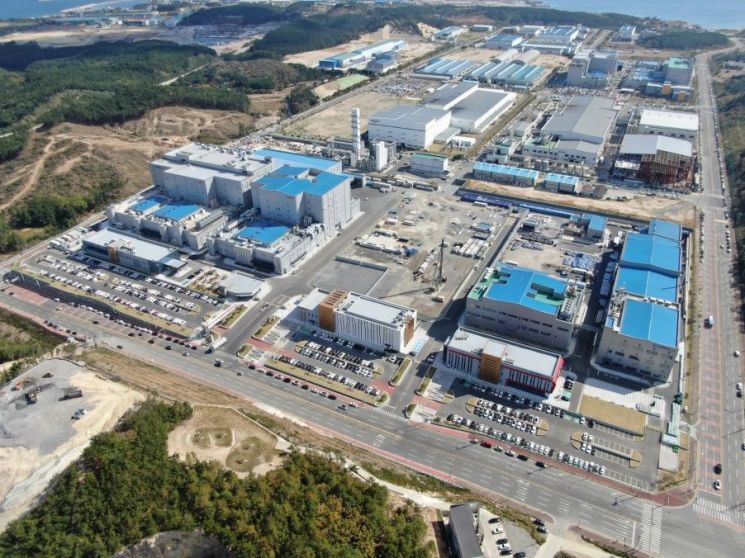 A view of the Ecopro Pohang Campus located in the Yeongilman Industrial Complex in Pohang-si, Gyeongbuk. At the end of last month, the government designated the Yeongilman Industrial Complex in Pohang-si and the Blue Valley National Industrial Complex as secondary battery opportunity development zones.
 [Photo by Ecopro]
On the 23rd, the Korea Chamber of Commerce and Industry announced the results of a 'Survey on the Current Status and Improvement Measures of the Special Zone System' conducted among 50 regional economic experts, including university professors and research fellows from public and private economic research institutes.
When asked whether the special zone system helped revitalize the regional economy, 76% of experts answered 'it was helpful.' 'Average' was 22%, and 'not helpful' was 2%. Experts evaluated that the special zone system contributed to infrastructure development, improvement of residential conditions, and promotion of corporate investment attraction.
Special zones with high public recognition and good performance included Incheon Free Economic Zone, Daedeok Research and Development Special Zone (Daejeon), Osong Advanced Medical Complex, and Pohang Regulatory Free Zone. The Incheon Free Economic Zone was cited as a case that achieved the special zone’s purpose of attracting foreign investment. The Daedeok Special Zone performed well in research and development (R&D) functions. The Osong Complex was noted for advanced medical care, and the Pohang Special Zone was identified as a clear case with representative industries such as used battery recycling.
Regarding the overall operation status of the current special zone system, 48% of experts responded 'average.' Those who said 'not well operated' accounted for 44%. Only 8% of experts said the system was 'well operated.'
The cause of poor system operation was pointed out as the problem of 'dividing regions' in designating special zones. It was criticized that the system’s capabilities were dispersed and did not lead to economies of scale. Seunghan Ryu, Senior Research Fellow at the Korea Research Institute for Human Settlements, pointed out, "There are many systems, and different special zones targeting the same industry are being promoted, causing fractures in corporate and investment attraction."
The most urgent improvement was the integration and abolition of similar special zone systems (88%). This was followed by discovering special zone systems tailored to corporate demand (42%), revising and expanding tax benefits (40%), and improving residential environments (32%). Regarding the question about differentiation among current special zone systems, 82% of experts answered 'lack of differentiation.' Only 8% said there was differentiation.
Professor Cheolwoo Park of Korea Polytechnic University said, "First, it is necessary to stabilize the Opportunity Development Special Zone launched last month, then consider linking other special zones with the Opportunity Development Special Zone or upgrading them to that level." He added, "The Special Act on Local Investment Promotion (Jichok Act), currently pending in the National Assembly, should be processed promptly to ensure the Opportunity Development Special Zone is firmly established."
For revitalizing the regional economy, the most frequently cited element that the special zone system should have was improvement of residential environment (50%). This was followed by revising and expanding tax benefits (40%), integration and abolition of similar special zone systems (40%), and development of special zone systems tailored to corporate demand (40%).
Regarding the participation ratio of stakeholders in promoting special zone policies, the order of response rates was 'central government,' 'local governments,' and 'private sector (companies, economic organizations, etc.).' Dr. Jungseok Ha of the Regional Balanced Development Center at the Korea Institute for Industrial Economics and Trade said, "Given the nature of the special zone system involving various stakeholders such as ministries, local governments, companies, and residents, the government's coordination and mediation functions are very important."
© The Asia Business Daily(www.asiae.co.kr). All rights reserved.
![Clutching a Stolen Dior Bag, Saying "I Hate Being Poor but Real"... The Grotesque Con of a "Human Knockoff" [Slate]](https://cwcontent.asiae.co.kr/asiaresize/183/2026021902243444107_1771435474.jpg)
















