BOK Economic Research Report
Greater Mismatch in Inflation Expectations Lowers Monetary Policy Effectiveness
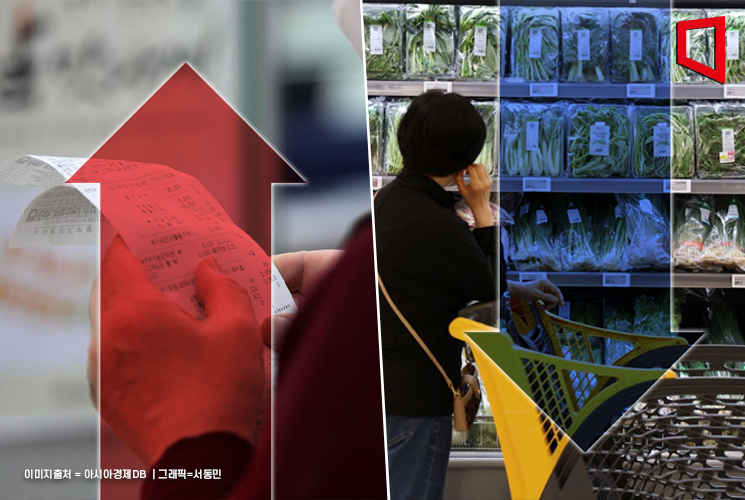
An analysis has emerged indicating that the greater the difference in perceptions of future inflation rates among economic agents, the weaker the effect of monetary policy.
According to the 'BOK Economic Research, Expectation Inflation Discrepancy and Monetary Policy Transmission Effects' published by the Bank of Korea on the 22nd, when the level of disagreement in expected inflation among market participants (experts) increases, the effectiveness of monetary policy diminishes. Expected inflation refers to the subjective forecast of economic agents regarding future inflation rates.
This study analyzed whether the findings from previous research in major advanced countries such as the United States are applicable to Korea. It used expected inflation data collected from domestic economic research institutes, investment banks (IBs), and other experts during the period from January 2006 to November 2023 by Consensus Economics, a macroeconomic survey organization, to calculate the discrepancy in expected inflation.
According to the analysis, when the level of disagreement in expected inflation among economic agents was high, contractionary monetary policy did not significantly reduce the inflation level. In other words, the effectiveness of monetary policy declined. Conversely, when the level of disagreement was low, contractionary monetary policy lowered inflation and slowed down the real economy.
This suggests that when uncertainty about future inflation trends increases, the effect of monetary policy through traditional transmission channels can be offset by signaling channels that operate in the opposite direction. For example, if private economic agents interpret a central bank’s interest rate hike as a signal that the economy will be robust in the future, expected inflation may not decrease but rather increase.
Looking at the periods, the degree of disagreement in expected inflation was highest in 2009. It then maintained an upward trend until 2016, before reaching its lowest point in 2018. After 2020, during the COVID-19 period, the level of disagreement rose again.
From 2008 to 2011 and from 2014 to 2017, the period was characterized by high expected inflation disagreement. However, from 2017 until early 2020, when the COVID-19 pandemic began, the disagreement decreased again. Shim Seri, head of the Macroeconomic Research Division at the Bank of Korea’s Economic Research Institute and author of the report, stated, "As of July 2024, the level of disagreement has not significantly increased and is maintaining a downward trend."
Shim added, "To enhance the effectiveness of monetary policy, it is necessary to reduce not only the level of expected inflation but also the degree of disagreement among economic agents. It is important to lower the discrepancy in expected inflation through smooth communication with market participants, such as forward guidance and inflation target convergence communication."
© The Asia Business Daily(www.asiae.co.kr). All rights reserved.
![Clutching a Stolen Dior Bag, Saying "I Hate Being Poor but Real"... The Grotesque Con of a "Human Knockoff" [Slate]](https://cwcontent.asiae.co.kr/asiaresize/183/2026021902243444107_1771435474.jpg)
















