US Total Fertility Rate 1.62 Last Year
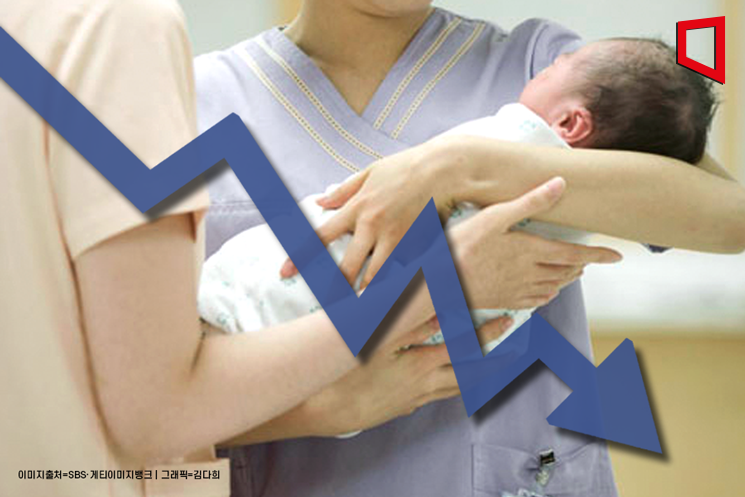
As more young people in the United States decide not to have children, the low birthrate problem is worsening.
On the 21st (local time), the U.S. Wall Street Journal (WSJ) cited the rising costs of raising children and increased expectations for children as reasons why young people hesitate to have kids.
According to statistics from the U.S. Centers for Disease Control and Prevention (CDC), the total fertility rate in the United States was 1.62 in 2023, down 2% from the previous year, reaching a historic low. Although this is higher than the average of 38 OECD member countries (1.51 in 2022) and significantly higher than South Korea, which has the world's lowest rate (0.72 in 2023), concerns about low birthrates are growing in the U.S. as the fertility rate continues to decline.
The WSJ cited analysis by Dean Spears, a demographer at the University of Texas, stating that the increase in women who never have children explains two-thirds of the decline in the average fertility rate among women aged 35 to 44. The main reason for the recent low birthrate phenomenon is not that women are having children at older ages or fewer children than before, but that more women are choosing not to have children at all. While it is true that the childbearing age is gradually increasing and women are delaying childbirth, 80% of American women who gave birth in 2022 were under 35 years old.
Anastasia Berg and Rachel Weizmann, in their recent co-authored book What Is a Child?, analyzed that in the past, people did not consider the costs of raising children and took parenting for granted, but the younger generation views children as one of the elements that make life meaningful. Compared to personal and professional ambitions, they may see the investment in raising children as relatively less valuable.
Relatedly, Beth Davis (42), who lives in New Orleans, said, "I don't want to ruin the vitality of my life right now. Especially not for someone who would have to depend on me 100%," which the media introduced as a typical example explaining the new mindset of the millennial generation.
Although it is true that the basic costs of raising children have increased, there is also analysis that the desire to provide children with more opportunities and experiences has increased the burden of parenting for the younger generation. Melissa Kinney, an economist studying children and families at the University of Maryland, explained, "People say that the cost of raising children has become more expensive, but much of the increase in parenting costs is due to parents focusing more on child-rearing and consequently increasing their spending."
© The Asia Business Daily(www.asiae.co.kr). All rights reserved.
![Clutching a Stolen Dior Bag, Saying "I Hate Being Poor but Real"... The Grotesque Con of a "Human Knockoff" [Slate]](https://cwcontent.asiae.co.kr/asiaresize/183/2026021902243444107_1771435474.jpg)















