Bought seafood from a nearby raw fish restaurant and operated
Unauthorized use of public waters and violation of origin labeling
It has been revealed that seafood vendors along the coast of Yongduam in Jeju City, who were involved in a 'price gouging controversy,' were illegally using public waters and violating origin labeling regulations.
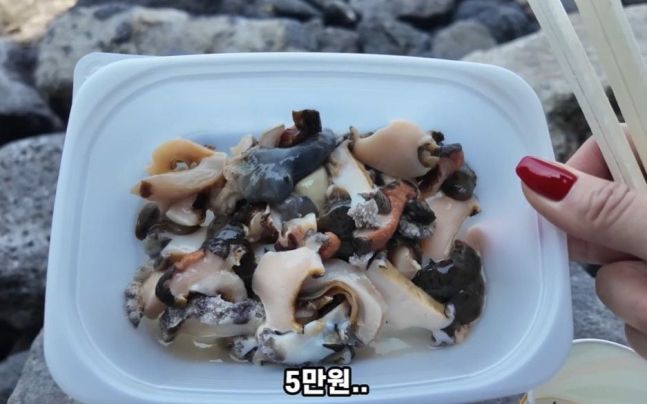 YouTuber A, who lives in Jeju, purchased 50,000 won worth of seafood at Yongduam.
 [Image source=YouTube capture]
On the 19th, Jeju Province and the Autonomous Police Agency announced that they had cracked down on merchants selling seafood under tents along the Yongduam coast in Jeju City on the 15th. It was found that they were illegally occupying and using public waters and failing to properly label the origin of their products. Jeju City has ordered these vendors to voluntarily dismantle their facilities and plans to impose fines or other penalties if they fail to comply.
The crackdown was initiated after YouTuber A, residing in Jeju, filmed and released a video last month showing the process of purchasing seafood at Yongduam. Following this, a complaint was filed through the Safe Report system, suspecting illegal sales activities. The video showed A expressing disappointment when the seafood purchased for 50,000 won in cash was served in a plastic container, and a customer sitting with A saying, "The flight to Jeju costs 20,000 won," and "I never want to come back." Netizens who watched the video reacted with comments such as, "It's like side dishes at a sashimi restaurant, but 50,000 won is too much," "Is the pledge to eradicate price gouging just empty words?" and "This is why people say they'd rather go abroad than Jeju."
According to the Jeju City investigation, these vendors are local villagers divided into three groups of 5 to 6 people each, selling seafood and other items to tourists from rocky shores. Some of them are haenyeo (female divers), but they operated independently without any connection to haenyeo communities or fishing cooperatives. Furthermore, seafood such as conch and sea cucumbers, which were sold without origin labeling, were not caught by them but purchased from a sashimi restaurant in Jeju and then sold.
However, their business activities do not fall under unlicensed operations because they sell small quantities without additional processing, and thus are not subject to registration or permits under food-related regulations.
© The Asia Business Daily(www.asiae.co.kr). All rights reserved.

















