Lake View Turns Out to Be Cement Wall
Two Boilers Installed in One House
"Compensate for Damages" Consecutive Rulings
When defects are concealed during the sale of commercial spaces or apartments and the buyers discover them later, can the buyers seek relief? Recently, such disputes have been increasing in courts.
On the 27th of last month, the Supreme Court upheld a ruling in favor of buyers who sued after suffering damages because the existence of pillars, which could impose spatial constraints, was not disclosed during the sale of commercial spaces. The Supreme Court Civil Division 1 (Presiding Justice Seo Kyunghwan) concluded, based on an on-site inspection, that the developer failed to fulfill the duty to disclose and effectively deceived the parties. The court affirmed the lower court’s decision that the contract should be canceled or damages compensated for the loss in value by dismissing the appeal without trial (2024Da230626).
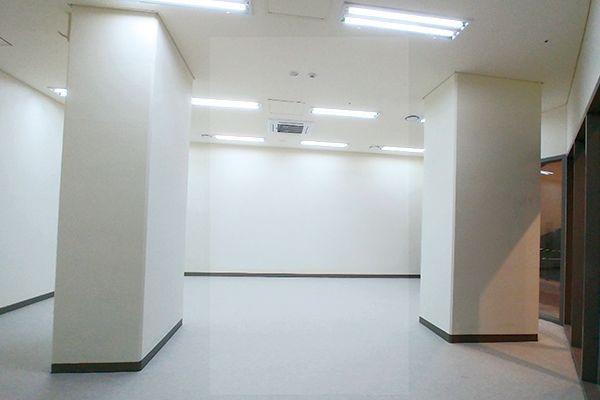
The appellate court stated, “Although the parties could have recognized that they were not properly informed about the pillars, the developer failed to fulfill the duty to disclose as required by the principle of good faith, thus the developer acted with intent and unlawfulness.”
Kang Hoseok (41, Judicial Research and Training Institute class 40), a lawyer at Jeonghyang Law Firm who led the successful case, said, “This is a very progressive ruling that a sales contract can be canceled if the developer fails to properly disclose matters that significantly affect the value of the commercial space.”
There was also a case where commercial spaces were sold with expectations of lake views through glass walls, but in reality, the walls were blocked with cement. The Suwon District Court Civil Division 11 (Presiding Judge Jo Hyuok) ruled in January that this constituted a breach of the duty to disclose and ordered the cancellation of the contract in a lawsuit filed by the buyers (represented by lawyers Park Geonho and Kang Hoseok) against the developer (2021Gahap30989).
Additionally, during an apartment reconstruction, due to an architect’s error, two boilers were installed in one household, resulting in two boiler bills being issued. The first trial sided with the developer, but the appellate court ordered compensation to the residents. This case was also finalized by the Supreme Court earlier this year by dismissing the appeal without trial (2023Da257945).
However, there are also many cases where the court sides with the seller. In one case, the height difference (段差) between the commercial space and the sidewalk was larger than initially expected, and the commercial space buyers filed a lawsuit against the developer and the constructor (represented by lawyers Oh Sangyeop and Jeon Hyungyu of Seonbaek Law Firm) seeking cancellation of the sales contract. In March 2022, the Supreme Court affirmed the lower court’s ruling dismissing the plaintiff’s claim without trial (2021Da306102). The lower court stated, “The commercial sales contract included a design-related caution that ‘applicants must check the level differences between each store and the sidewalk blocks or buffer green areas before signing the contract,’ and the model of the commercial space installed at the sales office showed increasing level differences toward the plaintiffs’ stores. The plaintiffs were aware of these facts when signing the contract. It is difficult to recognize that the developer deceived the plaintiffs by disclosing false information in a manner blameworthy under the duty of good faith regarding the structure and appearance of the commercial space.”
Also, the Suwon District Court Civil Division 8-3 (Presiding Judge Lee Youngbeom) ruled in September last year in a lawsuit (2022Na83250) filed by commercial space buyers against the constructor (represented by lawyer Baek Jonghyun of Jipyung Law Firm), claiming damages for loss of store value due to a pillar installed outside the store obstructing the view, citing breach of the duty to disclose under the principle of good faith. The court stated, “The sales announcement’s caution notes that ‘depending on the sales facility, the presence and size of internal and external windows, store configuration, shape, and pillars may vary,’ and when comparing the catalog with the model, the ‘■’ mark in the catalog could be understood to indicate a pillar.”
Park Suyeon, Legal News Reporter
※This article is based on content supplied by Law Times.
© The Asia Business Daily(www.asiae.co.kr). All rights reserved.

















