Impact of Slowly Moving Rain Clouds
In the Gwangju and Jeonnam regions, 4,500 lightning strikes (discharge phenomena occurring between clouds and the ground) were observed within a single day. As a result, accidents such as malfunctions in meteorological equipment and power outages at factories occurred consecutively.
According to the Gwangju Regional Meteorological Administration on the 16th, from midnight to 9 p.m. that day, 4,500 lightning strikes were observed in 22 cities and counties in Jeonnam, and two lightning strikes also occurred in nearby Gwangju.
In July of last year, 4,916 lightning strikes were recorded in the same Jeonnam area, meaning that 91% of those strikes were concentrated in just one day.
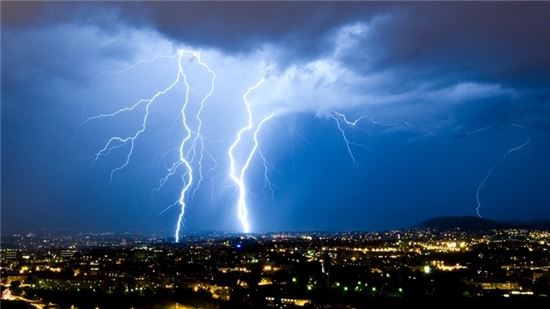 The photo is not related to the specific content of the article.
The Meteorological Administration explained that since they do not tally the number of lightning strikes by date, it is not confirmed whether this is the highest number ever observed, but it is an unusual record.
The increase in lightning frequency is analyzed to be influenced by the slow movement speed of rain clouds (precipitation clouds). Due to the influence of high pressure located on the east coast, the rain clouds could not move eastward and remained over the Jeonnam region for an extended period.
Continuous lightning strikes also caused damage. Transmission errors occurred in automatic weather observation systems (AWS) that monitor temperature, wind, and other conditions, and a power outage occurred at a petrochemical company within the Yeosu National Industrial Complex, halting some processes.
© The Asia Business Daily(www.asiae.co.kr). All rights reserved.
![Clutching a Stolen Dior Bag, Saying "I Hate Being Poor but Real"... The Grotesque Con of a "Human Knockoff" [Slate]](https://cwcontent.asiae.co.kr/asiaresize/183/2026021902243444107_1771435474.jpg)














