Plan to Expand Investment with Goal of SMR Operation Within 10 Years
"Cannot Sustain with Clean Energy Alone"
Italy, known as the world's first 'nuclear phase-out' country, is pushing for the reintroduction of nuclear power after 35 years. The country plans to expand investment in Small Modular Reactors (SMRs) to reduce carbon emissions and dependence on fossil fuels.
Gilberto Pichetto Fratin, Italy's Minister of Environment and Energy, stated in an interview with major foreign media on the 14th (local time) that a bill allowing investment in SMRs will be proposed with the goal of operation within 10 years, and that nuclear power is planned to account for more than 11% of the country's total electricity consumption by 2050.
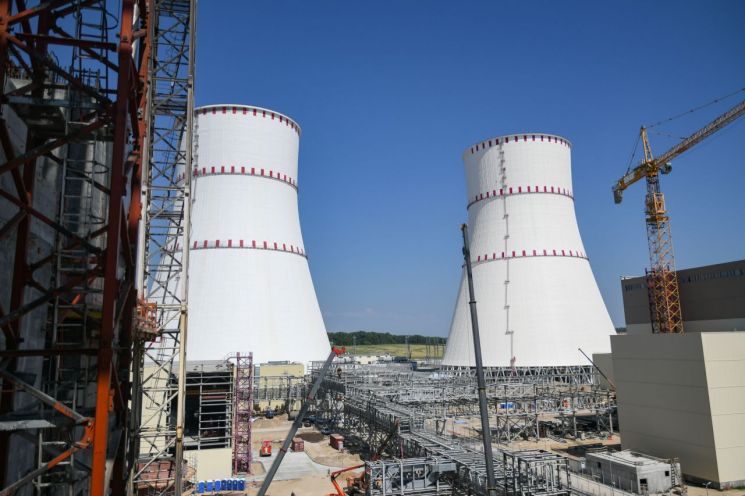
He emphasized that renewable energy technologies such as solar and wind "cannot provide the energy security we need," and that "to ensure the sustainability of clean energy, nuclear energy must play a role as one pillar of power supply."
Previously, Italy expanded its nuclear power capacity by building four nuclear power plants in the 1960s and 1970s. However, following the 1986 Chernobyl disaster in Ukraine (then the Soviet Union), a national referendum led to the decision to phase out nuclear power. The four operating nuclear plants were immediately shut down, and with the closure of the last plant in 1990, Italy became the world's first nuclear phase-out country.
In the 2010s, then-Prime Minister Silvio Berlusconi attempted to reintroduce nuclear power, but the plan was scrapped after a referendum showed over 90% opposition, influenced by the Fukushima nuclear accident caused by the 2011 Great East Japan Earthquake. A recent public opinion poll conducted by Italy's largest environmental organization, Legambiente, showed that 75% of respondents were skeptical that nuclear power could solve Italy's energy crisis, while 25% expressed strong opposition.
Minister Pichetto Fratin expressed confidence that the public's aversion to nuclear power can be overcome, considering the unprecedented safety of the latest nuclear technologies and the benefits they would bring to households and businesses. He also highlighted that Italian companies and research institutions possess high capabilities in the global nuclear power sector.
Minister Pichetto Fratin also addressed the flood of low-cost solar panels from China. He pointed out, "Solar power is closely related to imports from China," and added, "China is a country with a government-controlled corporate system, so solar power can become a political and commercial tool." He further explained, "Italy has unique geographical characteristics," noting that "there are many hills and mountains, so there is no vast spare space for solar panels."
Meanwhile, as global awareness of AI and climate change crises rises, SMRs are gaining attention from countries and companies. The United States recently passed the bipartisan-supported 'ADVANCE Act,' which simplifies nuclear power licensing procedures and reduces fee burdens on companies. Bill Gates, founder of Microsoft (MS), invested more than $1 billion (approximately 1.377 trillion KRW) in next-generation SMR company TerraPower by last month and announced plans to invest several billion dollars more in the future.
© The Asia Business Daily(www.asiae.co.kr). All rights reserved.
![Clutching a Stolen Dior Bag, Saying "I Hate Being Poor but Real"... The Grotesque Con of a "Human Knockoff" [Slate]](https://cwcontent.asiae.co.kr/asiaresize/183/2026021902243444107_1771435474.jpg)
















