Debt increased by 483% in 9 years... 84 trillion debt incurred in 2021-22
Raw material price hikes not reflected, revenue structure diversification failed
Electricity rates frozen for 3rd quarter, city gas slightly raised in August
"Price normalization needed to resolve negative margins"
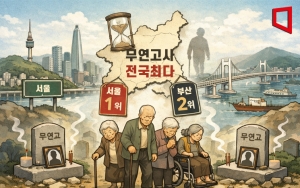
Two major energy public enterprises responsible for domestic electricity and gas supply, Korea Electric Power Corporation (KEPCO) and Korea Gas Corporation (KOGAS), are struggling with massive debt. This is because they have been unable to raise sales prices in line with the rising fuel costs required to produce electricity and gas, leading to deteriorating profitability. As of the end of last year, the combined debt of KEPCO and KOGAS stood at 250 trillion won, nearly half of the total debt (523 trillion won) of all 32 public enterprises.
According to the electronic disclosure system on the 22nd, KEPCO and KOGAS had debts of 202.4502 trillion won and 47.4286 trillion won respectively last year, totaling 249.8788 trillion won. This represents a 483.3% increase (207.0436 trillion won) compared to 42.8352 trillion won nine years ago in 2014.
!["KRW 250 Trillion Debt Mountain" KEPCO and Gas Corporation... Ongoing Financial Crisis [Debt Giant in Crisis]①](https://cphoto.asiae.co.kr/listimglink/1/2024072211465159700_1721616411.gif)
◆ Debt increased by 84 trillion won in just 2021 and 2022
Debt for both KEPCO and KOGAS surged sharply during the Moon Jae-in administration in 2021 and 2022. During this period, an additional 84.169 trillion won of debt was incurred, accounting for 40.7% of the debt accumulated over nine years. Professor Jeong Dong-wook of the Department of Energy Systems Engineering at Chung-Ang University said, "The debt of KEPCO and KOGAS is largely influenced by cost factors. Fuel prices have risen, but for various reasons, these increases were not reflected in sales prices, resulting in electricity and gas being supplied below cost price, accumulating losses that ultimately led to increased debt."
KEPCO's debt increase was particularly steep. It rose from 108.8833 trillion won in 2014 to 202.4502 trillion won last year, an increase of 93.3736 trillion won. In 2021 and 2022, debt ballooned by 13.3217 trillion won and 47.0077 trillion won respectively. The debt incurred over these two years accounted for 29.8% of the total debt. The debt growth rate, which was only 4.6% in 2014, jumped to 10.1% in 2021 and 32.2% in 2022.
Former KEPCO CEO Kim Jong-gap once described the situation as "When the price of imported soybeans (fuel) rose, the price of tofu (electricity) was not raised accordingly, making tofu cheaper than soybeans."
According to Korea National Oil Corporation, the price of Dubai crude oil surged 64.1% (27.12 dollars) from an average of 42.29 dollars per barrel in 2020 to 69.41 dollars in 2021. This was due to a sharp increase in global oil demand following economic stimulus measures worldwide after the COVID-19 pandemic. However, the government did not raise electricity rates even once in 2021, following no increase in 2020. It was only in 2022, when the international oil price rose another 38.9% to an average of 96.41 dollars, that electricity rates were increased by 21.1%. By the end of 2022, KEPCO's total debt had already risen to 192.8047 trillion won.
Due to the money injected into the market to stimulate the economy recovering from the COVID-19 impact, consumer price inflation jumped from 0.5% in 2020 to 2.5% in 2021, prompting measures to minimize the burden on citizens. As a result, the electricity rate cost recovery ratio (sales divided by cost) dropped from 101.3% in 2020 to 85.9% in 2021 and further to 64.2% in 2022. This means electricity costing 100 won was supplied at 64.2 won, accumulating a loss of 35.8 won with every sale.
The situation at KOGAS is similar to KEPCO. KOGAS's debt decreased from 34.7336 trillion won in 2013 to 28.999 trillion won in 2017 during the low oil price period but soared to 52.0142 trillion won in 2022. Debt increased by 6.376 trillion won in 2021 and 17.4636 trillion won in 2022. The debt growth rate rose to 22.6% in 2021 and 50.5% in 2022. The unpaid raw material cost for city gas, which was zero in 2017, surged to 13.7867 trillion won last year. This unpaid amount, essentially an operating loss, reflects the difference between cost and supply price recorded as 'accounts receivable' after supplying gas below cost.
Choi Yeon-hye, CEO of KOGAS, lamented, "The annual personnel cost for employees, including welfare expenses, is 400 billion won, but the current scale of unpaid receivables is such that even if all employees worked without pay for 30 years, it would be impossible to recover. Since the end of 2021, international gas prices have risen by 200%, but residential and general gas rates increased by only 43%, with the difference accumulating entirely as unpaid receivables."
!["KRW 250 Trillion Debt Mountain" KEPCO and Gas Corporation... Ongoing Financial Crisis [Debt Giant in Crisis]①](https://cphoto.asiae.co.kr/listimglink/1/2024072210573859627_1721613458.jpg)
◆ Annual interest alone is 6 trillion won... Increasing the burden on citizens
Most of the debts of KEPCO and KOGAS are financial debts that require interest payments. KEPCO's proportion of financial debt (financial debt as a percentage of total debt) decreased to 59.2% in 2017 but has steadily increased since, reaching 73.2% last year. KOGAS's financial debt ratio also rose from 90.7% in 2017 to 94.2% last year.
Debt is divided into long-term and short-term based on repayment period, with the proportion of short-term financial debt (due within one year) recently increasing sharply. KEPCO's short-term financial debt ratio was only 19.1% in 2019 but expanded to 33.9% last year. For KOGAS, it jumped from 29.5% in 2019 to 61.3% in 2022. Last year, KEPCO paid 4.5 trillion won and KOGAS 1.68 trillion won in interest alone. Interest costs will inevitably be reflected in gas rates over the long term, meaning the burden will eventually fall on consumers.
KEPCO becoming a debt giant is not solely due to selling electricity below cost. It also failed to diversify its revenue structure. KEPCO CEO Kim Dong-chul emphasized "change for survival" upon taking office in September last year. He stated, "We must create new revenue sources to drastically reduce dependence on electricity rates," and "In the mid to long term, more than 30% of total revenue should come from areas other than domestic electricity sales." Last year, KEPCO's sales totaled 88.2051 trillion won, of which 94%, or 82.9548 trillion won, came from electricity sales. This reflects the neglect of a financial structure vulnerable to electricity rate fluctuations.
◆ Financial crisis is ongoing
The problem is that the crisis of KEPCO and KOGAS, now debt giants, continues. The Yoon Suk-yeol administration, launched in May 2022, reported a "KEPCO management normalization plan" to the National Assembly's Industry, Trade, Energy, Small and Medium Enterprises Committee in December of the same year. The plan stated that electricity rates should be raised by 51.6 won per kilowatt-hour (kWh) to normalize KEPCO's management. However, electricity rates were only increased by 13.1 won and 8 won per kWh in January and May last year, totaling 21.1 won. In the fourth quarter, only industrial electricity rates were raised by 10.6 won per kWh considering household inflation burdens. Since then, electricity rates have been frozen. In the third quarter of this year (July to September), rates were not raised to minimize the burden on citizens amid increased cooling power demand.
Wholesale city gas rates for residential use will increase by 1.41 won (6.8%) per MJ (megajoule) and general use by 1.30 won starting August 1. Gas rates are usually adjusted on the first day of odd-numbered months, and there was speculation that rates might rise from July 1, when heating demand is low, but the increase was postponed to August 1 to minimize inflation burdens.
An energy industry official said, "Even if gas rates increase by 1 won, KOGAS's profit only rises by about 500 billion won annually, so the effect from the August increase is less than half and insufficient to resolve the negative margin structure. To secure investment capacity for facilities in preparation for the surge in electricity demand caused by AI and data centers in the future, it is urgent to normalize the management of energy public enterprises through price increases."
© The Asia Business Daily(www.asiae.co.kr). All rights reserved.