Jijiyeon Confirms Lithium Production Potential After 4 Years of Exploration Results
In South Korea, the possibility has been raised that lithium, a rare mineral used in electric vehicle batteries, can be directly produced in Uljin and Danyang.
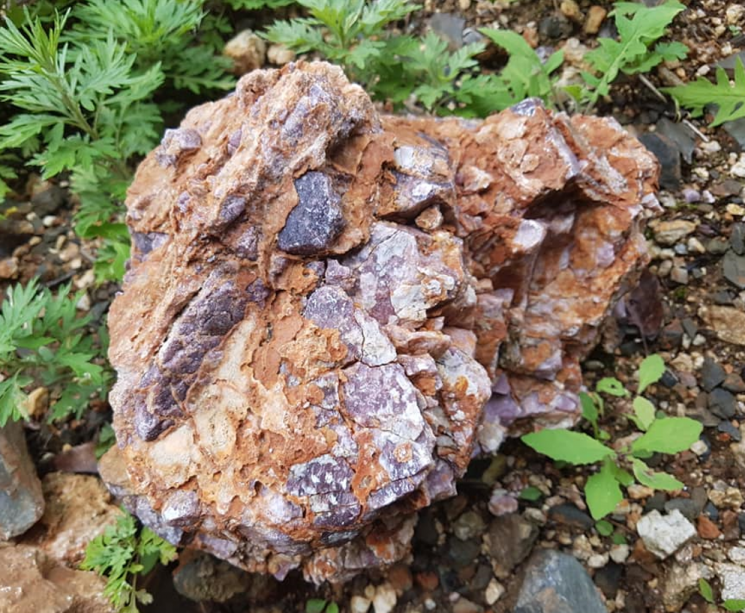
The Korea Institute of Geoscience and Mineral Resources (Director Lee Hyung-gu) presented the results of a four-year investigation of 12 promising domestic lithium deposits at the 'Domestic Lithium Prospective Deposits Exploration Results Presentation' held on the 11th.
The research team conducted exploration of 12 domestic hard rock-type deposits known since the Japanese colonial period (Uljin Wangpiri, Danyang Oejungbang-ri, Buksang-ri, Hoesan-ri, Gopyeong-ri, Gapyeong Homyeong-ri, Chuncheon Bakam-ri, Jecheon Songgye-ri, Seosan Daesan-ri, Okcheon Sayang-ri, Muju Sasan-ri, Bonghwa Seobyeok-ri) starting from 2020.
As a result, the lithium grade in the Uljin and Danyang areas was found to be significantly higher than the average crustal grade. Analysis of the lithium grade in two newly discovered pegmatitic granite bodies located 1 km northwest of the Boam mine in Uljin showed lithium oxide content ranging from 0.3% to 1.5%, comparable to the Red Cross Lake mine in Canada. The lithium grade of the pegmatite bodies in the Danyang deposit ranged from 0.01% to 0.5% lithium oxide, which was below the minimum level of lithium mine development in China.
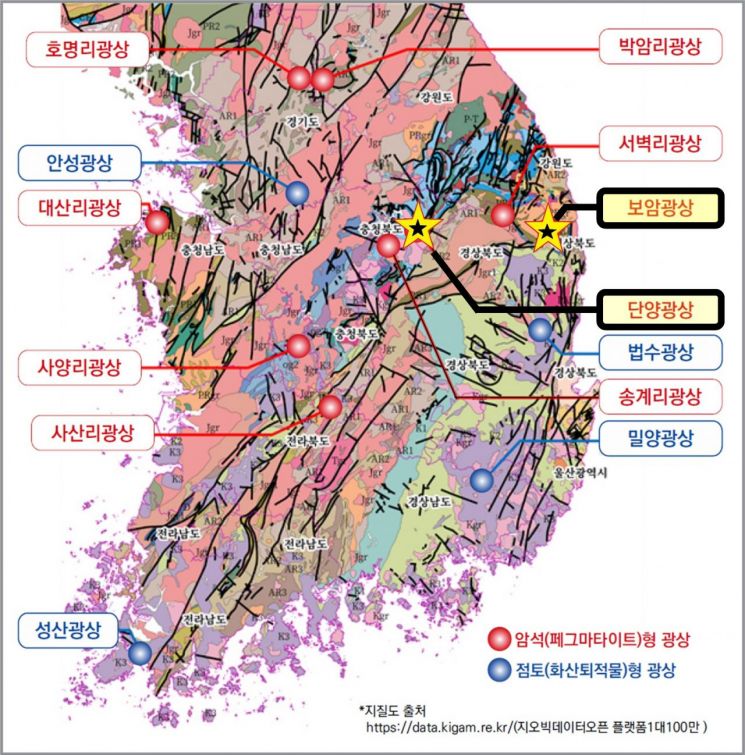
KGMI plans to provide these exploration results to domestic mining companies to be used as basic data for securing lithium mineral supply chains, but whether this will lead to actual development remains uncertain.
All the hard rock-type deposits surveyed, including those in Uljin and Danyang, have mining rights owned by companies, and the most promising Uljin deposit is located in a protected area for the Korean pine forest. Therefore, some opinions suggest that the significance lies in identifying the potential for rare resource development.
Lee Pyung-gu, Director of KGMI, said, "The significance of this exploration is that it confirmed the development potential of supply chains for key minerals such as lithium, which have been dependent on overseas sources."
© The Asia Business Daily(www.asiae.co.kr). All rights reserved.
![Clutching a Stolen Dior Bag, Saying "I Hate Being Poor but Real"... The Grotesque Con of a "Human Knockoff" [Slate]](https://cwcontent.asiae.co.kr/asiaresize/183/2026021902243444107_1771435474.jpg)
















