8,485 Food Poisoning Cases Last Year
33% of Annual Cases Occur in Summer
As the rainy season has recently begun in earnest, the risk of food poisoning is increasing. The hot and humid weather promotes the growth of microorganisms and bacteria, making it easier to contract food poisoning compared to other seasons, thus requiring special caution.
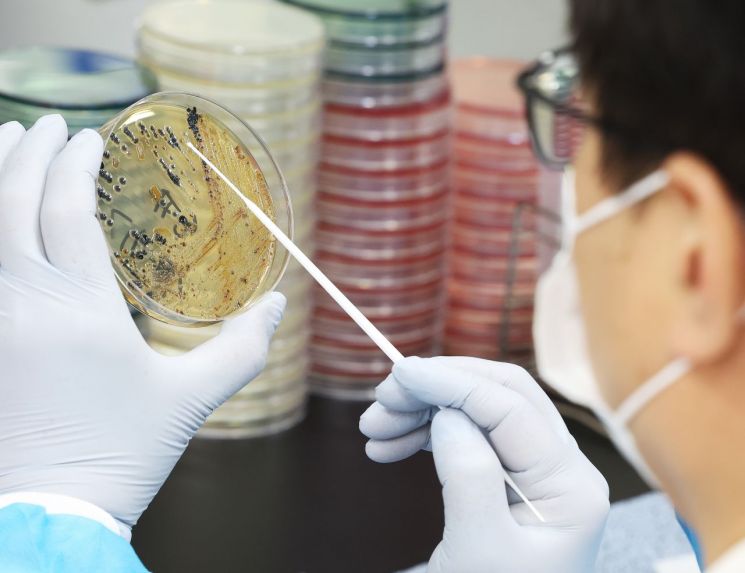 A researcher at the Gyeonggi-do Institute of Health and Environment conducting a food poisoning bacteria culture isolation operation. [Image source=Yonhap News]
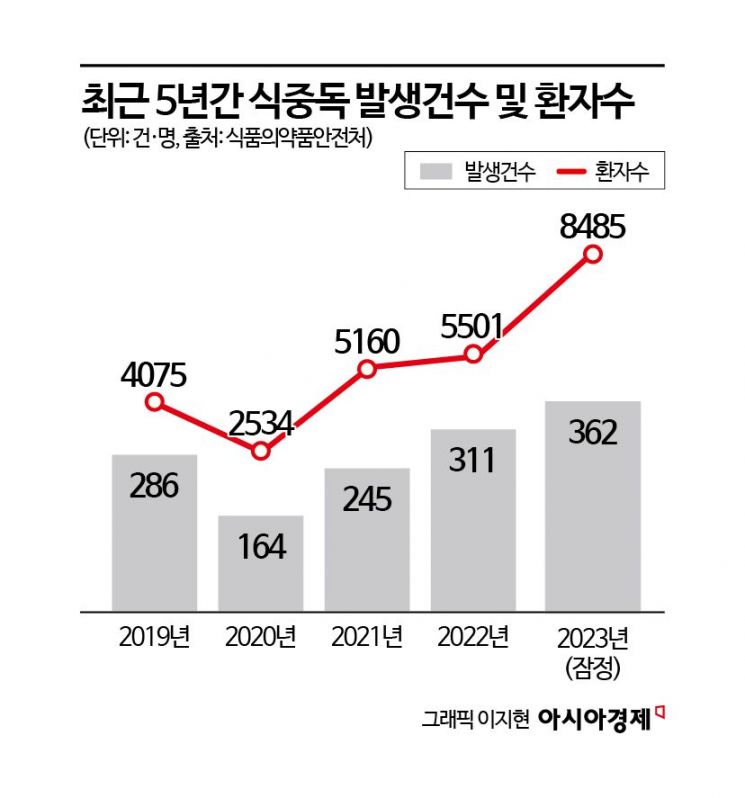
According to the Ministry of Food and Drug Safety on the 10th, the number of food poisoning patients was 4,075 in 2019, 2,534 in 2020, 5,160 in 2021, 5,501 in 2022, and 8,485 (provisional) in 2023. Last year, 33% of the annual cases occurred between June and August, showing that food poisoning is rampant during the summer. This year, due to abnormal climate phenomena, the heat arrived earlier than usual, and the number of suspected food poisoning cases in May reached 905.
On the 3rd, a mass food poisoning incident occurred at elementary, middle, and high schools in the Namwon area of Jeonbuk Province. According to Namwon City on the 10th, the total number of patients recorded from the 3rd to the 8th was 1,032. The investigation by the Namwon City Disaster and Safety Countermeasures Headquarters revealed that norovirus was detected in kimchi commonly supplied to the schools where food poisoning patients occurred.
During the summer, it is important to strictly follow food poisoning prevention guidelines. Wash hands with soap under running water for more than 30 seconds before eating, and maintain proper storage temperatures for refrigerated and frozen foods. Also, use separate knives and cutting boards for raw and cooked foods, and boil water before drinking. Additionally, when cooking meat, ensure it is thoroughly cooked at a core temperature of 75 degrees Celsius for at least one minute, and clean and disinfect ingredients and cooking utensils before consumption.
Professor Si Hyejin of the Department of Infectious Diseases at Gachon University Gil Medical Center advised, “The summer rainy season creates a hot and humid environment favorable for the proliferation of bacteria and microorganisms. Norovirus and rotavirus, which are transmitted through hands, are actively circulating. Compared to winter, food can spoil in a shorter time, and it becomes more difficult to store ingredients, so extra caution is necessary.”
© The Asia Business Daily(www.asiae.co.kr). All rights reserved.
![Clutching a Stolen Dior Bag, Saying "I Hate Being Poor but Real"... The Grotesque Con of a "Human Knockoff" [Slate]](https://cwcontent.asiae.co.kr/asiaresize/183/2026021902243444107_1771435474.jpg)
















