KCCI's Report on 'Rediscovering Jobs for the Elderly'
15.3% of People in Their 60s Have College Degrees or Higher... Increased by 5.4%P Over 10 Years
A study has found that increasing the employment rate of the population aged 60 and over by 5 percentage points would raise the country's potential economic growth rate by 0.1 percentage points. It has been argued that flexibility should be secured in employment conditions, work forms, and wage systems to actively utilize highly educated and highly skilled elderly workers.
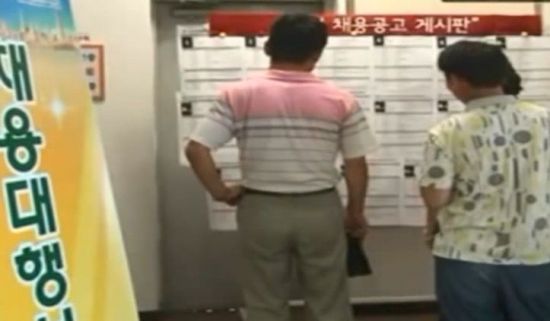
The Korea Chamber of Commerce and Industry's SGI (Sustainable Growth Initiative) released a report titled "Rediscovering Jobs for the Elderly" on the 3rd, containing these findings. The report stated that the proportion of the population aged 60 and over with a college degree or higher increased by 5.4 percentage points from 9.9% in 2010 to 15.3% in 2020. For those in their 50s, the figure rose by 17.1 percentage points from 21.1% to 38.2% during the same period.
Not only educational attainment but also digital literacy has improved. According to the Korea Chamber of Commerce and Industry's SGI, digital information capabilities among those aged 55 and over improved from 23.5% in 2014 to 55.3% last year compared to the entire population. Health has also improved. According to Statistics Korea, the proportion of people aged 60 and over who positively evaluate their health status increased by 9.9 percentage points from 21.6% in 2012 to 31.5% in 2022. The report stated, "Digital literacy among the elderly has improved, and health has also gotten better," adding, "When combined with artificial intelligence (AI) and robotics technologies, the elderly can become a more productive labor force."
SGI predicted that higher utilization of elderly workers would also boost the national economic growth rate. The report stated, "The expected average annual potential growth rate from 2024 to 2030 is 1.5%," and claimed, "If the employment rate of those aged 60 and over, which was 45.5% last year, increases by 5 percentage points, the potential growth rate will rise by 0.1 percentage points."
An increase in elderly employment is expected to have positive effects on national finances and the alleviation of income inequality. SGI predicted that a 5 percentage point increase in the employment rate of those aged 60 and over would increase income tax revenue by 578.4 billion KRW. This amount corresponds to 0.98% of last year's earned income tax and 0.02% of the gross domestic product (GDP). It is also expected to help reduce income inequality.
SGI advised that rather than simply increasing the number of jobs, wage systems that can maximize the productivity of the elderly should be established. The report stated, "Policies that focus solely on increasing the number of jobs or simply extend the length of service under the existing seniority-based wage system can hinder the efficient utilization of elderly workers and burden the economy," adding, "If efforts are made to establish wage systems suited to the productivity of the elderly and create jobs that do not compete with younger workers, elderly workers will emerge as an important solution to the problem of the declining working-age population."
SGI projected that Korea's working-age population will decrease by 300,000 people annually until 2030 and by 500,000 people annually from then until 2040. It emphasized the need to adopt different job allocation policies by generation to avoid overlap between elderly and youth jobs. It suggested referring to the Italian example, where elderly workers are assigned to professional service management or administrative and clerical roles, while younger workers are placed in conceptual design and design roles.
The report called for the deployment of collaborative robots in physically demanding and repetitive work sites to mitigate physical weaknesses. It advised establishing AI-based remote work and monitoring systems to reduce commuting burdens and operating customized telecommuting programs for the elderly. It also emphasized the need to increase elderly retraining and support activities for reemployment of retirees.
Park Yang-su, head of the Korea Chamber of Commerce and Industry's SGI, said, "The domestic labor market wage system does not properly reflect (employee) productivity, placing a heavy burden on companies employing elderly workers," adding, "It is urgent to develop diverse and flexible work forms and reform the wage system into a job-based pay system that compensates according to the nature and difficulty of tasks."
© The Asia Business Daily(www.asiae.co.kr). All rights reserved.
![Clutching a Stolen Dior Bag, Saying "I Hate Being Poor but Real"... The Grotesque Con of a "Human Knockoff" [Slate]](https://cwcontent.asiae.co.kr/asiaresize/183/2026021902243444107_1771435474.jpg)















