Samsung Electronics Strengthens Wearable Lineup with Galaxy Watch and Ring
Hints at Early Detection Feature for Sleep Apnea
Digital Healthcare Including DTx
Evolvable Through Acquisition of Various Biomarkers
As digital healthcare gradually penetrates everyday life through wearable devices, its scope is expanding. Beyond simply measuring step counts, it is expected to enable real-time measurement of various biomarkers and improve the efficiency of treating various diseases using the data obtained.
 Choi Jong-min, Executive Director of Samsung Electronics (Head of Health Hardware Development Group), is giving a presentation at the 'Future Research Symposium' held on the afternoon of the 28th at Gangbuk Samsung Hospital.
 [Photo by Lee Chun-hee]
On the 27th, Choi Jong-min, Executive Director of Samsung Electronics (Head of Health Hardware Development Group), explained at the 'Future Research Symposium' hosted by Kangbuk Samsung Hospital of Sungkyunkwan University School of Medicine, "Samsung Electronics' goal is 'health management in daily life,'" adding, "We are continuously conducting research and development (R&D) to ensure that devices such as glasses used in extended reality (XR) are comfortable to wear and effectively convey information."
Samsung Electronics is expected to showcase a large number of health-related wearable devices, including the Galaxy Ring and Galaxy Watch 7, at the Samsung Galaxy Unpacked 2024 event in Paris, France, on the 10th of next month (local time). Executive Director Choi emphasized the effectiveness of wearables by saying, "Since wearables are worn continuously, data can be analyzed continuously. If there is even a slight abnormality, it can notify the user and advise them to consult a doctor to obtain more information."
One feature that Executive Director Choi highlighted is the early detection support function for sleep apnea on the Galaxy Watch. This technology has already been certified as software as a medical device (SaMD) by the Korean Ministry of Food and Drug Safety and the U.S. Food and Drug Administration (FDA). It measures blood oxygen saturation during sleep through sensors, calculates estimated indices of apnea and hypopnea during sleep, and informs users of the presence or absence of symptoms. He mentioned that this feature will be added via updates not only to the latest Galaxy Watch 7 but also to older models released since the Galaxy Watch 4 in 2021. Samsung Electronics conducted research in 2022 with Samsung Medical Center that demonstrated the possibility of predicting sleep apnea using the Galaxy Watch 4.
Executive Director Choi also introduced various health management functions of the Galaxy Watch, including sleep coaching, body composition measurement, and menstrual cycle prediction. Regarding sleep management, he emphasized, "Although it is not as comprehensive as polysomnography, the Galaxy Watch 7 has improved accuracy up to 75%. It can somewhat identify sleep stages, and the accuracy is improving year by year."
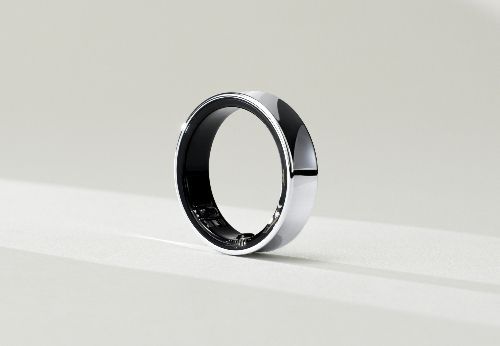
Regarding the Galaxy Ring, which is scheduled for full-scale commercial release following this Unpacked event, he expressed the ambition, "We aim to establish ourselves as a company excelling in health through the Ring." The Galaxy Ring will be launched as a pure wearable healthcare device without functions such as text notifications. It measures the user's heart rate, blood pressure, oxygen saturation, and sleep quality through various sensors. However, Executive Director Choi also noted that non-invasive blood glucose measurement, which has been consistently mentioned as a feature for both the watch and the ring, is still challenging at this time.
Digital Healthcare Must Prove Its Uniqueness Through Continuous 'Evolution' to Survive
Meanwhile, the digital healthcare business is also considered one that must continuously prove its uniqueness. This is because continuous competition arises, such as Apple’s Apple Watch, which competes with Samsung Electronics’ Galaxy Watch, expected to support sleep apnea detection features from models released as early as this year. Kang Sung-ji, CEO of Welt, a digital therapeutics (DTx) company spun off from Samsung Electronics, found the solution in regulatory systems to prove effectiveness and the implementation of 'digital better' through continuous evolution.
Kang, who also worked in Samsung Electronics’ Health Services Group, recalled, "Samsung Electronics had described its wearable devices as fitness devices rather than medical devices, but it hit a limit, and Apple did what Samsung was not prepared for," referring to the moment Apple Watch advanced as a medical device based on its electrocardiogram measurement function. Kang said, "(The medical industry) demands deregulation, but digital healthcare actually needs regulation," adding, "More opportunities arise to be recognized for value within regulations, and I have consistently advocated that proper regulations should be created as much as scientific proof can be provided." While regulations are generally seen as obstacles in typical industries, in digital healthcare, they can serve as a 'highway' for new industries to prove their value and grow.
 Kang Sung-ji, CEO of Welt, is presenting at the 'Future Research Symposium' held at Gangbuk Samsung Hospital on the afternoon of the 28th.
 [Photo by Lee Chun-hee]
Welt’s insomnia DTx, SleepQ, met its first patient on the 12th, one year and two months after receiving approval from the Korean Ministry of Food and Drug Safety in April last year. Since the domestic DTx industry is still in its infancy and the system for commercialization is not fully established, Kang explained, "Although it has entered actual use, strict management by regulatory agencies is ongoing," adding, "We will proceed by increasing market understanding with our partner, Handok."
Welt’s focus is on global expansion. Kang named Germany as "hope," identifying it as the forward base for global expansion. In February, Welt formed a partnership with the German Digital Health Association and is currently preparing local clinical trials of SleepQ with major German medical schools. Germany is considered a leading country in DTx, operating the Digital Health Application (DiGA) system, which allows DTx approval and one year of health insurance reimbursement. Based on this, more than 600,000 cumulative DTx prescriptions have been secured to date.
Kang cited 'evolution' as the strategy to secure competitiveness in global expansion. He said, "In fact, insomnia DTx is created based on counseling therapy or cognitive behavioral therapy, so it is similar to other DTx and can be thought of as a kind of 'digital biosimilar,'" but he pointed out the difference, "While drugs remain the same once developed, digital products can be continuously updated and improved." He added, "DTx can obtain real-time data about patients and diseases, increasing the 'resolution' to understand patients," and said, "We aim to become a digital better as an evolving platform that can provide the most necessary treatment plans to patients."
© The Asia Business Daily(www.asiae.co.kr). All rights reserved.
![Clutching a Stolen Dior Bag, Saying "I Hate Being Poor but Real"... The Grotesque Con of a "Human Knockoff" [Slate]](https://cwcontent.asiae.co.kr/asiaresize/183/2026021902243444107_1771435474.jpg)

















